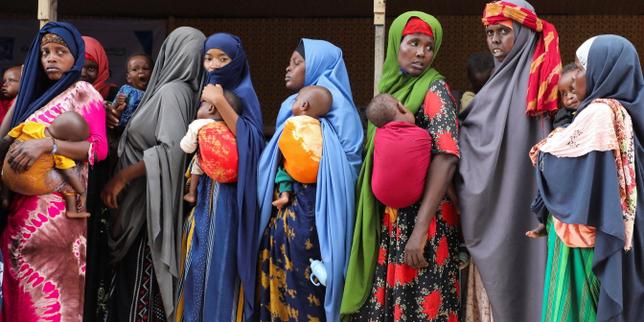
The sound of a global statistical victory is surprisingly quiet. It doesn't sound like a parade or a cheering crowd. It sounds like a grain sack thudding onto the bed of a truck in a dust-choked market outside Niamey, or a price tag being adjusted downward by three cents in a grocery aisle in South America.
In late 2025, international agencies quietly published numbers that brought a brief, tentative sigh of relief to policy circles. Global hunger figures had ticked downward. After half a decade of relentless surges driven by global lockdowns, inflation, and soaring fertilizer prices, the sharp upward curve finally bent. Fewer families faced catastrophic food scarcity than in the brutal peak years that preceded it.
Victory? Not even close.
Behind the polite applause in diplomat halls lies a brutal mathematical truth. The world made a solemn promise in 2015: zero hunger by the year 2030. With four years left on that countdown clock, that target has vanished into the realm of impossible dreams. We are not on track to end hunger; we are simply watching it slow down its expansion.
The Mirage of the Downward Curve
To understand why a drop in the numbers isn't cause for celebration, consider a hypothetical farmer named Mateo in rural Guatemala.
For three years, the price of nitrogen fertilizer forced Mateo to leave half his acreage unplanted. His family cut back from three meals a day to two, then to one heavy meal at dusk consisting mostly of boiled maize and salt. In 2025, local grain prices stabilized slightly. Mateo planted a bit more land. His children started eating a small morning ration again.
On a global spreadsheet, Mateo’s family represents a triumph. They migrated from the column marked "severe acute food insecurity" to the column marked "moderate insecurity."
Graphs look better. Bulletins sound optimistic. But Mateo’s soil remains depleted, his debts to local lenders remain unpaid, and a single prolonged dry spell next season will hurl his household straight back into crisis.
This is the central flaw of high-level hunger metrics. A statistical retreat is not a structural cure. When the tide goes out by an inch, the coastal town is still underwater.
Why the Promise Shattered
When the United Nations set Sustainable Development Goal 2 in 2015, the world operated under an optimistic assumption: that steady economic growth and modern supply networks would gradually push hunger into the history books.
Then reality intervened.
It turns out that hunger is rarely a problem of production. The Earth grows more than enough calories to feed every human being twice over. Hunger is an architecture of distribution, purchasing power, and geopolitics.
First came conflict. War does not just destroy infrastructure; it destroys harvests, blocks shipping lanes, and turns breadbaskets into minefields. When violence erupts, local food systems do not bend—they shatter.
Second came economic volatility. For developing nations burdened with dollar-denominated debt, currency devaluation made basic imports unaffordable. Even when global wheat prices dropped, the bread on local bakery shelves stayed agonizingly expensive because local money had lost its strength.
Third came the erratic weather patterns that smallholder farmers can no longer predict. Rain arrives three weeks late, or three months' worth of water falls in thirty-six hours.
When you stack these three forces together, a temporary drop in global hunger in 2025 looks less like a turning point and more like a brief intermission between storms.
The Cost of Almost
What does it actually mean to miss a target by 2030?
It means human potential systematically snuffed out before it has a chance to kindle. Early childhood malnutrition does not merely cause physical discomfort; it stunts brain development, weakens immune systems, and permanently limits a child's cognitive trajectory. A child who endures chronic severe hunger before age five carries that invisible weight for fifty years.
When international summits miss their target, the consequence is not a reprimand from an audit committee. It is millions of young minds forced to live below their potential.
Consider what happens next when aid budgets shrink. Many donor nations, facing domestic political pressure and fiscal tightening, trimmed their foreign food aid contributions just as input costs spiked. Emergency relief agencies are frequently forced to make unthinkable choices: feed half-rations to a million people, or feed full rations to five hundred thousand and leave the rest to forage?
This is the grim reality behind the technical terminology.
Moving Beyond the Spreadsheet
Fixing this requires dropping the delusion that global hunger will solve itself through incremental market adjustments.
If the world wants to eliminate hunger—not just celebrate temporary, fragile dips—the focus must shift from emergency intervention to local resilience.
- Debt Relief tied to Food Security: Developing nations cannot invest in domestic agricultural systems when eighty percent of their revenues go toward servicing foreign debt.
- Granular, Local Storage: Millions of tons of food rot before ever reaching a consumer because small-scale farmers lack basic cold storage and rural transport. Investing in local storage yields far greater long-term stability than shipping emergency grain across oceans after a famine hits.
- Soil Health and Local Crops: For decades, global policy pushed millions of farmers toward single cash crops dependent on synthetic inputs. Restoring native, drought-resistant staple crops builds natural immunity against global price shocks.
The progress seen in 2025 proves one thing: hunger is not an inevitable condition of human existence. It moves up or down based on deliberate choices made in finance ministries, trade negotiations, and agricultural departments.
The calendar keeps ticking toward 2030. The promise made to millions of children will not be kept on schedule. But the choice of how far we fall short—and how quickly we rebuild what is broken—remains entirely in human hands.
A mother sits on a wooden stool in a quiet room, stirring a pot over embers. She does not know about the 2030 targets. She does not read the reports published in Rome or Geneva. She knows only the depth of the spoon in the pot, the weight of the bowl in her child's hand, and whether there will be anything left to cook tomorrow morning.