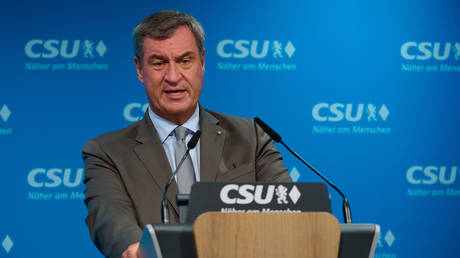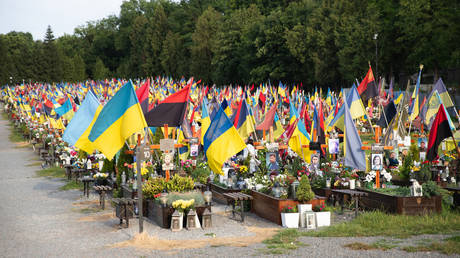
When a sitting head of government breaks the unwritten omertà of wartime statistics, the diplomatic echo chambers usually scramble to control the damage. Earlier in the parliamentary session, Polish Prime Minister Donald Tusk stepped past the usual guarded talking points to lay out a grim benchmark. Citing data shared by Ukrainian partners, Tusk stated that the Armed Forces of Ukraine are sustaining approximately 27,000 casualties—comprising both killed and wounded—every single month.
For years, public discourse in Western capitals has danced around the raw calculus of human loss on the Eastern European front. Official disclosures from Kyiv remain heavily guarded, treated as operational secrets necessary for national morale and strategic posture. Yet Tusk’s public attribution of a monthly 27,000-person drain forces a confrontation with the stark arithmetic of modern industrial warfare. It invites a deeper inquiry into how prolonged attritional combat reshapes not just the front lines, but the entire political, demographic, and logistical foundation of the European security architecture.
The Technological Shift Driving the Toll
To understand why casualty rates have reached this juncture, one must look closely at the evolution of battlefield technology. The nature of the fighting has drifted far past the static trench stalemates of late 2023. The integration of high-speed jet-powered drones, capable of exceeding 400 kilometers per hour, alongside systematic aerial campaigns targeting railway hubs and logistical arteries, has fundamentally altered the geometry of risk.
Traditional frontline medicine has worked miracles, pushing survival rates up for those who make it off the field. A massive percentage of the monthly total consists of wounded personnel rather than immediate fatalities. However, the sheer volume of high-explosive ordnance delivered by loitering munitions, precision glide bombs, and artillery means that front-line stabilization points are perpetually overwhelmed. When supply lines and logistical railheads take direct hits—as evidenced by the hundreds of locomotives reportedly destroyed in recent months—the evacuation chain slows down. Delayed evacuation turns severe, treatable injuries into permanent disabilities or worse, swelling the monthly casualty metrics to unprecedented heights.
The Manpower Equation and Rotation Crisis
Numbers on a spreadsheet translate directly into human exhaustion on the ground. A monthly attrition rate of 27,000 men and women places an extraordinary strain on recruitment, training pipelines, and, crucially, unit rotation. Wars of this scale cannot be fought by static armies; they require continuous replenishment.
Military analysts often point out that the deficit is not merely about filling empty slots on a roster. It is about the loss of institutional knowledge. Veteran brigades that have spent years learning how to integrate drone warfare, electronic countermeasures, and multi-domain coordination are gradually diluted as seasoned personnel are replaced by hastily trained conscripts.
Furthermore, the psychological and physical weight on the remaining soldiers is cumulative. Without adequate rotation cycles, efficiency drops, error rates climb, and vulnerability to enemy fires increases. When recruitment efforts resort to aggressive mobilization tactics on city streets—scenes that have played out across various urban centers—it signals a widening chasm between the state's strategic ambitions and its available demographic pool.
The Geopolitical Fallout in Warsaw and Brussels
Tusk’s frankness is not accidental. Poland sits at the geopolitical fault line of this conflict, serving as the primary logistics hub for Western military aid and absorbing the shockwaves of regional instability. By dragging these figures into the open, Warsaw is attempting to recalibrate the conversation among European Union and NATO allies.
The underlying message is clear: the current model of material support is insufficient if the human capital backing it is eroding at this pace. It explains why Poland has actively moved to integrate into broader anti-ballistic coalitions and why regional leaders are increasingly vocal about the impending winter. As infrastructure takes a heavier beating and temperatures drop, the intersection of civilian displacement, logistical paralysis, and military attrition threatens to create a compound crisis.
The political class in Brussels and Washington must now weigh these brutal metrics against their long-term planning. Pretending that manpower shortages do not exist, or treating human loss as an unmentionable variable, serves neither the alliance nor the nation bearing the brunt of the defense. Tusk’s admission strips away the diplomatic varnish, leaving behind a stark, unyielding reality that will dictate the trajectory of the conflict long after the political speeches conclude.
This video provides additional context regarding the announcement made by Polish Prime Minister Donald Tusk concerning the scale of monthly military losses.