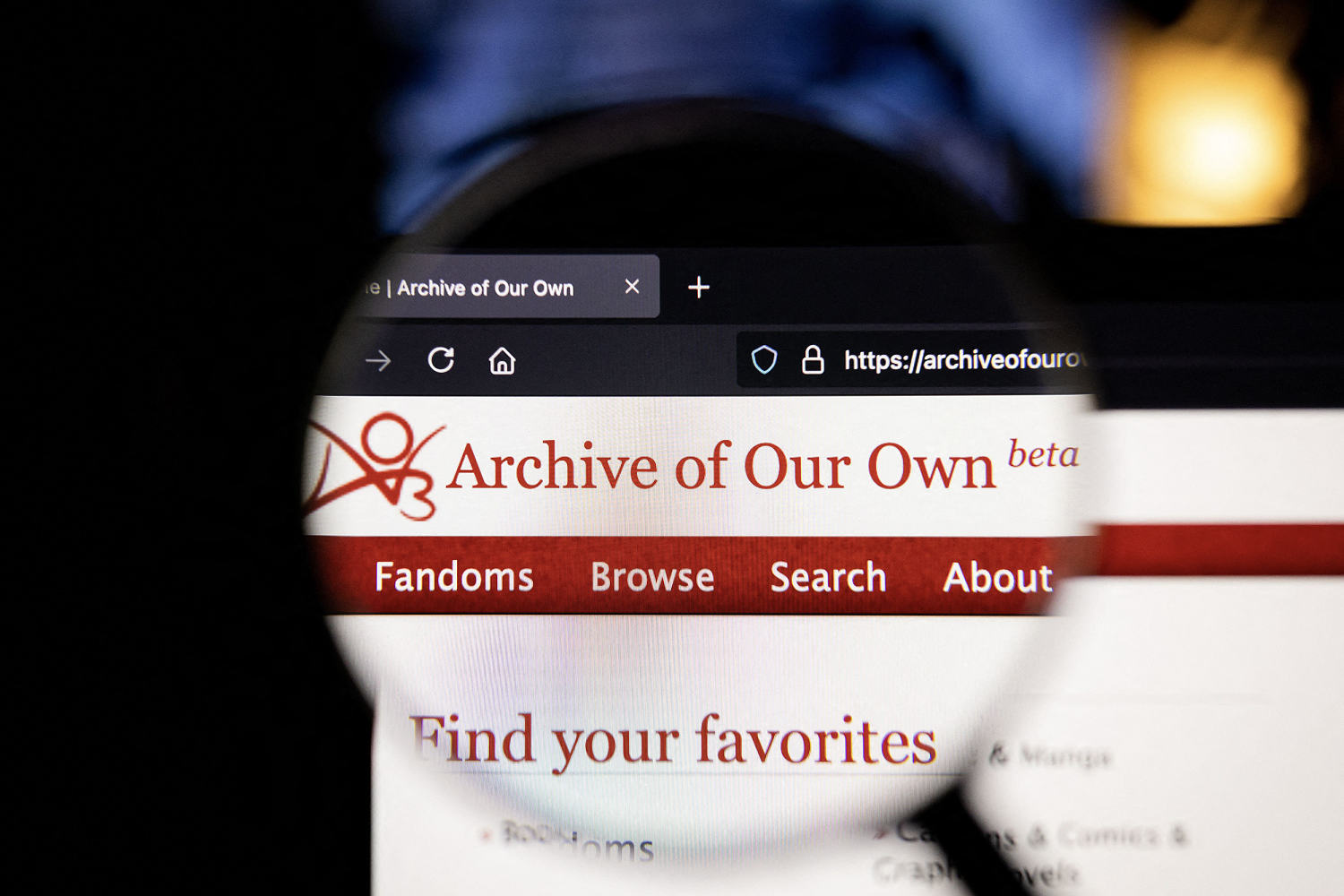
Two in the morning. The blue glow of a phone screen illuminates a bedroom ceiling, the only light in a house that has been asleep for hours. A thumb swipes down to refresh a browser tab, chasing the next chapter of a slow-burn romance that has taken three years and four hundred thousand words to reach a confession. Instead of cream-colored pages and crisp serif text, the screen flashes a stark white error message.
Error 503. Service Unavailable.
Panic.
For anyone outside the world of online fandom, a website going down for maintenance or buckling under traffic spikes is a minor inconvenience. You close the tab, make a cup of tea, and check back later. Yet when Archive of Our Own—known universally to its millions of devotees simply as AO3—goes dark, the internet fractures along invisible fault lines. Across time zones, from dorm rooms in Seoul to commuter trains in London and quiet suburban kitchens in Ohio, millions of readers suddenly find themselves locked out of their primary emotional sanctuary.
To understand why an outage on a non-profit, text-only website triggers a wave of genuine grief and frantic workarounds, we have to look past the server logs and examine what this digital library actually holds. It is not merely a repository of amateur stories about fictional characters. For an entire generation raised on volatile, algorithm-driven social media, AO3 is the last stable public square.
The Architecture of a Sanctuary
Consider a hypothetical reader named Maya. Maya works a grueling retail shift, deals with chronic anxiety, and cannot afford a stack of new hardcovers every week. At night, her ritual is non-negotiable. She opens AO3, filters out the tropes that trigger her stress, selects a tag that promises comfort after a hard day, and downloads a fifty-thousand-word story onto her e-reader. The site asks nothing of her. There are no targeted advertisements tracking her search history, no algorithmic feeds pushing rage-bait to keep her scrolling, and no paywalls demanding a monthly subscription.
When the servers crash—whether from a distributed denial-of-service attack like the infamous July 2023 incident that knocked the site offline for days, or routine database migrations that stretch past their scheduled windows—Maya does not just lose entertainment. She loses her decompression chamber.
I remember the exact feeling from the first major outage I lived through years ago. You refresh the page with a strange, hollow disbelief, your brain refusing to accept that a link you clicked ten minutes ago has vanished into the ether. You open another tab to check the official status account on social media, watching the reply count climb by the thousands every sixty seconds. In those comment sections, strangers trade survival tactics like hikers caught in a sudden mountain storm. Did anyone save the EPUB file for that unfinished sci-fi epic? Does the Wayback Machine have a cached copy of chapter fourteen? Who has a Google Drive folder of classic works ready to share?
The numbers behind this collective scramble are staggering. Operated by the Organization for Transformative Works, a non-profit run largely by volunteers, AO3 hosts well over thirteen million works across more than sixty thousand fandoms, serving billions of page views every week. In 2019, the platform won a Hugo Award for Best Related Work, an institutional recognition that fanfiction is not a fringe hobby, but a dominant force in modern literature. When a library of that scale locks its doors without warning, the shockwave is felt across the entire cultural ecosystem.
Why Modern Readers Cannot Just Go Elsewhere
A casual observer might ask a logical question during an outage. If one website is down, why not simply read a traditional book, watch a show, or visit another writing platform?
The answer lies in how AO3 fundamentally differs from every other corner of the modern internet. Think of mainstream social media and commercial reading apps as brightly lit shopping malls. Every aisle is designed to maximize profit, every recommendation is dictated by opaque algorithms, and the rules of what is permitted shift constantly to appease advertisers and payment processors. Commercial platforms routinely purge content, shadowban creators, and clutter reading interfaces with video ads that drain battery life and shatter immersion.
AO3 is built like a public park funded by community donations. Its famous tagging system functions as an intricate, user-generated card catalog, allowing readers to curate their exact emotional experience before reading a single sentence. You want a story where two rival astronauts are stranded on a moon base, written in second-person perspective, with a guaranteed happy ending and zero major character deaths? You can find twelve of them in thirty seconds.
Nowhere else on the web offers that level of surgical precision combined with absolute freedom from corporate interference. When the archive goes offline, readers cannot simply migrate to commercial alternatives like Wattpad or Kindle Unlimited, because those spaces operate on entirely different ecosystems. They lack the granular filtering, the archival permanence, and the fiercely protected non-commercial ethos that allows transformative works to exist without fear of copyright takedowns.
During an outage, that absence becomes physical. Readers report a sudden, disorienting silence. The muscle memory of opening a browser and typing those three characters—a-o-3—hits a brick wall over and over again.
The Survival Playbook of a Fandom in Exile
Watch what happens on social media within fifteen minutes of a confirmed outage. The panic quickly mutates into dark humor, and then into a remarkably organized emergency response. Fandom, after all, is built on resourcefulness.
First comes the status verification. Experienced users immediately bypass third-party "is it down" trackers and head straight to the official AO3 Status account, the sole reliable source of truth during server turbulence. When the volunteer system administrators confirm that engineers are investigating database latency or mitigating malicious traffic, the collective sigh is almost audible. At least the silence has a name.
Next comes the great migration to offline stashes. Veteran readers know the golden rule of internet preservation, a lesson learned through decades of sudden platform shutdowns from GeoCities to LiveJournal. Never trust the cloud to hold your favorite art forever. Those who heeded the warning spend the outage smugly reading through their local Calibre libraries—a free, open-source e-book management tool that many fans treat like a digital bunker. AO3 natively provides a download button at the top of every single work, offering instant copies in EPUB, MOBI, PDF, and HTML formats. During a blackout, the people who actually clicked that button become royalty.
For those caught empty-handed, the scavenging begins. Readers flock to social media threads to trade recommendations for published books that capture the specific emotional beats of their favorite tropes—the "only one bed" scenarios, the found-family dynamics, the slow-burn redemption arcs. Others turn to alternative archives like FanFiction.net, SquidgeWorld, or Tumblr, though moving between them feels a bit like trading a modern research library for a sprawling, unorganized flea market.
Consider what happens to the writers during these hours, too. Imagine spending six months outlining a pivotal chapter, editing it until two in the morning, and hitting publish—only for the site to go down five minutes later. The immediate feedback loop that fuels fanfiction, that exhilarating rush of seeing kudos tick upward and reading paragraph-long comments dissecting a single line of dialogue, vanishes instantly. Writers sit in the dark alongside their readers, clutching raw text files on their hard drives, waiting for the bridge between them to be rebuilt.
The Fragility of Volunteer Infrastructure
Beneath the memes about Victorian orphans begging for spare chapters lies a sobering technical reality. Keeping an archive of this magnitude running is an extraordinary engineering feat carried out under severe constraints.
Unlike tech giants that maintain sprawling server farms across every continent and employ thousands of full-time site reliability engineers, the Organization for Transformative Works operates entirely on user donations. Every server rack, every database upgrade, and every bandwidth bill is paid for by periodic fundraising drives where readers chip in five or ten dollars at a time. The code itself—an open-source Ruby on Rails application known as OTW-Archive—is maintained largely by volunteers who write patches and troubleshoot database bottlenecks after finishing their regular day jobs.
Think of the system like a historic wooden bridge that was originally built for foot traffic, suddenly forced to carry millions of eighteen-wheelers every single day. The volunteers are constantly reinforcing the beams while traffic roars overhead, unable to close the road without stranding millions of commuters. When a sudden surge of visitors hits—say, right after the season finale of a massively popular television show airs—or when bad actors launch automated attacks to overwhelm the servers, that volunteer infrastructure stretches to its absolute limit.
Understanding this fragility transforms how we view those Error 503 screens. The outage is not a failure of competence. It is a reminder that one of the richest, most vibrant cultural archives in human history exists solely because a dedicated group of volunteers refuses to let it be bought, monetized, or destroyed.
Building Your Own Digital Lifeboat
If you have ever stared at a blank error screen with your heart sinking, the antidote to that helplessness is preparation. Treating an online archive as permanent is a gamble that the internet eventually punishes.
The simplest habit any reader can adopt is the rule of immediate archival. Whenever you start a multi-chapter story that hooks you, or finish a one-shot that leaves you staring at the ceiling in awe, hit the download button at the top of the page. Save it as an EPUB file. Store it in a dedicated folder on your phone, your laptop, or a cloud drive you control. Those files take up mere kilobytes of space—you could fit ten thousand full-length novels on a cheap thumb drive—yet they guarantee that no server crash, no cyberattack, and no sudden author deletion can ever take that story away from you.
For readers who want to go a step further, setting up a local library with software like Calibre allows you to preserve not just the text, but the metadata, the tags, and the author notes that give each work its context. It turns passive consumption into active stewardship. You become a branch librarian of your own personal collection, immune to the whims of server uptime.
And when the site inevitably returns—when the volunteer engineers finally clear the bottleneck, the status account posts the all-clear, and the familiar red-and-cream interface loads once again—take a moment to appreciate what just happened. For a few hours or a few days, millions of people were reminded that the stories we tell each other in the margins of mainstream culture matter deeply. They are not disposable content. They are lifelines.
The next time the archive goes dark, the bedroom will still go quiet, and the blue glow of the phone screen will still reflect a sudden, sharp disappointment. Yet across the world, thousands of readers will simply close their browsers, open their local e-readers, and keep turning the pages in the dark until the lights come back on.