The modern world operates like an aggressive open-plan office. Notifications ping. A tractor-trailer downshifts on the street below. The refrigerator hums its dull, low-voltage song while three separate group chats debate where to order lunch. We mistake this ambient static for living.
A few years ago, during a winter that felt unusually long, I found myself sitting in a crowded train station. Hundreds of people hurried past, their shoulders hunched against the damp cold, eyes glued to screens. I was doing the same. My mind felt like a browser with forty open tabs, all of them playing audio at the same time. It was a specific kind of exhaustion—not physical, but a deep, structural fatigue of the self. We are hyper-connected, yet fundamentally scattered. We gather data, opinions, and visual stimuli, packing them into our minds until there is no room left to move.
We have forgotten how to be clean.
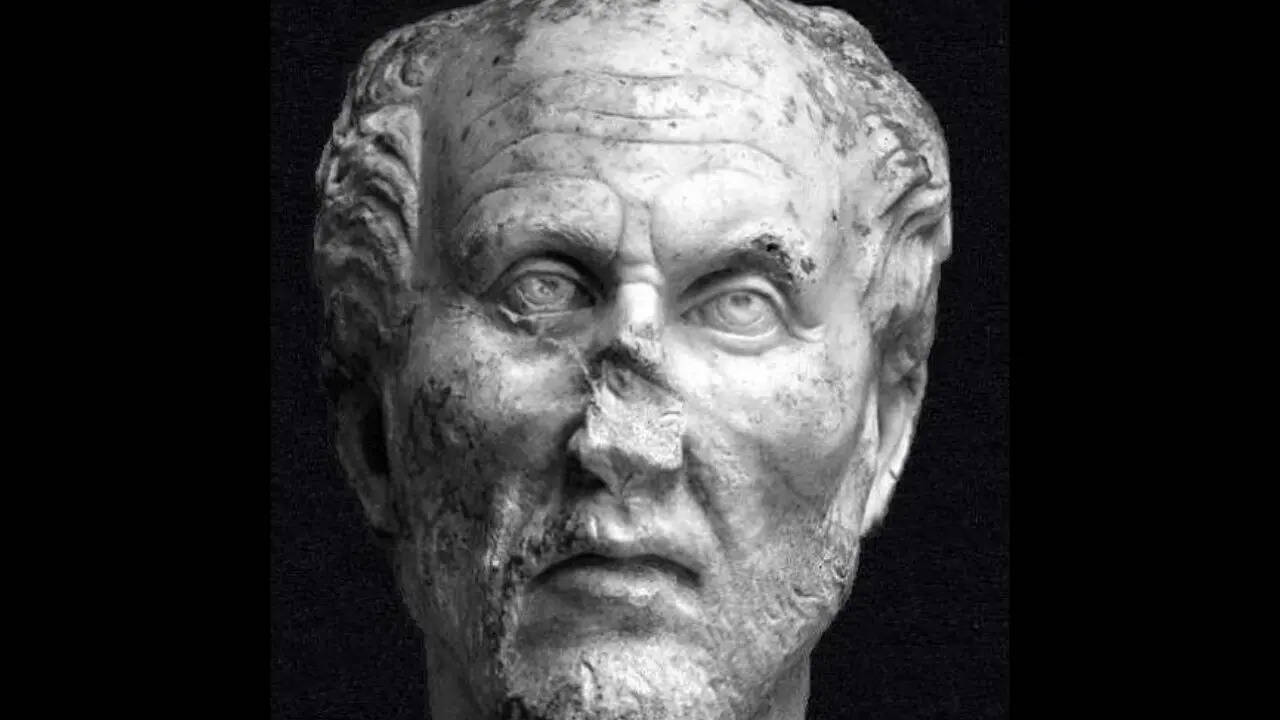
Centuries ago, long before the internet or the printing press, a philosopher named Plotinus sat in Rome and stared into the same human dilemma. He didn’t have an inbox, but he had the noise of an empire. He wrote a phrase that has survived two millennia, buried in dry academic texts, usually stripped of its blood and bone: "The purification of the soul is simply to allow it to be alone."
When most people hear the word purification, they think of something clinical. They think of boiling water, filters, or strict moral tallies. They think of scrubbing away dirt. But Plotinus meant something entirely different. He saw the human mind not as something inherently dirty that needs washing, but as a clear glass of water that has been vigorously shaken with mud. To purify it, you don’t add soap. You don’t scrub it.
You just set it down. You let it stand still.
The mud settles because gravity is patient.
The Crowd Inside Your Head
Consider a hypothetical professional named Elena. She is thirty-four, successful, and carries an undercurrent of low-grade anxiety that she treats with morning espressos and evening podcasts. Elena rarely spends a single minute without an external input. If she walks to the elevator, she checks her phone. If she folds laundry, a documentary plays in the background. She believes she is staying informed, staying productive, and keeping her mind sharp.
But look closer at what happens to Elena’s internal world. Every person she follows online, every headline she skims, and every opinion she absorbs leaves a footprint. Her mind becomes a crowded room filled with the voices of strangers, ex-partners, influencers, and politicians. When she tries to make a decision, she isn’t consulting herself; she is conducting a chaotic committee meeting of people who don’t even know she exists.
This is the state Plotinus described as impurity. It isn't a moral failure. It is a state of dilution. The self becomes so mixed with the world that it loses its distinct flavor.
Psychologists call the modern equivalent "cognitive overload," a documented state where the brain's working memory is overwhelmed by too much information, leading to increased errors and heightened stress levels. We treat this with productivity hacks, apps that block websites, or noise-canceling headphones. We try to solve the noise with more mechanics. But the real problem lies elsewhere. We are terrified of what happens when the noise stops.
The Terror of the Blank Screen
Silence has a weight. When you first step away from the noise—when you leave the phone in another room, turn off the music, and sit in a chair—the silence doesn't feel peaceful. It feels hostile.
Your brain, accustomed to a steady drip of dopamine from notifications, begins to panic. It starts digging up old regrets, awkward conversations from five years ago, and vague anxieties about the future. It creates an artificial storm just to avoid the stillness. This is the exact moment most people give up. They reach for the remote. They open a social feed. They break the isolation because the confrontation with the unvarnished self is too uncomfortable.
I remember trying my first deliberate experiment with this kind of solitude. I committed to sitting on a porch for thirty minutes without a book, a phone, or a task. The first ten minutes were excruciating. My hands twitched toward my pockets. My mind raced with things I should be doing. I felt a strange, illogical guilt, as if being still was a form of theft against my employer, my family, or my future.
But then, somewhere around the twenty-minute mark, a shift occurred. The frantic internal chatter began to run out of steam. It was like watching a toddler throw a tantrum until they simply get tired and sit down. The world didn't end because I wasn't responding to it. The sky was still a pale, neutral gray. The branches of the oak tree in the yard moved slightly in the wind.
I began to notice the actual quality of my own thoughts, stripped of the usual adjectives provided by the internet. I wasn't thinking about what was trending or what someone else had written. I was just observing the immediate reality. It was terrifying, then boring, and then, finally, incredibly light.
The Mechanics of Unmixing
Plotinus argued that the soul is pure when it encounters nothing outside of itself. To understand this without getting lost in ancient metaphysics, think of oil and water.
If you stir them together violently, they look like a single, cloudy substance. They appear inseparable. A bad chemist might try to find a complex tool to filter the oil from the water, fracturing the liquid in the process. A wise observer simply walks away. In the quiet, the oil rises. The water sinks. Each returns to its true nature, not because they fought to separate, but because the agitation stopped.
Solitude is not a vacation. It is not an escape. True solitude is an act of reclamation. When you step away from the crowd, you are letting the foreign substances evaporate. You are allowing your own values, your own grief, and your own joy to separate themselves from the ambient noise of the culture.
Consider what happens next when we refuse this process. We become incredibly fragile. When our internal world is entirely dependent on external inputs, any disruption to those inputs feels like an existential threat. If the network goes down, or if the social validation stops, we crumble because we have no solid foundation beneath the noise. We have built our homes on the surface of a crowded highway.
The Practice of the Empty Room
You do not need to move to a monastery or sell your possessions to practice this. You do not need to spend thousands of dollars on a silent meditation retreat in the desert. The commercialization of wellness has convinced us that peace is a commodity we have to buy, which is perhaps the greatest irony of our time.
The architecture of solitude requires only a small, daily act of defiance.
It means choosing the quiet commute instead of the podcast. It means sitting with your morning coffee for five minutes before checking the news. It means allowing yourself to experience boredom without immediately trying to cure it. Boredom is simply the waiting room of clarity.
When we allow the soul to be alone, we give it permission to heal its own fractures. We give our brains the necessary space to process experience rather than just consume it. The insights that change lives—the sudden realizations that a career path needs to alter, that a relationship needs repair, or that a creative project needs a completely different direction—rarely happen while scrolling through someone else's highlight reel. They happen in the gaps. They emerge from the sediment after the shaking stops.
We are alive in an era that trades our attention for profit. Every app, every flashing neon sign, and every notification is a tiny hook pulling at your identity, trying to drag a piece of you into the marketplace. Choosing to be alone, even for an hour, is an act of radical sovereignty. It is looking at the entire machinery of modern distraction and saying, You cannot have this part of me.
The train station where I sat years ago is still there, thousands of people still rushing through it every morning, their faces illuminated by the pale blue light of their devices. I still catch that train sometimes. I still carry the same phone. But I no longer mistake the noise for the music.
Sometimes, the most important thing you can do is absolutely nothing at all. Sit in the quiet. Let the room grow still. Watch the dust motes drift through the sunlight by the window, and wait for the water to become perfectly, beautifully clear.