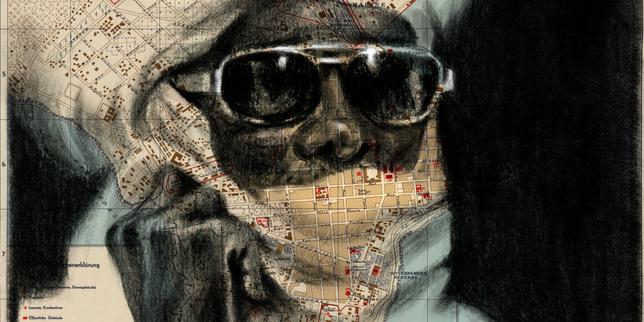
When the late Chadian dictator Hissène Habré fled to Dakar in 1990 with a looted treasury, he bought what he thought was permanent immunity. For over two decades, Senegal provided a sanctuary where millions of dollars in stolen state funds transformed a brutal autocrat into a respected neighborhood benefactor. But Habré’s long, luxurious evasion of justice did not just expose the weakness of international law. It revealed a deeper, more troubling systemic reality. The geopolitical structures designed to hold dictators accountable are inherently transactional, highly malleable, and deeply dependent on local political convenience rather than universal moral imperatives.
Habré’s eventual 2016 conviction by the Extraordinary African Chambers (EAC) in Dakar was heralded as a historic milestone for African justice. It was the first time a domestic court on the continent, reinforced by international elements, tried a former African head of state for crimes against humanity. Yet, looking beneath the celebratory press releases reveals a far more cynical blueprint. Habré's life in Dakar was not a fragile, precarious refuge. It was an entrenched, heavily defended operation that only collapsed when his political utility expired and his financial leverage dried up.
The Economics of Sovereign Asylum
Dictators do not run away empty-handed. When Habré was ousted by Idriss Déby in December 1990, he allegedly cleared out the Chadian national treasury, boarding a transport plane with an estimated billions of CFA francs. This capital flight was the foundation of his second life in the Ouakam district of Dakar.
In exile, cash translates directly to protection. Habré did not hide in the shadows; he bought his way into the fabric of Senegalese society. He invested heavily in local real estate, funded neighborhood infrastructure, and made massive donations to influential Islamic brotherhoods. In a country where religious leaders wield immense political sway, these moves were calculated investments in personal security.
- Financial Integration: Stolen state funds were laundered into legitimate domestic businesses, making local economic actors complicit in preserving his freedom.
- Social Cohesion: By marrying a Senegalese woman and adopting local customs, Habré transitioned from a foreign fugitive to a domestic family man.
- Political Leverage: His wealth allowed him to retain top-tier legal representation and buy favorable coverage in local media, controlling his public narrative for a generation.
This strategy created a formidable shield. For years, successive Senegalese administrations viewed Habré not as a legal liability, but as an economic asset and a diplomatic hot potato. When victims' groups first filed charges against him in Dakar in 2000, the local judicial apparatus routinely threw out the cases on technicalities. The state’s reluctance was not born out of a commitment to pan-African solidarity. It was driven by the raw economic reality that prosecuting Habré meant disrupting the lucrative networks he had spent a decade building.
The Illusion of the Passive Host State
International human rights narratives often portray host countries like Senegal as passive actors trapped between international treaty obligations and domestic legal loopholes. This is a myth. Senegal’s handling of the Habré case was an exercise in deliberate institutional inertia.
Under President Abdoulaye Wade, who ruled from 2000 to 2012, the Senegalese government perfected the art of the bureaucratic stall. When the International Court of Justice (ICJ) or the African Union pressured Dakar to act, Wade’s administration demanded millions of dollars in international funding before they would even consider upgrading their legal system to try a foreign leader. They argued that Senegal could not bear the financial burden of an international trial alone.
This created a highly profitable stalemate. Senegal extracted financial commitments from Western donors while simultaneously assuring Habré’s domestic defenders that nothing was moving forward. It was a masterclass in using international law as a diplomatic bargaining chip. The victims, meanwhile, were left to navigate a labyrinth of broken promises and cynical delays.
+--------------------------------------------------------------+
|             The Cycle of Deliberate Institutional Inertia    |
+--------------------------------------------------------------+
| 1. International Pressure -> Senegal demands donor funding   |
| 2. Funds Secured          -> Legal loopholes/appeals created |
| 3. Domestic Pushback      -> Trial delayed indefinitely      |
| 4. Process Repeats        -> Decades of comfortable exile    |
+--------------------------------------------------------------+
The Geopolitical Shift That Broke the Shield
No dictator’s immunity lasts forever, but the breakdown of Habré’s protection was not triggered by a sudden moral awakening in Dakar. It was caused by a shifting geopolitical alignment that eroded his utility to the Senegalese state.
The turning point came in 2012 with the election of Macky Sall to the Senegalese presidency. Sall ran on a platform of institutional reform and international modernization, aiming to position Senegal as a premier democratic hub in West Africa. Holding onto Habré was no longer a viable option for an administration seeking to deepen ties with Washington, Paris, and Brussels.
Concurrently, Belgium was aggressively pursuing Habré under its universal jurisdiction laws, threatening to drag Senegal before the ICJ if it refused to either try or extradite him. The cost of protecting the aging dictator had finally surpassed the benefits.
The Realist Calculation
The creation of the Extraordinary African Chambers in 2013 was less about pioneering a new model of African justice and more about damage control. By creating a hybrid court within the Senegalese judicial framework, Dakar managed to satisfy international demands, appease Western donors who footed the bill, and avoid the domestic humiliation of extraditing an African leader to Europe. It was a compromise born of geopolitical necessity.
The Flawed Legacy of the Extraordinary African Chambers
The trial of Hissène Habré concluded in May 2016 with a life sentence for crimes against humanity, war crimes, and torture. The international community celebrated. Human rights organizations wept in courtrooms.
But a cold analysis of the trial’s aftermath reveals a much darker picture. The court ordered Habré to pay tens of millions of dollars in reparations to more than 7,000 victims. To this day, the vast majority of those victims have not received a single cent. Habré’s vast wealth, hidden across complex webs of offshore accounts and front companies, was never fully recovered or liquidated. The court possessed the political will to convict a frail, elderly man whose allies had abandoned him, but it lacked the structural power to dismantle the financial networks that sustained him.
Habré died of COVID-19 in August 2021 while serving his life sentence in a Dakar hospital. His death brought a biological end to his accountability, leaving behind an unfinished legacy.
The Missing Precedent
If the EAC was truly a template for the future, we would see it applied across the continent today. Instead, former leaders accused of mass atrocities continue to find comfortable exile in neighboring states, protected by the exact same mechanisms Habré utilized in the 1990s. The impunity trap remains fully operational because the fundamental equation has not changed. As long as a fleeing ruler possesses enough stolen capital to buy local protection and enough diplomatic relevance to serve as a buffer, the international legal order will remain on the outside looking in.
Real justice requires more than a single historic trial every quarter-century. It demands the aggressive, immediate freezing of stolen assets before a fleeing dictator crosses a border, and the elimination of the political discretion host states currently enjoy. Until those systemic loopholes are closed, the story of Habré’s long, luxurious life in Dakar will serve not as a warning to autocrats, but as a tactical manual on how to buy twenty-six years of freedom.