The ink on the ledger was always purple.
John D. Rockefeller sat at his rolltop desk in Cleveland, dipping his steel-tipped pen into the well, recording every single cent. A dime spent on a missing barrel hoop. Three cents for a lost delivery crate. He was a young clerk then, long before the world knew him as the architect of the greatest monopoly in human history. He didn't smile much. He didn't smoke, drink, or dance. His true religion was order, and his god was arithmetic.
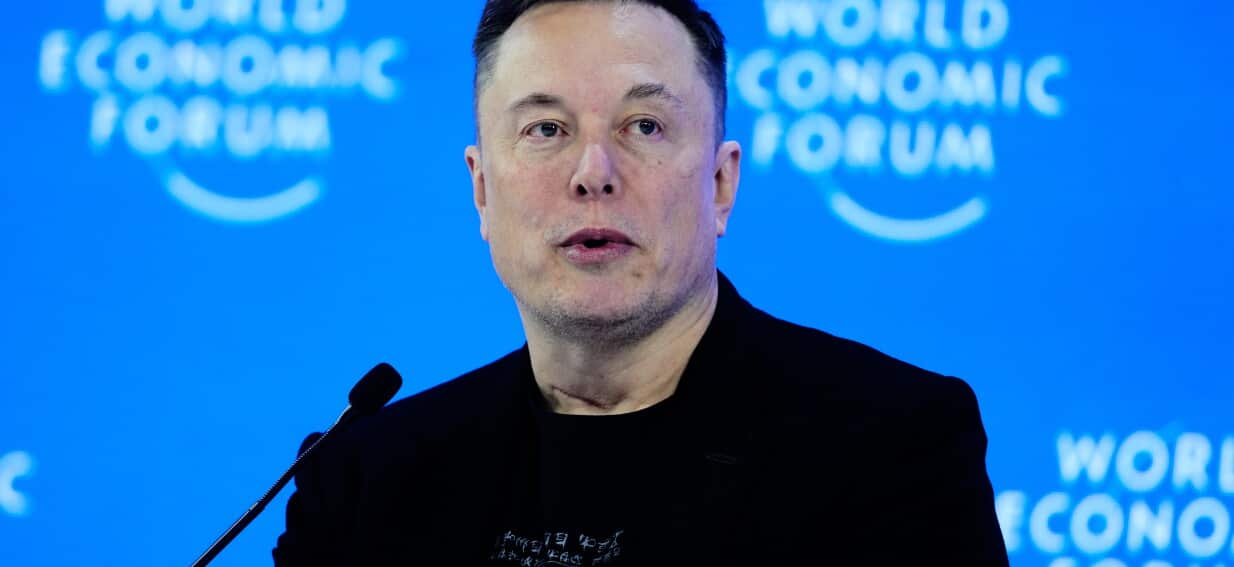
Fast forward more than a century. A rocket booster drops from the edge of space, caught mid-air by a pair of massive mechanical arms nicknamed Mechazilla. A man in a black t-shirt watches a monitor, chewing on a plastic structural model, calculating how to colonize Mars while simultaneously commanding a fleet of electric cars, satellite arrays, and brain-computer interfaces.
Elon Musk operates in the stratosphere of the unimaginable.
We look at these two men and see the same thing: numbers so large they cease to mean anything to the human brain. But wealth is not just a scoreboard. It is a mirror of the era that birthed it. When the news cycles buzz with the calculation that Musk has crossed the threshold into becoming the world’s first trillionaire, the mind naturally drifts backward. We want to know where this trajectory started. We want to look at the first man who broke the ten-digit barrier.
To understand the trillionaire, you have to understand the billionaire. And to understand the billionaire, you have to look past the money and into the obsession.
The Day the Scales Tipped
It happened quietly. There was no siren, no ticker-tape parade, no sudden flash of light in the sky.
In 1916, the calculations of a few Wall Street analysts confirmed that the net worth of John D. Rockefeller had officially crossed one billion dollars. To put that in perspective, the entire gross domestic product of the United States at the time was only about fifty billion. Rockefeller, on his own, controlled one-fiftieth of the economic output of the most powerful rising nation on Earth.
Imagine holding that kind of gravity in your hand.
The public reaction was a mix of awe and deep, curdling resentment. This wasn't just success; it was a mutation of capitalism. People looked at the Standard Oil trust and saw an octopus with tentacles wrapped around every kitchen lamp, every train track, and every state legislature in America. Rockefeller didn't build things with the chaotic, erratic energy of today's tech founders. He built a machine that squeezed out competition until there was nothing left but his own shadow.
But the most striking thing about the world's first billionaire was how little the money changed the man. He still saved the paper bags his groceries came in. He still gave his children pennies for chores and fined them if they were late to breakfast.
He was trapped in the system he created. He had spent his life chasing efficiency, only to find that the ultimate efficiency resulted in a mountain of gold so massive it alienated him from the rest of humanity. He spent his final decades hiding behind the iron gates of his estate, handing out shiny new dimes to strangers just to see a smile that didn't cost him a piece of his soul.
The New Shape of Infinity
Now, look at the transition from that first billion to the first trillion.
A billion is a difficult number to visualize. A trillion is entirely abstract. If you spent one dollar every single second, it would take you about thirty-two years to spend a billion dollars. To spend a trillion dollars at that same rate, you would have to keep spending for over thirty-one thousand years.
Rockefeller accumulated his wealth by consolidating a physical commodity. He bought the oil wells, the refineries, the pipelines, and the barrels. His wealth was heavy. It smelled of kerosene and sulfur. It required thousands of men sweating in dark valleys and grease-stained railyards.
Musk’s wealth is made of ghost-stuff. It is built on software, autonomy, and the collective belief of the global stock market. It fluctuates by tens of billions of dollars in a single afternoon based on a single post on a social media platform or a sudden shift in investor sentiment regarding artificial intelligence.
Consider what happens next when wealth detaches itself entirely from physical limits.
When Standard Oil was broken up by the Supreme Court in 1911, the fragments actually made Rockefeller richer. The spin-off companies—which would become Exxon, Mobil, and Chevron—floated on a wave of new automobile demand. He couldn't stop the money from growing even when the government tried to shatter his empire.
Today, the forces driving a modern tech titan toward the trillion-dollar mark are even more distributed. It isn't about controlling a single railroad; it is about owning the digital infrastructure of tomorrow. The satellites providing global internet, the batteries powering the transition away from fossil fuels, the algorithms dictating human attention.
The stakes are different now. Rockefeller wanted to light America’s homes. Musk wants to alter the destiny of the species.
The Shared Illusion
We often treat these figures as gods or monsters, depending on our political leanings. But if you strip away the mythology, you find a very specific type of human loneliness.
There is an old story about Rockefeller toward the end of his life. He was walking the grounds of his estate with a visitor, looking out over the perfectly manicured lawns. The visitor remarked on how incredible it must be to own all of this, to have conquered the material world so completely.
Rockefeller stopped, looked at the grass, and whispered that he would give every single dollar back if he could just have his youth and his health return.
The tragedy of extreme wealth is that it eventually runs into the hard ceiling of human limitation. You can buy the company, you can buy the media narrative, you can buy the rocket ship, but you cannot buy more time. You cannot buy an escape from the fundamental fragility of being alive.
The first billionaire lived in terror of disease and public hatred, eventually transforming himself into a philanthropist to salvage his name before the curtain fell. The first trillionaire builds machines to escape the planet entirely, perhaps driven by a similar, deeper panic that Earth itself is a sinking ship.
We watch them because they represent the extreme edge of what is possible within our system. They are the outliers that test the structural integrity of our societies. We argue about their taxes, their ethics, their eccentricities, and their power.
But beneath the noise of the headlines and the staggering arrays of zeroes, the story remains remarkably unchanged. It is the story of a man sitting at a desk, looking at a screen or a ledger, trying to calculate a way to become immortal.
The purple ink eventually fades. The rocket eventually lands. The silence that follows is exactly the same.