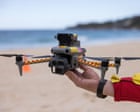
The deployment of public capital into environmental risk mitigation requires a strict transition from reactive crisis management to systematic asset optimization. The New South Wales Government commitment of an additional A$34 million to expand dawn-to-dusk drone patrols across 70 beaches establishes a capital-intensive tech-surveillance network designed to replace analog, destructive intervention methods. However, scaling an uncrewed aerial vehicle ecosystem to execute approximately 500,000 annual flights introduces profound challenges across computer vision pipelines, edge computing infrastructure, and multi-variable operational bottlenecks.
Evaluating this initiative requires moving past political rhetoric and examining the system through three distinct structural lenses: tactical capability frameworks, algorithmic error profiles, and the broader economic trade-offs of marine risk management.
The Three Pillars of Modern Coastal Surveillance
The A$34 million expansion modifies the existing perimeter defenses of the NSW coastline by shifting the operational model from a seasonal, localized schedule to a continuous, year-round utility. This infrastructure relies on three core operational dependencies:
- Continuous Flight Architecture: Shifting from seasonal school-holiday deployments to 365-day coverage across all 38 of Sydney’s ocean beaches and 32 key regional sites. This demands an exponential increase in pilot allocation and fleet rotation metrics.
- Decentralized Remote Piloting Networks: Utilizing remote operations where personnel can pilot craft hundreds of kilometers away from the actual deployment zones, removing geographical limits on human resource allocation.
- Computer Vision Integration: Testing automated object-detection pipelines during peak summer periods to transition from human-dependent visual identification to algorithmic target classification.
This framework seeks to establish an early-warning telemetry system rather than physical exclusion. The core objective is reducing response latency—the time elapsed between a target entering a high-risk zone and the execution of a beach evacuation protocol.
The Mathematical Limitations of Physical vs. Digital Mitigation
For nearly nine decades, coastal security relied heavily on passive, destructive capture methods. Analyzing the structural inefficiency of the traditional shark net program reveals why capital is shifting toward digital surveillance.
[Traditional Sub-Surface Netting] -> High Non-Target Bycatch -> Localized Organic Decay -> Elevated Local Apex Predator Attraction
[Digital Aerial Telemetry Network] -> Real-Time Video Feed -> Computer Vision Edge Compute -> Immediate Low-Latency Public Warning
The standard shark net asset functions as a 150-meter-long gill net suspended 500 meters offshore. Statistically, these networks introduce severe systemic failures:
- The Perimeter Infiltration Defect: Data indicates that roughly 40% of target species entangled in these nets are captured on the shoreward side, demonstrating that large marine life routinely bypasses the installation entirely.
- The Bycatch Trap: Approximately 90% of marine organisms entangled within these systems are non-target species, including protected cetaceans and sea turtles.
- The Biological Attraction Loop: Entangled organisms that succumb to exhaustion generate localized organic decay. This decomposition creates a chemical and acoustic trail that actively attracts apex predators closer to recreational zones, completely contradicting the asset's intended purpose.
Drones replace this destructive mechanical failure with a passive observation field. A human eye or an algorithm assessing water columns from an altitude of 40 to 60 meters creates zero environmental friction. The financial trade-off involves trading the minimal operational costs of a static net for the highly variable, asset-heavy maintenance cycle of a continuous drone fleet.
Automated Computer Vision and Edge Compute Bottlenecks
The ultimate milestone of the NSW program is the full automation of drone flights, moving from human life-saver operations to scheduled, autonomous drone nests. Reaching this milestone depends entirely on solving major challenges in computer vision and machine learning.
The Marine Object Discrimination Problem
Detecting a target species from a vertical viewpoint is straightforward in pristine water conditions with optimal solar angles. Real-world deployment environments, however, feature high levels of visual noise. An algorithmic detection pipeline faces continuous data degradation from multiple environmental variables:
- Water Turbidity and Suspended Solids: Particulate matter scatter light, reducing the signal-to-noise ratio of the video feed and masking the distinct silhouettes of apex predators.
- Refractive Distortion: Surface wind and wave energy deform the underlying geometry of marine life, causing non-threatening species like rays or schools of fish to trigger false positives.
- Sun Glint and Cloud Reflection: Direct specular reflection creates saturated white zones on the sensor, blinding the algorithmic model during early morning and late afternoon hours—the exact windows prioritized by the new dawn-to-dusk mandate.
To operate effectively without human intervention, the neural network must distinguish between a 3.5-meter Carcharodon carcharias (Great White) and a harmless shark or marine mammal under these degraded conditions. High false-positive rates trigger unnecessary beach closures, eroding public confidence and disrupting local economies. Conversely, false negatives represent a catastrophic system failure.
Edge Computing and Telemetry Constraints
Processing high-definition, high-frame-rate video streams requires substantial computational power. Transmitting uncompressed raw data to a centralized cloud server for real-time inference is unfeasible due to cellular bandwidth limits and latency variations along regional coastlines.
The architecture must therefore rely on edge compute payloads mounted directly to the uncrewed craft. This design choice introduces a severe engineering trade-off:
$$\text{Processing Power} \propto \text{Payload Mass} \propto \text{Battery Depletion Rate}$$
Integrating heavy onboard processing hardware directly shortens flight times. Current commercial multi-rotor units manage approximately 30 to 40 minutes of operational flight per charge cycle. Increasing the computational load on the drone reduces this window further, creating an operational bottleneck that demands larger on-site battery inventories and more frequent automated battery-swapping sequences.
Regulatory and Geofencing Impediments
Technology alone does not dictate the success of public safety networks; airspace regulation presents an equally rigid constraint. The geographical layout of high-density recreational beaches often intersects directly with commercial and civil aviation corridors.
The June 2026 incident at Coogee Beach highlights this systemic friction. Although the state government had funded widespread drone access, strict airspace restrictions enforced by the Civil Aviation Safety Authority (CASA) initially grounded surf club drones at that specific location. The beach sits directly beneath a critical low-altitude approach path for major commercial airline traffic.
+--------------------------------------------------------------+
| Commercial Airspace Corridor (CASA Regulated Lower Limit)     |
+--------------------------------------------------------------+
  | (Regulatory Friction / Potential Conflict Zone)
+--------------------------------------------------------------+
| Public Aerial Surveillance Zone (Drone Operational Ceiling)  |
+--------------------------------------------------------------+
Overcoming these structural gridlocks requires establishing dedicated, low-altitude digital corridors and integrating transponder tracking systems (such as ADS-B) directly into the public safety drone fleet. Automated collision-avoidance systems must reach aviation-grade reliability before regulators grant blanket waivers for year-round, dawn-to-dusk operations in complex urban airspace.
Operational Logistics and Human Capital Constraints
Scaling a drone program to capture 500,000 flights annually requires a massive operational footprint. While technology providers emphasize automation, the current intermediate phase remains heavily dependent on human capital.
Surf Life Saving NSW relies on a hybrid workforce of paid lifeguards and volunteer lifesavers. Managing a fleet of hundreds of aircraft requires continuous tracking of pilot certifications, equipment degradation, and battery health profiles. LiPo (Lithium Polymer) battery arrays used in commercial drones exhibit rapid degradation when exposed to highly corrosive, saline marine environments. The logistics network must accommodate continuous equipment testing, preventative maintenance, and rapid component replacement across thousands of kilometers of coastline.
The system also faces a clear geographical data imbalance:
- Metropolitan Hubs: Highly populated zones feature robust cellular infrastructure, abundant pilot availability, and rapid technical support, yet face high regulatory restrictions.
- Regional Sectors: Isolated coastal zones present fewer airspace conflicts but suffer from weak telemetry coverage, challenging maintenance logistics, and limited personnel to manage prolonged, daily operations.
Strategic Asset Allocation Framework
To maximize the return on the A$34 million capital expenditure, the program should drop blanket deployment strategies and adopt a data-driven risk matrix. Resource allocation must prioritize locations where the intersection of human density and shark habitat metrics is highest.
                High Risk / High Density
                [Maximum Priority: Continuous Automation]
                        |
                        |       Low Risk / High Density
                        |       [Seasonal / On-Demand Fleet]
                        |
Low-Density ------------+------------ High-Density
                        |
                        |       High Risk / Low Density
                        |       [Passive Acoustic Arrays Only]
                        |
                Low Risk / Low Density
                [De-Prioritized / Zero Asset Allocation]
Deploying permanent, automated drone nests at every single beach is economically inefficient. High-density urban areas require continuous automated surveillance backed by edge compute infrastructure. Conversely, low-density regional beaches are better served by combining passive satellite-linked acoustic listening stations with targeted, on-demand drone deployments during verified high-risk periods, such as whale migration or bait fish schooling events.
This approach ensures that high-cost technical infrastructure is concentrated where it provides the greatest statistical reduction in human risk, rather than being distributed evenly but thinly across underutilized shorelines.
The Strategic Path Forward
The expansion of the NSW drone program marks an important step away from outdated, destructive marine management tools. To ensure long-term viability, management should focus immediate operational efforts on three distinct areas:
- Standardizing Edge Datasets: Establish an open-source, heavily labeled repository of marine telemetry specifically captured in suboptimal water conditions to accelerate the training of object-discrimination algorithms.
- Automating Battery Swap Infrastructure: Prioritize the development of ruggedized, weather-sealed ground stations capable of executing automated battery extractions and insertions, removing human dependency from the flight readiness cycle.
- Establishing Dynamic Airspace Agreements: Build pre-approved digital geofences with aviation regulators to allow immediate drone deployment in commercial flight paths during high-risk scenarios, eliminating bureaucratic delays.
Shifting the operational paradigm from human-driven observation to automated aerial biosecurity will ultimately depend on systematic software refinement and clear regulatory alignment, rather than simply increasing the volume of aircraft in the sky.


