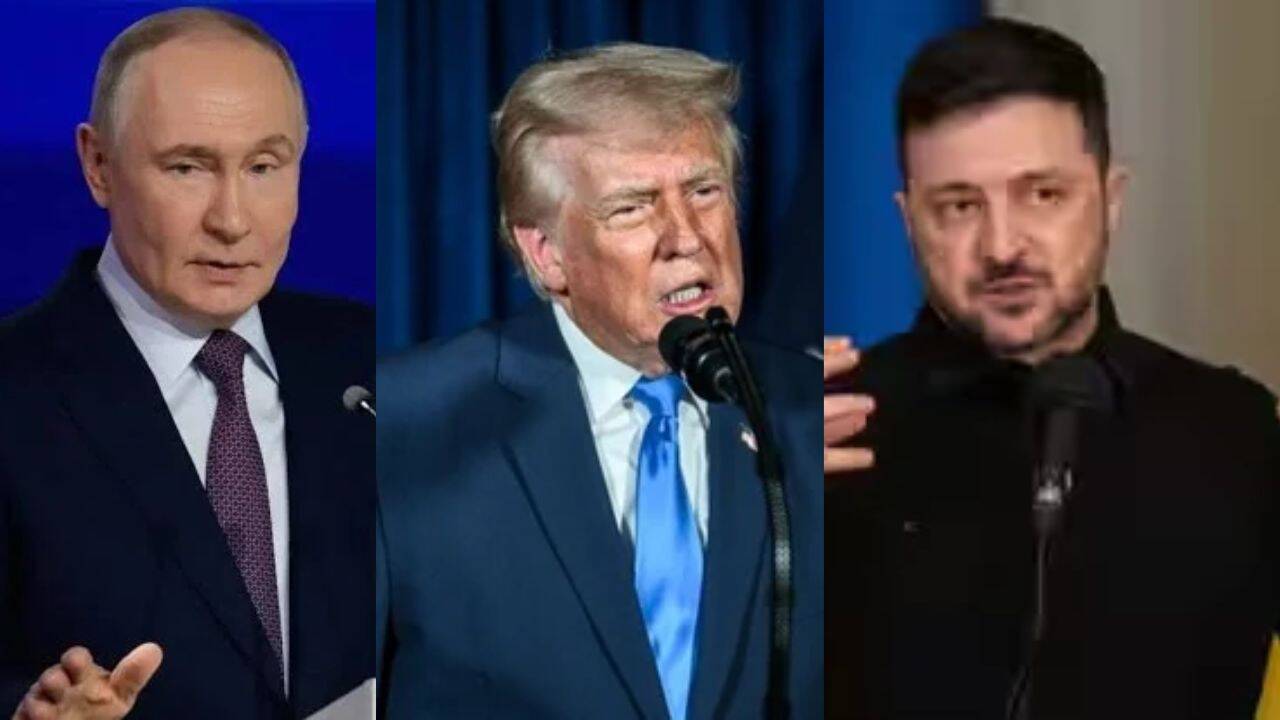
Diplomatic mediation between warring states rarely fails due to a lack of communication; it fails because the underlying incentive structures make defection more profitable than compliance. When Russian and Ukrainian delegations convene in Abu Dhabi under United States mediation to discuss a new European security framework, the public narrative focuses on diplomatic breakthroughs and territorial compromises. That focus misses the operational reality. Any durable settlement requires solving a classic commitment problem under conditions of extreme information asymmetry, where neither Moscow nor Kyiv can credibly guarantee future restraint without external enforcement mechanisms that Washington is reluctant to underwrite.
To evaluate the viability of an Abu Dhabi framework, analysts must strip away diplomatic rhetoric and examine the structural variables governing the negotiation: venue neutrality, asymmetric security guarantees, territorial freezing versus legal recognition, and the economic cost functions of prolonged attrition. For a different look, check out: this related article.
The Structural Logic of the Abu Dhabi Venue
The selection of Abu Dhabi as the negotiating venue is not a geographic accident; it is a deliberate function of diplomatic arbitrage. Traditional European venues—Geneva, Vienna, Helsinki—carry institutional baggage and legal obligations, including International Criminal Court jurisdiction and European Union sanctions regimes, that create immediate friction for Russian participation.
The United Arab Emirates operates outside the Western sanctions coalition while maintaining deep defense and intelligence ties with Washington. This dual alignment produces three operational advantages for backchannel and formal talks: Similar insight on the subject has been provided by Al Jazeera.
- Sanctions Insulation: Abu Dhabi provides a banking, aviation, and logistical corridor where sanctioned Russian officials can operate without triggering automatic arrest warrants or asset freezes.
- Transactional Neutrality: Unlike Western European states, whose domestic electorates view the conflict in existential moral terms, the UAE approaches mediation as a statecraft asset. Abu Dhabi extracts geopolitical capital from hosting high-stakes negotiations without demanding ideological alignment from either belligerent.
- Precedent Infrastructure: The UAE has already established working protocols for prisoner exchanges and humanitarian corridors between Moscow and Kyiv. These existing communication channels reduce the transaction costs of convening higher-level security talks, allowing negotiators to bypass the preliminary trust-building phases that stall first-time summits.
However, venue neutrality only solves the logistics of meeting; it does not alter the battlefield mathematics driving the negotiators' mandates.
The Core Commitment Problem in European Security
In international relations theory, a commitment problem occurs when two actors cannot reach a mutually preferable bargain because at least one actor has an incentive to renege on the agreement once the balance of power shifts. This mechanism sits at the center of the Russia-Ukraine negotiations.
From Kyiv's perspective, a ceasefire without binding, automatic military intervention guarantees from the United States or NATO is simply a strategic pause that allows the Russian defense industrial base to reconstitute its degraded armor and artillery stocks. Ukraine’s historical reference point is the Minsk I and Minsk II agreements, which froze frontlines temporarily while failing to deter a full-scale invasion in 2022. If Ukraine trades territorial concessions or permanent neutrality for paper assurances, it suffers an immediate, irreversible loss of defensive depth in exchange for a revocable promise.
From Moscow's perspective, any framework that leaves Ukraine armed, integrated into Western intelligence networks, and economically tethered to the European Union represents a deferred threat. Even if Kyiv agrees to formal non-alignment, Russian strategic planners assume a future Ukrainian government—or a future U.S. administration—will void those restrictions once Ukraine rebuilds its military capacity.
A US-mediated framework must therefore bridge two incompatible risk profiles:
- Ukraine's Minimum Viable Condition: Deterrence by denial, backed by forward-deployed Western weaponry, air defense integration, and an explicit tripwire mechanism that guarantees US involvement if Russia crosses a demarcated line.
- Russia's Minimum Viable Condition: Neutralization of Ukraine as a forward operating platform for Western military power, codification of territorial gains, and the progressive dismantling of Western sanctions regimes.
When a mediation framework attempts to satisfy both conditions simultaneously, it tends to produce constructive ambiguity—vague treaty language that allows each leader to claim domestic victory while leaving the core dispute unresolved. Constructive ambiguity works in trade disputes; in kinetic wars, it guarantees renewed hostilities within five years.
Deconstructing the US Mediation Calculus
Washington’s role in Abu Dhabi is driven by resource allocation constraints rather than purely altruistic diplomacy. The United States faces a multi-theater strategic environment where munitions production, naval deployments, and fiscal bandwidth are finite. Sustaining high-intensity proxy attrition in Eastern Europe directly competes with deterrence requirements in the Indo-Pacific and force posture obligations in the Middle East.
The US negotiating posture relies on coercive conditioning—using the throttle of military aid and sanctions enforcement to force both sides toward a negotiated equilibrium.
The Pressure Mechanism on Kyiv
Washington controls the precision-strike capabilities, air defense interceptors, and intelligence, surveillance, and reconnaissance (ISR) feeds that allow the Armed Forces of Ukraine to hold defensive lines. By signaling that congressional appropriations for sustained offensive operations are reaching a hard ceiling, US mediators compel Kyiv to shift from a strategy of territorial liberation to one of territorial defense and state survival. The implicit offer is clear: accept a negotiated freeze along current lines of contact in exchange for long-term bilateral security pacts, EU accession pathways, and reconstruction capital.
The Pressure Mechanism on Moscow
Against Russia, US mediation relies on economic attrition and secondary sanctions enforcement. While the Russian economy has adapted to initial Western sanctions by pivoting to a war-footing Keynesianism—pumping state revenue into defense manufacturing—this model creates severe structural distortions, including acute labor shortages, double-digit inflation, and the depletion of liquid reserves in the National Wealth Fund. US negotiators use the threat of tightened secondary sanctions on Chinese, Indian, and Turkish financial intermediaries to raise the marginal cost of every additional square kilometer Russia captures.
The flaw in this dual-coercion strategy is asymmetry of pain tolerance. The Russian political system is insulated from short-term electoral shocks and can absorb immense human and economic capital losses to achieve strategic objectives. Democratic administrations in Washington and European capitals operate on two-to-four-year electoral cycles, making long-term strategic patience difficult to sustain. Moscow understands this temporal asymmetry and consistently prices it into its negotiating demands.
Four Variables That Determine Framework Viability
Any framework emerging from Abu Dhabi will fail unless it establishes verifiable, self-enforcing mechanisms across four operational domains. If the final text relies on good-faith compliance rather than structural enforcement, the agreement will collapse during the implementation phase.
1. The Demilitarized Zone Architecture
A ceasefire line stretching over 1,000 kilometers cannot be policed by traditional, lightly armed United Nations observers. Modern drone warfare and long-range tube artillery render unarmed monitoring missions obsolete. A viable buffer zone requires:
- Depth: A minimum separation of 30 to 50 kilometers to push standard 152mm and 155mm artillery systems out of range of opposing frontlines.
- Sensor Saturation: Continuous overhead satellite monitoring, acoustic sensors, and unmanned aerial vehicle patrols operated by a mutually accepted third party—potentially involving Emirati, Indian, or Brazilian technical contingents—to attribute ceasefire violations instantaneously.
- Automated Escalation Protocols: Pre-agreed penalties for violations, such as the automatic release of frozen Russian sovereign assets to Ukraine for every documented artillery barrage, removing political hesitation from enforcement.
2. The Sovereign Asset Escrow Mechanism
Roughly $300 billion in Russian Central Bank assets remain immobilized in Western jurisdictions, predominantly within Euroclear in Belgium. Moscow demands their immediate return; Kyiv demands their confiscation for reconstruction. A sophisticated framework avoids binary outcomes by converting these assets into a performance bond. The principal remains in an escrow account managed in a neutral jurisdiction, with the accrued interest funding Ukrainian infrastructure rebuilding. Full return of the principal to Moscow is staggered over a ten-to-fifteen-year compliance schedule, contingent on zero verified border incursions. This converts static frozen capital into an active deterrent against renewed aggression.
3. Force Posture Caps and Verification
To address Russian concerns regarding offensive strike capabilities without leaving Ukraine defenseless, the framework must distinguish between defensive and offensive force structures. This mirrors the logic of the Cold War Conventional Armed Forces in Europe (CFE) Treaty. Negotiations must establish strict numerical ceilings on main battle tanks, armored personnel carriers, and long-range ballistic missiles within specific geographic zones, while leaving air defense systems, anti-tank weapons, and border fortification engineering uncapped. Verification requires intrusive, short-notice on-site inspections by neutral technical teams.
4. Sanctions Snapback Architecture
Premature sanctions relief removes the primary non-kinetic tool available to Western powers. Rather than lifting sanctions upon the signing of a framework, relief must be sequenced against verifiable milestones: withdrawal of heavy weaponry from the buffer zone, return of displaced populations, and uninterrupted freedom of navigation in the Black Sea. Crucially, the legal architecture must include an automatic "snapback" clause—similar to the mechanism designed for the 2015 Iran nuclear deal—whereby a single verified breach restores full sanctions without requiring a unanimous vote in the European Council or the US Congress.
The Limits of Bilateral Mediation in a Multipolar War
Even if US, Russian, and Ukrainian negotiators draft a technically sound document in Abu Dhabi, the framework faces three external vulnerabilities that sit outside the immediate room.
First, European Union member states hold the legal authority over the majority of frozen Russian assets and trade sanctions, yet they are often marginalized in bilateral US-Russia-Ukraine formats. If Washington negotiates terms that Brussels views as compromising European security architecture—such as lifting energy sanctions or halting defense industrial integration—EU capitals can stall implementation indefinitely.
Second, China remains the decisive economic enabler of the Russian war effort, supplying critical dual-use machine tools, microelectronics, and nitrocellulose while absorbing discounted Russian crude. Beijing has no strategic interest in a US-brokered diplomatic triumph that frees Washington to pivot full military capacity toward the Taiwan Strait. Without Chinese buy-in—or at least passive non-interference—Moscow retains an economic lifeline that blunts US coercive pressure.
Third, domestic political legitimacy in both Moscow and Kyiv constrains the concessions either leader can survive. In Ukraine, ceding sovereignty over occupied territories violates the constitutional mandate and risks severe internal political instability, particularly among veteran networks and nationalist factions. In Russia, ending the conflict without securing the complete administrative boundaries of the four annexed Ukrainian oblasts risks framing the immense casualties of the war as a strategic failure for the Kremlin.
Strategic Forecast and Operational Directives
The Abu Dhabi talks represent a tactical inflection point rather than a permanent resolution to the European security crisis. The gap between Russia's maximalist territorial and political demands and Ukraine's requirement for ironclad security guarantees remains too wide to be closed by a single diplomatic summit.
The highest-probability outcome of the current mediation track is not a comprehensive peace treaty, but a fragile, localized armistice—an operational freeze along existing battle lines paired with narrow technical agreements covering Black Sea maritime security, energy infrastructure non-targeting, and structured prisoner exchanges. This outcome converts an acute kinetic war into a chronic, militarized standoff analogous to the Korean Peninsula post-1953.
For institutional strategists, defense planners, and capital allocators operating in or adjacent to European markets, strategy must be calibrated to this reality rather than optimistic headlines:
- Price in Permanent Defense Spending: European defense budgets will not revert to pre-2022 baselines regardless of what is signed in Abu Dhabi. Capital allocation toward European munitions manufacturing, air defense systems, and border infrastructure remains a structural multi-year trend insulated from ceasefire announcements.
- Treat Sanctions Relief as Deferred and Reversible: Corporate compliance and supply chain teams must not anticipate rapid re-entry into the Russian market. Even under an armistice, export controls on dual-use technologies and financial restrictions will remain intact or subject to volatile snapback triggers.
- Anchor Reconstruction Exposure to Sovereign Guarantees: Private capital entering Ukraine should only deploy alongside multilateral development bank guarantees or structures backed by the interest yields of immobilized Russian sovereign assets, as kinetic risk will remain elevated along the contact line for the foreseeable future.