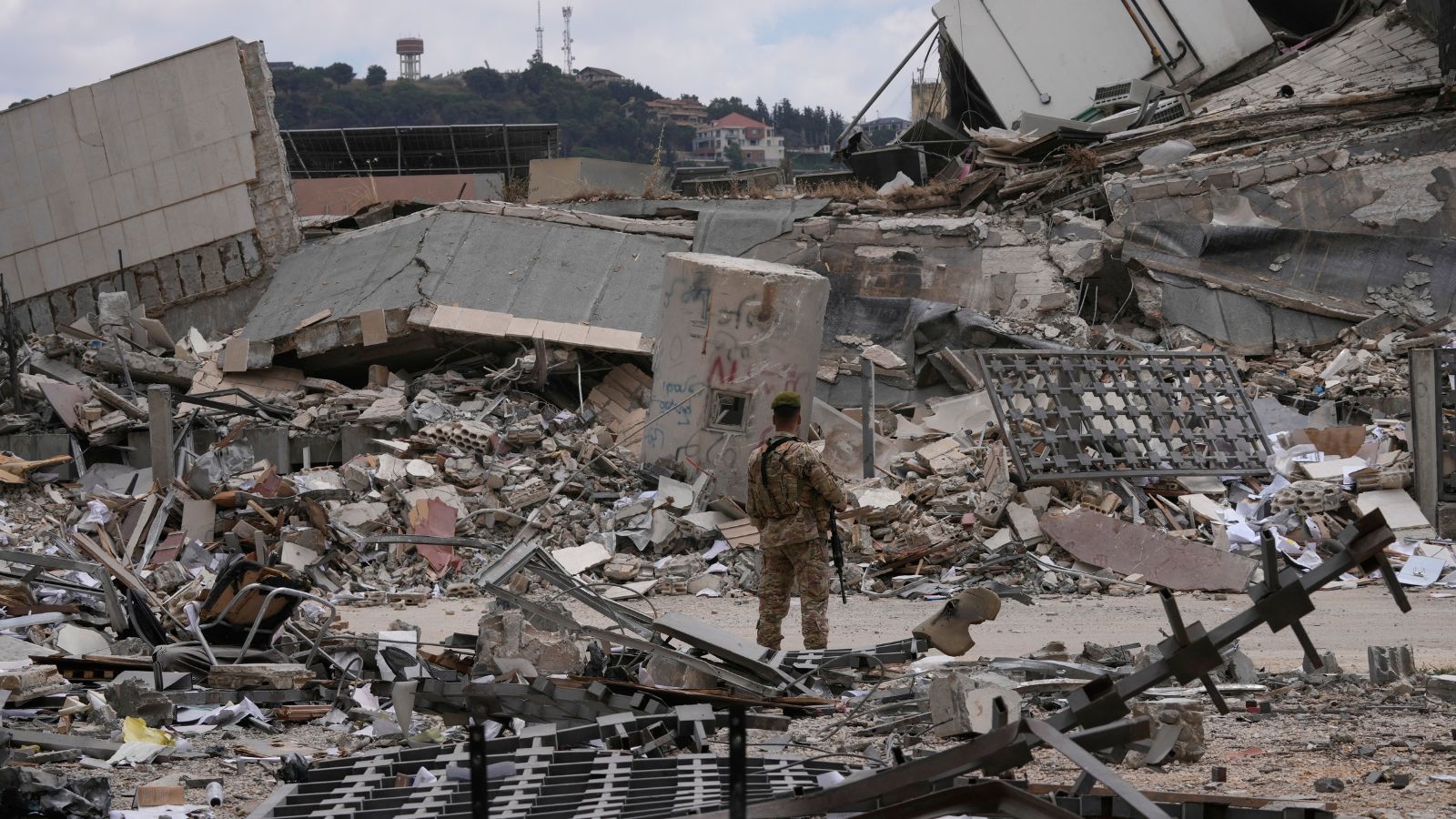
A single industrial warehouse fire in a metropolitan hub like Los Angeles does not merely destroy physical inventory; it triggers an immediate, multi-layered systemic collapse across localized economies. When an industrial asset burns, public discourse frequently centers on immediate property damage and localized displacement. This narrow focus misses the broader structural breakdown. The true cost of a localized disaster is dictated by a compounding series of failures across three distinct domains: immediate operational disruptions, secondary supply chain bottlenecks, and tertiary capital reallocation crises.
Understanding these dynamics requires moving past emotional narratives of abandonment and analyzing the hard mechanics of urban resilience, resource scarcity, and commercial vulnerability.
The Tri-Phasic Cascade of Industrial Disruptions
Industrial disasters do not operate in isolation. They function as a catalyst for a predictable sequence of economic and operational failures. This cascade can be mapped across three distinct phases, each defined by different timelines and resource dependencies.
[Phase 1: Operational Disruption] ──> Immediate asset loss & localized containment
               │
               ▼
[Phase 2: Supply Chain Bottlenecks] ──> Inventory shocks & localized real estate spikes
               │
               ▼
[Phase 3: Structural Realignment]  ──> Capital flight & regulatory overhead inflation
Phase 1: Immediate Operational Disruption (0–72 Hours)
The initial phase is defined by the total cessation of economic activity within the blast radius. The immediate consequences include:
- Direct Asset Liquidation: The total destruction of raw materials, work-in-progress (WIP) inventory, and capital equipment. This represents an immediate balance sheet shock for the affected enterprises.
- Utility Interruption: The forced shutdown of localized power grids, water lines, and telecommunications to facilitate emergency response. This expands the operational freeze to adjacent, physically undamaged businesses.
- Labor Displacement: The sudden halt of hourly and salaried employment within the zone, causing an immediate dip in hyper-local consumer spending.
Phase 2: Secondary Supply Chain Bottlenecks (72 Hours–30 Days)
As the immediate crisis transitions into recovery, the disruption ripples outward into the regional supply chain. The mechanisms driving this phase are structural, not behavioral:
- The Inventory Whiplash Effect: Small to mid-sized enterprises (SMEs) relying on just-in-time (JIT) delivery from the destroyed facility experience sudden stockouts. Unlike enterprise-level firms with diversified geographic footprints, localized businesses rarely maintain safety stock exceeding 5 to 7 business days.
- Micro-Market Real Estate Spikes: The sudden elimination of square footage drives local industrial vacancy rates down, triggering an immediate spike in short-term leasing costs for displaced tenants requiring emergency overflow space.
- Fulfillment Re-routing Inefficiencies: Logistics providers must rapidly re-engineer routes. This structural shift introduces friction, increases drayage costs, and extends last-mile delivery times across the metropolitan area.
Phase 3: Tertiary Capital Reallocation and Structural Realignment (30 Days+)
The final phase determines the long-term viability of the affected commercial ecosystem. The primary drivers during this period include capital flight and shifting regulatory environments:
- Insurance Capital Friction: Insurance payouts for total asset losses are rarely instantaneous. The gap between proof of loss and capital disbursement creates a critical liquidity bottleneck for mid-market firms, often leading to technical insolvency despite viable long-term business models.
- Regulatory Overhead Inflation: Municipalities frequently respond to industrial disasters by tightening building codes, increasing compliance audits, and raising the barrier to entry for new industrial developments. This permanently alters the cost structure of doing business in the area.
The Cost Function of Localized Supply Chain Shocks
To accurately quantify the impact of a warehouse failure on adjacent businesses, we must look at the mathematical realities of operational dependency. The total vulnerability of a localized economy can be expressed as a function of asset concentration, alternative sourcing latency, and capital reserves.
When a critical node in a localized logistics network fails, the financial friction experienced by dependent businesses increases exponentially based on their proximity to the node and their lack of systemic redundancy.
The Vulnerability Index of Interdependent Enterprises
Not all businesses suffer equally during an industrial disruption. The severity of the impact is determined by three rigid operational variables:
- Sourcing Concentration Ratio (SCR): The percentage of a business's total inventory or raw materials routed through the compromised node. An SCR above 40% signals an extreme vulnerability to single-point-of-failure events.
- Lead Time Delta (LTD): The time differential between the original supply source and the fastest available alternative. If the primary warehouse delivered goods within 4 hours, and the closest alternative requires 48 hours, the resulting 44-hour gap represents an operational bottleneck that halts production lines.
- Liquidity Runway (LR): The number of days an enterprise can sustain fixed operational costs (rent, payroll, debt service) without generating top-line revenue from the disrupted supply chain.
The intersection of a high SCR, an extended LTD, and a compressed LR creates a compounding trap for local businesses. While enterprise operations leverage global logistics networks to absorb these shocks, regional small businesses are forced to absorb the financial friction directly on their balance sheets.
Micro-Market Real Estate Distortion and the Displacement Loop
When an industrial building is destroyed, the immediate loss of commercial square footage triggers a predictable distortion in the local real estate market. Industrial real estate markets function on tight capacity margins, especially in primary logistics hubs like Southern California.
The Mechanics of Spot-Market Rent Inflation
The sudden destruction of a major warehouse instantly removes thousands of square feet of usable logistics space from the market. Displaced businesses must secure alternative square footage within a tight geographical radius to maintain their existing client base and workforce.
This creates an artificial demand shock in a highly constrained market. Landlords holding vacant or underutilized industrial space experience a surge in inquiries, allowing them to command premium spot-market rental rates. This inflation prices out lower-margin businesses, forcing them to relocate to secondary or tertiary markets far outside the urban core.
The Long-Term Industrial Flight Mechanism
The displacement loop accelerates capital flight from the affected urban area. The sequence follows a rigid structural path:
[Loss of Industrial Square Footage]
               │
               ▼
[Hyper-Local Vacancy Rates Drop to Near-Zero]
               │
               ▼
[Spot-Market Lease Premiums Increase]
               │
               ▼
[Lower-Margin Enterprises Price Out]
               │
               ▼
[Permanent Relocation to Outlying Logistics Hubs]
This migration permanently alters the local economic tax base and increases the average commute distance for the industrial workforce, introducing long-term labor friction into the regional economy.
Mitigating Systemic Vulnerability: A Blueprint for Regional Resilience
Relying on municipal intervention or federal disaster relief during an industrial crisis is a high-risk operational strategy. Public resources are optimized for life safety and immediate hazard containment, not the preservation of private supply chain continuity. Enterprises must build internal operational redundancies to insulate themselves from localized infrastructure failures.
Dual-Sourcing Networks and Geographic Diversification
The most effective hedge against localized warehouse failure is the elimination of single-point-of-failure logistics structures.
- Implement a 70/30 Sourcing Strategy: Distribute inventory fulfillment across two distinct geographic zones. Route 70% of volume through the primary urban node and 30% through an alternative secondary node located in an independent utility grid zone.
- Establish Pre-Negotiated Shared-Space Agreements: Form reciprocal logistics alliances with non-competing firms in adjacent submarkets. These agreements grant mutual access to emergency cross-docking and short-term storage space in the event of an asset loss.
Operationalizing Digital Twin Logistics
Modern supply chain management requires real-time visibility into infrastructure vulnerabilities. Businesses must transition from static logistics mapping to dynamic, data-driven modeling.
- Map Tier-2 and Tier-3 Supplier Dependencies: Document not only where primary goods are stored, but where components and raw materials are staged. A fire at a third-party packaging supplier can halt a business just as effectively as a fire at a primary fulfillment center.
- Automate Trigger-Based Re-routing: Configure warehouse management systems (WMS) to automatically divert incoming freight to secondary nodes the moment a primary facility experiences an unscheduled operational shutdown exceeding 6 hours. This prevents supply chain stagnation at port terminals and rail yards.
The viability of an urban economic ecosystem depends entirely on the structural redundancy of its private logistics infrastructure. Businesses that treat supply chain resilience as an optional capital expense remain perpetually vulnerable to the next localized structural failure. The path forward requires shifting capital from reactive recovery to proactive network diversification.