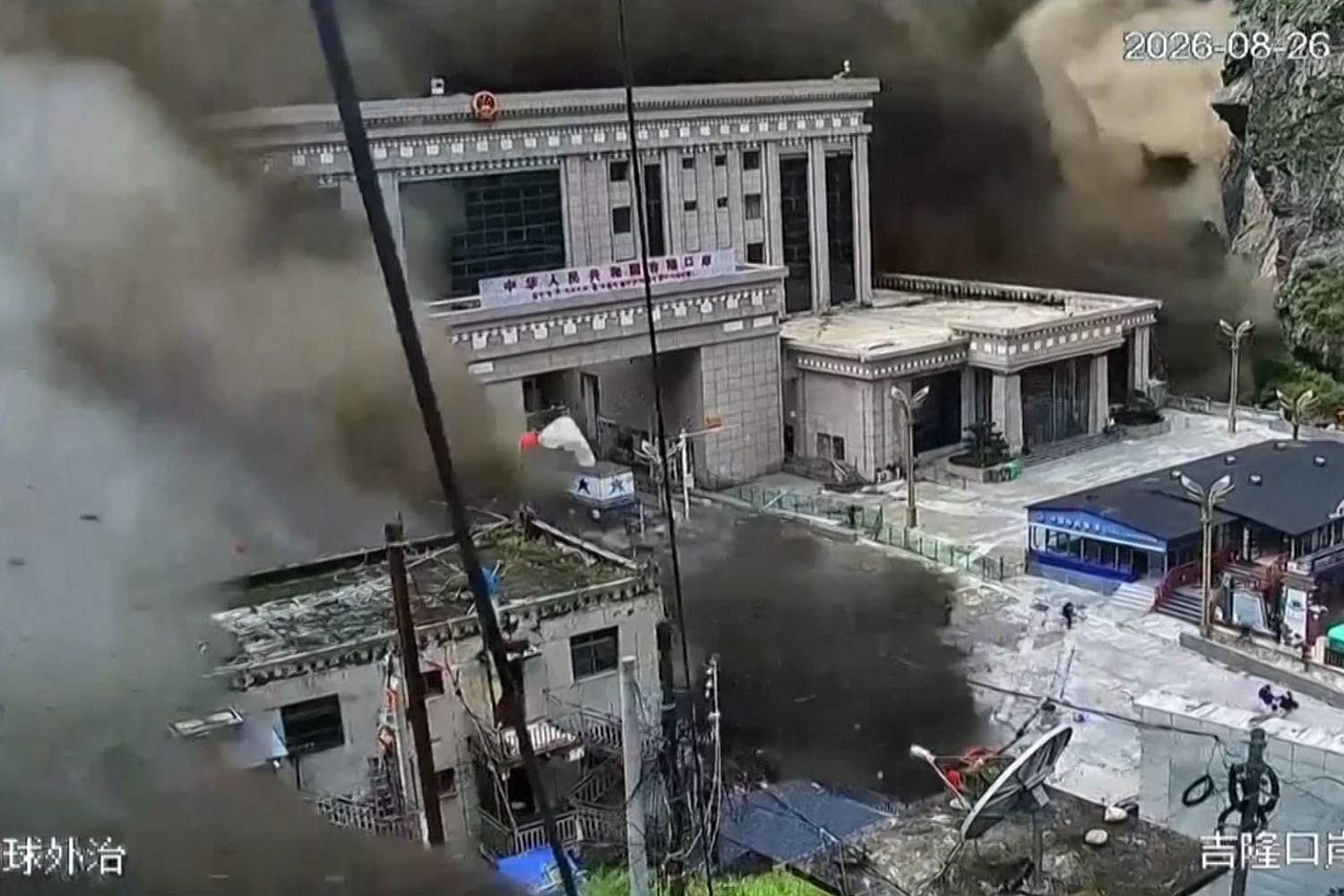
Cross-border hydrological catastrophes operate on strict physical mechanisms where meteorological triggers, seismic disruptions, and fragile infrastructure converge. The flash flood that tore through Nepal's Rasuwa district along the Bhote Koshi and Trishuli river corridors provides a stark analytical case study. By evaluating the vectors of destruction, tracking tourist demographics, and examining hydraulic impact functions, we can deconstruct why standard disaster response metrics fail in transboundary river basins.
The Trigger Matrix and Upstream Mechanics
To understand the scale of devastation in central Nepal, one must isolate the preconditioning factors. The disaster originated across the international border in the Tibet Autonomous Region of China. Seismological data from the German Research Centre for Geosciences recorded a 4.4-magnitude earthquake striking approximately seven minutes before security cameras captured the wall of water, mud, and debris entering the border zone at Timure.
This sequence establishes a clear chain of causation:
- Seismic Shock: The tectonic tremor destabilized high-altitude geological formations, precipitating massive rock-and-ice avalanches or temporary natural landslide dams.
- Hydraulic Impoundment: Accumulated debris formed a temporary barrier across the upper river channel, storing massive potential energy behind an unstable earthen wall.
- Catastrophic Breach: The temporary barrier failed under hydrostatic pressure, releasing a high-velocity surge that compressed hours of normal river discharge into minutes of destructive kinetic energy.
The absence of real-time hydro-meteorological data sharing agreements across the Himalayan watershed creates an information asymmetry. Downstream authorities in Nepal received virtually no advance telemetry warning before the wave front traversed the border at Rasuwagadhi.
Demographics of Exposure and the Pilgrim Vulnerability Function
The human cost of the disaster highlights structural vulnerabilities inherent in high-altitude religious tourism. According to preliminary figures compiled by the Nepal Tourism Board, 384 travelers were initially logged as missing, alongside dozens of local security personnel and residents. Among the foreign contingents, Indian nationals represent the largest demographic concentration, accounting for 105 confirmed missing citizens plus 37 non-resident Indians.
The high concentration of Indian nationals correlates directly with seasonal pilgrimage schedules. The temporal window aligns with transit preparations for the Kailash Manasarovar Yatra crossing into Tibet. Pilgrims cluster tightly within specific geographic bottlenecks:
- Transit Hubs: Border-adjacent settlements like Timure and Syaphrubesi act as mandatory staging grounds for customs clearance and permit verification.
- Logistical Density: Tour operators aggregate travelers in concentrated cohorts, maximizing economic efficiency but exponentially increasing individual exposure during systemic shocks.
- Communication Deserts: Deep gorge topography disrupts cellular and satellite signals, creating extended verification lags where missing status reflects severed communication lines rather than confirmed casualties.
Infrastructure Vulnerability and Energy Sector Cost Functions
The physical impact extended far beyond human displacement, punishing linear infrastructure and capital-intensive energy assets. The Bhote Koshi and Trishuli river basins host high concentrations of run-of-the-river hydroelectric installations designed to exploit steep hydraulic gradients.
When the debris-laden surge moved downstream, it imposed extreme mechanical stress on civil structures:
- Generation Capacity Shock: Approximately 430 megawatts of electricity generation capacity was abruptly knocked offline, representing more than twelve percent of Nepal's total installed hydropower output.
- Transport Severance: The primary 42-kilometer arterial road linking Betrawati in Nuwakot to the Rasuwagadhi border crossing was heavily eroded or completely washed away, isolating rescue zones.
- Structural Erasure: Bridges, customs checkpoints, and police outposts constructed within the high-risk lateral flood plain were entirely dismantled by the kinetic force of boulders suspended in the fluid mass.
This destruction proves that standard environmental impact assessments in the Himalayas frequently underestimate probable maximum flood parameters, often relying on historical stationary hydrological records that fail to account for climate-induced glacial lake expansion and seismic sediment loading.
Tactical Deployment and Search Operations
Rescue architecture in rugged Himalayan terrain faces severe physical constraints. The Nepal Army, Armed Police Force, and civil police deployed fourteen specialized helicopters, drone surveillance units, and canine squads to penetrate isolated pockets along the gorge.
Effectiveness in this operational phase depends on three variables:
- Aviation Access Windows: Narrow mountain valleys limit flight stability, restricting search-and-rescue insertions to optimal meteorological windows.
- Triangulation Speed: Reconciling agency-specific manifests from commercial outfitters like Samrat Tours, Leaf Holiday, and Himalayan Glacier with verified survivor registries dictates the efficiency of resource allocation.
- Downstream Containment: As the flood plume propagated southward into the Narayani and Gandak river systems toward Bihar and Uttar Pradesh, coordinated multi-state alerts forced disaster response forces in India to transition from search protocols to preventive evacuation readiness.
Establish bilateral, real-time seismic and hydrological telemetry loops across the upper Tibetan-Nepalese watershed to eliminate warning latency for downstream infrastructure corridors.