Standard breaking-news coverage of the Trappes and La Verrière shootings treats a 15-to-20-minute mobile assault as a sequence of disconnected horror beats: one man killed, a 12-year-old girl gravely wounded, a terror probe opened, and politicians trading accusations. That flat chronology obscures the operational mechanics that govern a mobile shooting in a dense suburban corridor—specifically how a shooter converts a vehicle into a moving firing platform, why weapon stoppages and local police intervention cap casualty counts, and how a single violent act accelerates polarization during nationwide unrest.
To understand what happened on October 23, 2026—and why security officials and municipal leaders face acute operational trade-offs afterward—this analysis separates verified facts from investigative hypotheses, maps the three operational pillars of the attack, traces the casualty and escalation mechanics, and outlines practical risk-mitigation steps for residents, local institutions, and crisis managers.
Known Facts Versus Investigative Hypotheses
Clear separation between established facts and open questions prevents analytical drift while an anti-terrorism inquiry is active:
- Established operational facts: Shortly after 10:00 a.m. CEST on October 23, 2026, a gunman firing from a grey Renault Clio moved across neighboring municipalities Trappes and La Verrière in the Yvelines department west of Paris over roughly 15 to 20 minutes. One man—26-year-old amateur mixed martial arts fighter Pengo Bossio Wangi—was killed, and multiple people were injured, including a 12-year-old girl who suffered eight gunshot wounds. Five Anti-Crime Brigade (BAC) officers arrested the suspect—partially identified as 39-year-old Kevin T.—near Coignières around 10:20 a.m. and recovered a Second World War-era Sten submachine gun along with tear-gas grenades. Investigators also reported that the suspect's apartment had been booby-trapped with gas canisters and electrical wires connected to a timer, and the National Anti-Terrorism Prosecutor's Office (PNAT) opened a terrorism-related investigation while noting four prior expunged convictions.
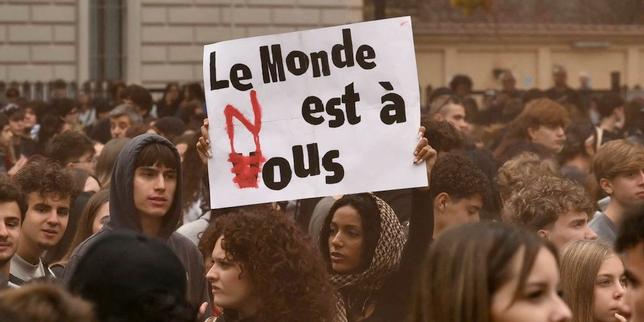
- Contextual conditions: The attack occurred six days after October 17 demonstrations that descended into looting and vandalism in parts of France, amid ongoing cost-of-living and student protests, heavy police deployments, and sharp political disputes over immigration and racism.
- Open investigative questions: Prosecutors and police have had to establish the precise ideological or personal motive—including whether the suspect's reported remarks about post-protest looting reflect a racist or Islamophobic terror motive, psychiatric instability, or a hybrid grievance—and whether any prior warning signs or monitoring gaps existed before the attack. No formal link to an organized political group had been established in early reporting.
The Three Pillars of a Mobile Suburban Attack
Breaking news often treats a lone-actor shooting as pure chaos. In practice, a multi-stop vehicular shooting relies on three interdependent pillars: mobility, firepower, and target density. Removing or disrupting any one pillar alters the outcome.
Mobility as a Force Multiplier and Liability
Driving between Trappes and La Verrière—passing sites such as Avenue Hector-Berlioz, Rue Gérard-Philipe, Square Louis-Pergaud, Boulevard Martin-Luther-King, the Bois-de-l'Étang pharmacy, and Rue Marcel-Rivière—turns a single shooter into a distributed threat across several minutes. A car compresses travel time between crowded civilian spots while complicating static perimeter defense because the threat window at any single street corner lasts only seconds.
The same vehicle creates a tracking liability. A distinct car moving at speed through municipal streets, firing bursts from windows, and leaving identifiable physical and surveillance traces narrows the search area for patrols already operating in the department. That trade-off explains how a five-officer BAC unit intercepted the suspect near Coignières roughly 20 minutes after the opening shots.
Firepower Reliability Versus Lethality
Weapon selection in an improvised or illicit attack involves a sharp reliability-versus-concealment trade-off. Recovering an aging Sten submachine gun alongside tear-gas canisters and finding gas bottles wired to a timer at a residence points to high-intent preparation paired with hardware friction. Vintage or poorly maintained automatic firearms are prone to feeding, extraction, or magazine malfunctions under rapid use.
At the Esso petrol station on Boulevard Martin-Luther-King, a weapon malfunction allowed a wounded victim to seek cover inside the shop before the shooter changed magazines. That single mechanical failure demonstrates a crucial cause-and-effect relationship that headlines miss: lethality in a mobile shooting is governed not just by intent ("to cause a bloodbath" or "as many casualties as possible"), but by mechanical reliability, ammunition discipline, and the time elapsed between bursts.
Target Density and Exposure Window
Suburban commercial streets, pharmacies, petrol stations, medical centers, and residential squares combine predictable foot traffic with open sightlines. Yet exposure is uneven across locations and time of day. Firing at a parked car or a building facade without hitting occupants shows how brief the line-of-sight window is from a moving vehicle, whereas a 12-year-old girl sustaining eight gunshot wounds illustrates how devastating sustained or close-range fire becomes once a target is caught in the open.
Cause-and-Effect Dynamics Missed in Surface Reporting
Standard reporting lists reactions—statements from President Emmanuel Macron, Prime Minister Sébastien Lecornu, Interior Minister Laurent Nuñez, Mayor Ali Rabeh, opposition figures, and local residents—without mapping the causal chain linking the attack to broader instability.
The first causal link runs from macro-level friction to micro-level triggers. When a country is already experiencing cost-of-living protests, student demonstrations, overnight curfews, and intense arguments blaming minority communities or immigrants for civil unrest, high-salience grievances circulate constantly in public debate and online feeds. A volatile individual does not need formal command-and-control from a terrorist cell to interpret national tension as a personal call to action.
The second causal link runs from targeted perception to communal shock. When residents and local officials point to victims' North African or African backgrounds and a 12-year-old girl wearing a headscarf—while national leaders label the act a racist terrorist attack—the harm extends beyond physical trauma. Neighborhoods with high concentrations of minority residents experience collective vulnerability, turning a local crime scene into a national flashpoint during rallies and weekend protest deployments.
The third causal link is the retrospective surveillance paradox. After an attack, families and commentators routinely ask whether authorities monitored the suspect closely enough, especially when prior expunged convictions or domestic devices are discovered. Intelligence and policing agencies operate under strict legal thresholds and resource limits: thousands of individuals exhibit grievances or eccentricities, while only a tiny fraction cross into violent execution. Retrospectively connecting dots after a shooting is far easier than forecasting which low-signal or legally dormant profile will ignite during a week of nationwide unrest.
Practical Response and Risk-Mitigation Logic
For residents in affected areas, local facility operators, and crisis-response teams, reducing harm during and after a mobile shooting requires ordered actions rather than improvised reactions:
- Prioritize hard cover over concealment during active gunfire. If shots sound nearby, move immediately behind solid structural barriers—masonry walls, concrete pillars, or engine blocks—rather than thin glass storefronts or parked cars, and stay low until law enforcement clears the area.
- Delay movement until perimeter containment is verified. Because a mobile shooter can cover several kilometers in minutes, stepping outside to film, check on noise, or drive immediately toward an active incident zone increases exposure to both secondary gunfire and high-speed police intercepts.
- Audit public-facing entry and shelter points. Pharmacies, petrol stations, clinics, and municipal buildings should review lockable interior rooms, blind spots from street-level glazing, and camera retention so staff can shelter patrons rapidly and preserve high-resolution footage for investigators.
- Separate verified police advisories from unverified social clips. Circulation of raw surveillance video or rumors about motives during active unrest inflames street tensions and complicates crowd control; rely on official prosecutor and municipal updates for verified details.
- Pair security presence with de-escalation and trauma support. Heavy police deployments address physical order and protest spillover, but restoring civic stability also requires transparent investigative communication and visible support for grieving families and injured youths.
Limitations and Strategic Reality
No security measure eliminates lone-actor violence entirely. Expanding broad surveillance without clear legal standards erodes civil liberties and drowns analysts in false positives, while heavy-handed crowd policing during simultaneous protests can escalate street clashes rather than calm them. In addition, an attacker using a vehicle and an older firearm can still inflict fatal harm in seconds before patrol units close the distance.
The decisive strategic play for French authorities and municipal leaders is to decouple rapid judicial and forensic attribution from partisan protest narratives while tightening local rapid-response coverage around high-footfall suburban corridors. Delivering fast, transparent facts from the anti-terrorism investigation denies rumor cycles oxygen, while positioning mobile patrol units and clear civilian shelter protocols along suburban commercial arteries shortens the window between the first shot and effective containment.