Ink.
That is what Reza worries about first. Not the rising price of bread, though that arithmetic is a daily humiliation. Not the shifting lines on a geopolitical map drawn in air-conditioned rooms six thousand miles away. Ink. The chemical compound that lets him print the small packaging labels for a pharmaceutical distributor in Tehran. Without it, the bottles stop moving. Without the bottles, the pharmacy shelves empty. Without the shelves, a quiet panic begins to spread through hospital corridors.
Sanctions are rarely experienced as a sudden explosion. They arrive as an accumulation of friction.
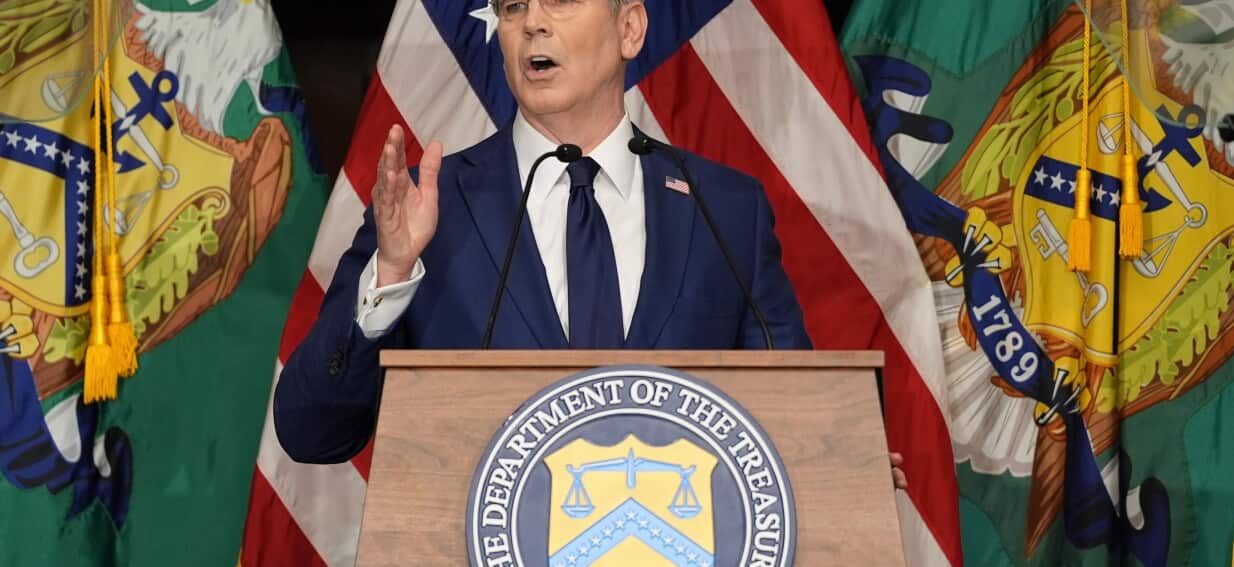
To understand the sweeping new sanctions campaign unveiled by Washington—a massive escalation designed to achieve what officials term economic asphyxiation—you have to look past the dense acronyms of the Treasury Department. You have to look past the bureaucratic announcements and the dry press briefings. You have to watch what happens when a nation of eighty-eight million people is systematically unplugged from the plumbing of global finance.
Money moves like water. When you dam the rivers, people do not stop needing to drink. They simply start digging in the dirt for moisture.
For months, the policy apparatus in the United States has watched the Middle East curdle into deeper proxy conflicts and accelerating nuclear developments. The response has been a return to an old weapon: maximum pressure, supercharged. The new restrictions target the remaining vascular tissue connecting Iranian commerce to the outside world—petrochemical networks, shadow shipping fleets, and foreign financial intermediaries who thought they could operate in the gray zones of international trade.
The architects of this campaign call it precision. They argue that tightening the screws on financial institutions and maritime brokers will starve the regime of the hard currency it needs to fund regional militias and advanced weapons programs.
On paper, the logic is clean. Mathematics has no conscience.
In practice, Reza sits at a worn wooden desk in a cramped office overlooking a congested Tehran street, staring at an invoice that cannot be paid. The standard routing codes—the swift messages that normally allow money to hop from a desk in Asia to a desk in the Middle East in a matter of seconds—returned a cold, blank error. Not denied. Erased. As if the bank on the other end no longer existed.
That is the true nature of economic isolation. It creates ghost transactions.
Consider what happens next in a market cut off from official banking channels. When legitimate trade becomes illegal under secondary sanctions, legitimate traders exit. Who remains? Smugglers. Speculators. Organized networks that thrive on chaos. The cost of everything doubles, then triples, then distorts into a surreal theater where a carton of eggs requires a mental calculation usually reserved for high-stakes stock options.
Economists call this the contraction of the gross domestic product. A teacher living in Isfahan calls it watching her retirement savings evaporate into the thin air of inflation before she can afford to buy new shoes for her daughter.
The policy assumes a linear cause-and-effect relationship: squeeze the economy hard enough, and the populace will rise to demand a change in behavior from the top. History offers a complicated ledger on this theory. More often, a population under siege turns inward. Survival becomes a full-time occupation. When you are entirely consumed by the desperate mechanics of securing tomorrow's medicine or next week's fuel, the luxury of political revolution recedes into the background. You do not storm the palace when you are waiting in line for three hours to buy subsidized chicken.
This is the invisible human cost of modern statecraft.
The new measures target the architecture of evasion. For years, Iranian oil has found its way to refineries through a labyrinth of dark fleet tankers—aging vessels with their transponders switched off, transferring crude from hull to hull in the open ocean under the cover of night. The United States and its allies are now expanding their sights to penalize any port, any captain, and any insurer willing to touch these floating ghosts.
It is an attempt to choke the last remaining artery of state revenue.
Yet, human ingenuity in the face of desperation is a relentless force. Where official ports close, underground barter systems expand. Cryptocurrency wallets flicker on encrypted messaging apps. Hawala networks—centuries-old informal value transfer systems based on trust and family honor across borders—hum with activity. The state adapts. The black market deepens its roots. And the ordinary citizen pays the tax of illegality on every basic necessity of modern life.
We are watching the deliberate decoupling of one of the world's oldest civilizations from the modern global grid.
The architects in Washington believe this is the only language remaining. Diplomacy has stalled. Military intervention carries unthinkable risks of regional conflagration. So they turn the valve tighter. They pull the oxygen from the room and wait to see who suffocates first.
Back in Tehran, the afternoon light fades against the concrete balconies. Reza closes his ledger. The ink he needs is still sitting in a warehouse across the Gulf, waiting for a ship that cannot find insurance, waiting for a payment that cannot cross a border, waiting for a world that has decided his livelihood is an acceptable collateral damage in a distant game of chess.
The room grows dark, long before the sun actually goes down.