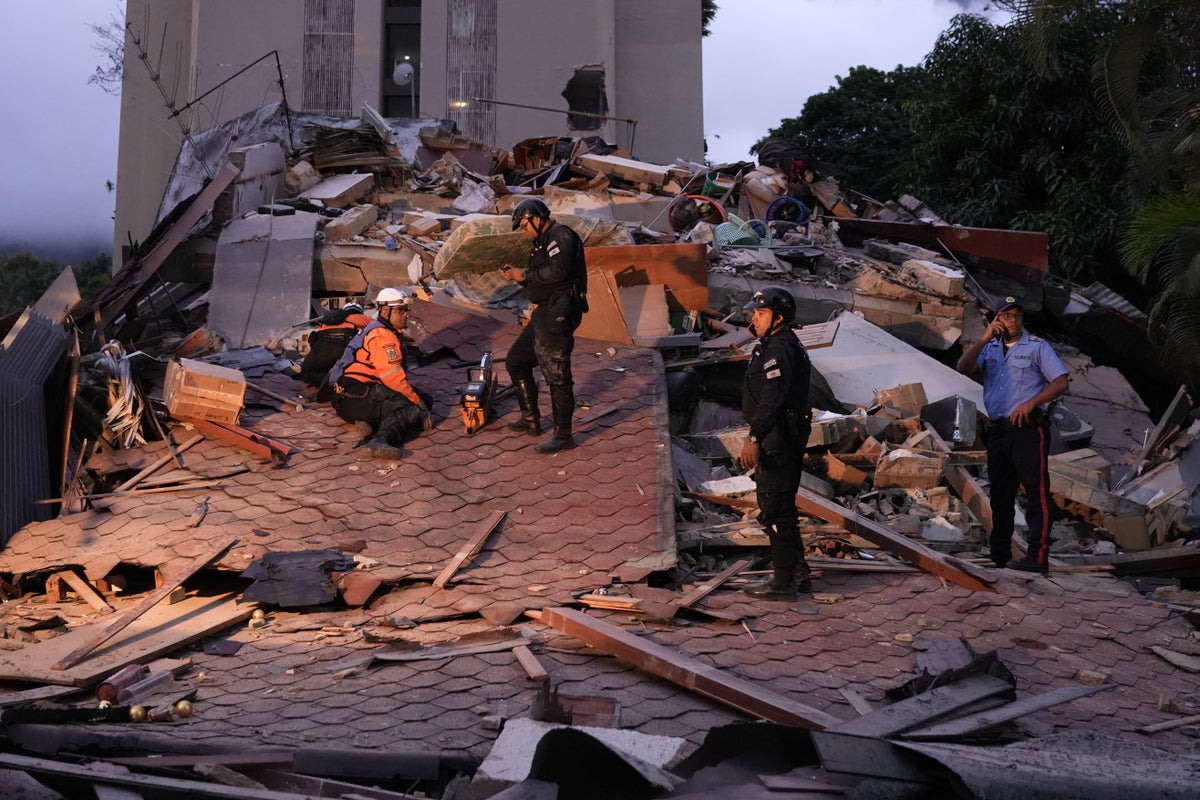
On the evening of June 24, 2026, Venezuela suffered a catastrophic seismic doublet when two massive earthquakes struck the north-central coast less than a minute apart. A magnitude 7.2 foreshock hit at 6:04 p.m. local time near San Felipe, followed just 39 seconds later by a crushing magnitude 7.5 mainshock centered near Yumare. The back-to-back earthquakes instantly pulverized substandard concrete high-rises in Caracas, ruptured gas pipelines in La Guaira, and prompted a grim U.S. Geological Survey warning that total casualties could eventually range between 10,000 and 100,000 people.
This was not a surprise to seismologists. For decades, experts warned that the strike-slip fault system cutting across the Caribbean and South American tectonic plates was a ticking clock. What transformed this natural phenomenon into an unprecedented humanitarian disaster was a profound, multi-decade collapse of regulatory oversight, infrastructure maintenance, and structural engineering enforcement.
The Brutal Mechanics of a Doublet Event
Earthquakes are typically understood as a single massive shock followed by a series of smaller aftershocks. A seismic doublet defies this expectation. In this rare and highly destructive sequence, the first rupture does not relieve the tectonic stress along the fault system. Instead, it misdirects that kinetic force, instantly triggering an adjacent section of the fault that was already strained to its absolute limit.
The 7.2 magnitude foreshock hit at a shallow depth of roughly 15 kilometers. Before residents could process the initial violent shaking, the 7.5 mainshock struck even closer to the surface at a depth of just 10 kilometers. Shallow earthquakes maximize the energy transferred directly to surface structures. By the time the second shock wave rippled through the region, the foundational integrity of hundreds of structures had already been compromised by the first wave.
In Caracas, located nearly 180 miles east of the epicenters, the geological basin amplified the seismic waves. The sediment-filled valley acts much like a bowl of jelly, trapping and multiplying the shaking frequencies. Middle-class neighborhoods like Altamira saw multi-story apartment buildings sway violently before their lower floors pancaked entirely. Further down the coast in La Guaira, the sudden displacement of land shattered subterranean infrastructure, sparking immediate fires from fractured natural gas lines that illuminated the night sky.
Decades of Deferred Maintenance and Structural Decay
To attribute the devastation solely to tectonic force is to ignore the human choices that guaranteed this scale of ruin. An earthquake measures the structural honesty of a city. For the past twenty-five years, Venezuela has endured an economic and institutional contraction that stripped its building codes of any real authority.
Caracas is a city defined by two architectural realities. On one side are the formal, aging concrete towers built during the oil booms of the late twentieth century. On the other are the vast, self-built informal settlements known as barrios that cling precariously to the surrounding hillsides. Both environments were uniquely vulnerable to a doublet event, though for completely different reasons.
The formal high-rises were supposed to adhere to stringent seismic design guidelines established by the Venezuelan Foundation for Seismological Research. However, corruption and severe material shortages over the last two decades meant that building inspections became a bureaucratic formality. Substandard concrete, mixed with unwashed marine sand containing corrosive salts, was frequently substituted to cut costs. Over time, the internal steel rebar rusted, weakening the concrete from within. When the June 24 tremors hit, these brittle concrete columns failed in shear, losing their load-bearing capacity instantly.
The informal barrios faced an even simpler, more terrifying arithmetic. Built without engineering oversight, these brick-and-mortar homes lack structural framing or anchored foundations. They rely on gravity and the support of neighboring walls. The double shock acted as a giant chisel, knocking out the bottom row of homes and causing entire hillsides to slide down in a torrent of masonry and dust.
Institutional Paralysis in the Golden Hour
In emergency medicine and disaster response, the first sixty minutes after an event are known as the golden hour. It is the window during which rapid rescue operations yield the highest survival rates for trapped individuals. In Caracas, that window slammed shut due to immediate, systemic infrastructure failure.
Acting President Delcy Rodriguez declared a national state of emergency shortly after the tremors subsided, but a declaration carries little weight when the physical apparatus of the state is broken. Simon Bolivar International Airport in Maiquetia was forced to close immediately due to severe structural cracking on its runways and the collapse of its control tower ceilings. This effectively isolated the capital from incoming heavy international rescue equipment and foreign medical teams.
The domestic response was hampered by years of underfunding. Interior Minister Diosdado Cabello urged calm on state television, acknowledging that rescue protocols had been activated. Yet eyewitness reports from the ground detailed a starkly different reality. In downtown Caracas, firefighters and civil defense workers arrived at collapsed sites carrying only hand tools and flashlights. The heavy earth-moving equipment, cranes, and specialized acoustic sensors needed to locate survivors beneath tens of thousands of tons of concrete were largely non-functional, victims of a long-standing lack of spare parts and maintenance capital.
Compounding the crisis was the immediate failure of the municipal water and electrical grids. Power lines snapped across north-central Venezuela within seconds of the 7.2 foreshock, plunging hospital emergency rooms into darkness. While some facilities utilized backup generators, the lack of running water made sterile surgical operations nearly impossible. The communication network collapsed as mobile towers lost power, leaving thousands of people digging through the rubble of their homes using nothing but their bare hands and the light from their mobile phones.
The Transnational Toll of Economic Ruin
The true scope of the casualty count will take months to verify. The wide variance in the early estimates from the U.S. Geological Survey points to a fundamental reality of modern Venezuela. No one knows exactly how many people are currently living in these high-risk urban zones.
A massive migration wave over the past decade saw millions of citizens leave the country, but it also caused an internal migration shift. Rural Venezuelans flooded into the capital looking for access to basic services, often overcrowding older, unstable structures or building fragile extensions on top of existing apartments. This dense, unregulated concentration of human lives in structurally compromised buildings explains why international agencies fear the death toll could skyrocket past early official counts.
Geophysicists point out that the Caribbean-South American plate boundary will continue to adjust to this massive release of energy. More than twenty significant aftershocks were recorded within the first twelve hours, each one threatening to bring down the thousands of buildings that are still standing but structurally crippled. The immediate task of rescue is transitioning into a prolonged crisis of displacement, disease, and economic paralysis.
A nation cannot rebuild its capital when its treasury is empty, its engineering talent has largely fled abroad, and its logistical hubs are in ruins. The twin earthquakes of June 24 did not create the vulnerabilities that are currently claiming thousands of lives. They merely exposed them, violently and completely, in the span of thirty-nine seconds.