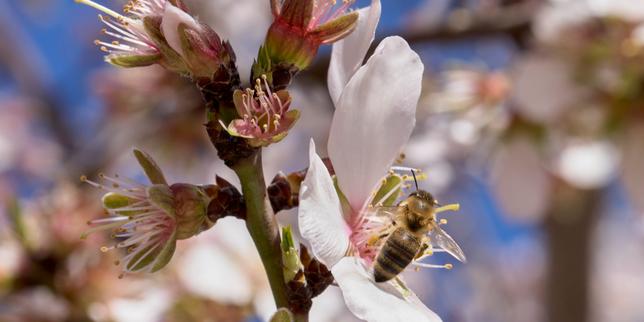
The Australian almond industry operates within a fragile biological dependency that exposes billions of dollars in agricultural output to systemic risk. Monocultural agricultural scaling requires an annual industrial mobilization of honeybee colonies, creating a single point of failure in the supply chain. When an external parasite compromises this biological vector, the entire economic architecture of the sector faces severe capitalization pressure.
Understanding this vulnerability requires dissecting the operational mechanisms that connect commercial apiculture to permanent orchard yields. The system relies on managed migratory pollination, where hives are transported across state lines to service distinct phenological windows. Any restriction on hive mobility or mortality spike alters the cost function of nut production, shifting the economic burden directly onto farm gate margins.
The Structural Mechanics of Migratory Pollination Dependency
Commercial almond production in Australia is concentrated in the Murray-Darling Basin, where expansive blocks of self-sterile cultivars require cross-pollination by insect vectors to set commercial yields. This agricultural model diverges sharply from natural ecosystems by creating massive, highly concentrated food deserts for bees outside the brief six-week bloom period, followed by an overwhelming influx of nutrient-dense forage that demands precise timing.
Orchard operators lease hundreds of thousands of hives annually, paying commercial beekeepers per colony. This dynamic binds the financial health of the horticulture sector to the biological health of apiculture enterprises.
- Temporal Concentration: The pollination window is fixed by ambient temperature and tree biology, forcing peak demand for hives into a rigid calendar window of forty-five days.
- Geographic Concentration: Over seventy percent of production resides within specific irrigation districts, creating localized density thresholds that amplify disease transmission risks among clustered hives.
- Vector Exclusivity: Apis mellifera remains the sole economically viable pollinator at scale, as native bee populations lack the colony numbers, managed mobility, and foraging behavioral traits required for industrial-scale orchard saturation.
The interdependence creates a classic externality problem. Orchardists capture the upside of high kernel prices per hectare, while beekeepers absorb the systemic biological risks of colony management, pest pressures, and chemical exposure. When a parasite enters this tightly wound loop, the risk transfer mechanism breaks down because replacement hives cannot be manufactured or imported on demand.
Pathogen Vector Dynamics and Economic Friction
The introduction and spread of Varroa destructor into Australian biosecurity perimeters shifts the operating environment from managed husbandry to defensive containment. Unlike endemic pests that beekeepers manage through established chemical rotations, this ectoparasite targets developing brood, weakens adult bees by vectoring debilitating viruses, and shortens colony lifespans drastically.
The economic friction manifests across three distinct operational layers.
First, treatment costs escalate capital expenditure for apiculturists. Chemical controls, mechanical screen floors, and continuous hive monitoring require labor hours and specialized inputs that squeeze already narrow profit margins within the honey production and pollination service sectors.
Second, colony mortality and depopulation reduce the total supply of grading-ready hives available for orchard deployment. A weaker hive deploys fewer foragers, reducing the pollen grain transfer rate per flower and directly depressing the kernel-to-flower conversion ratio.
Third, regulatory containment protocols—such as inter-state border closures, movement permits, and mandatory sanitization stations—introduce logistical delays. In a biological system where missing the bloom window by seven days results in catastrophic crop failure, regulatory friction translates directly into unrecoverable yield loss.
[Pathogen Incursion]
       │
       ▼
[Colony Depopulation & Treatment Costs]
       │
       ▼
[Logistical Border Restrictions]
       │
       ▼
[Deficit of Grading-Ready Hives]
       │
       ▼
[Orchard Pollination Deficit]
       │
       ▼
[Severe Kernel Yield Contraction]
This sequence illustrates why individual farm-level mitigations often fail. An orchardist can optimize irrigation, nutrition, and pruning, but without adequate vector density during the receptive stigmatic phase, yield potential collapses before fruit set even begins.
Capital Allocation and Risk Mitigation Failures
Current industry strategies for managing pollination exposure suffer from systemic underinvestment in alternative resilience frameworks. Traditional management assumes that biological inputs will remain perpetually elastic, mirroring industrial commodities where supply responds to price signals. Biology does not scale linearly.
Capital allocation within major horticultural firms has historically favored land acquisition, water entitlement security, and processing automation over biological supply chain redundancy. This misallocation leaves enterprises exposed to external shocks that dwarf standard operational variances.
- Insurance Market Gaps: Comprehensive crop insurance covers weather events and commodity price drops, but parametric or indemnity-based insurance for pollination vector failure remains largely undeveloped or prohibitively expensive due to moral hazard and correlation risks.
- Artificial Pollination Limitations: Mechanical dusters and drone-assisted pollen dispersion struggle to replicate the targeted, thermal-guided efficiency of a honeybee worker navigating complex floral architecture. These technologies function as expensive stopgaps rather than full replacements.
- Alternative Vector Underdevelopment: Research into managed populations of non-Apis pollinators—such as Osmia species or Bombus management where legally permitted—has suffered from chronic underfunding, leaving the industry structurally dependent on a single species.
The absence of a diversified biological portfolio means that management teams are forced into reactive posture management. When regional hive shortages occur, bidding wars for available colonies drive lease prices upward, disproportionately penalizing mid-tier growers who lack long-term contracts with major apiary operators.
Strategic Capital Realignment for Biological Exposure
Mitigating systemic vulnerability requires a fundamental shift in how agricultural enterprises value and secure biological inputs. Long-term solvency depends on internalizing pollination risk rather than treating it as an outsourced service managed entirely by third-party apiarists.
Forward-thinking organizations must integrate apicultural assets directly into their operational structures. Establishing captive breeding programs, co-investing in disease-resistant stock research, and securing multi-year exclusive deployment contracts with regional beekeepers create structural moats against spot-market volatility.
Orchard design itself must evolve. Transitioning away from uniform, single-cultivar blocks toward mixed-varietal layouts with staggered bloom profiles can smooth the demand curve for bees, reducing peak-load stress on migratory hives. Furthermore, establishing permanent, pesticide-managed floral refuges within orchard perimeters enhances forager longevity and reduces baseline colony stress prior to the primary pollination event.
Capital markets will increasingly penalize horticultural entities that fail to disclose and manage biological dependency ratios. Investors must demand granular auditing of pollination supply chains, treating biosecurity compliance and vector redundancy with the same rigor applied to water rights and debt covenants. The era of treating honeybees as a limitless, free utility has closed; future profitability belongs to those who treat biological security as the primary determinant of asset value.