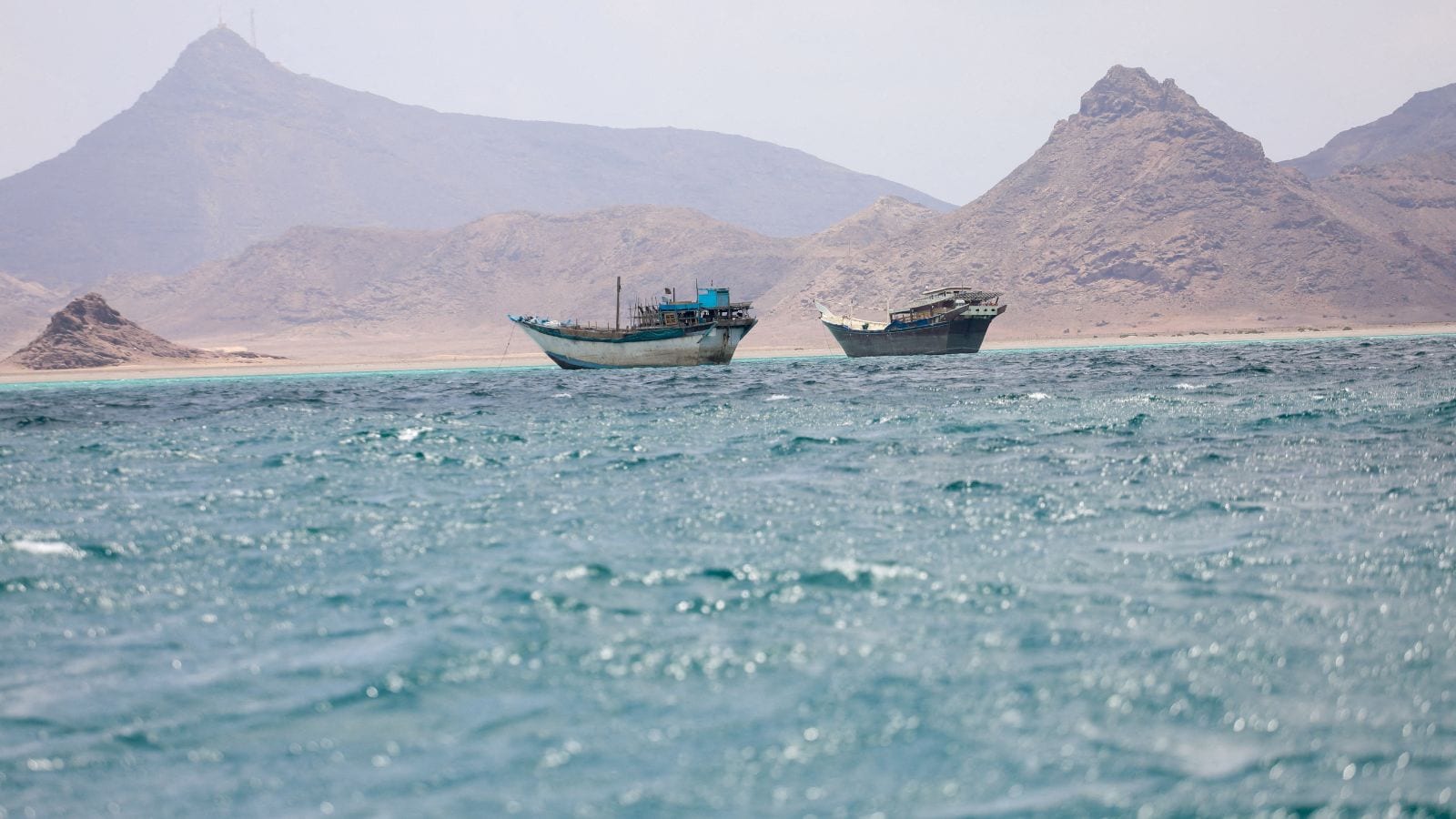
When a commercial asset vanishes from telemetry monitors during a regional geopolitical blockade, the explanation rarely involves mysterious forces. It maps directly to structural vulnerabilities in maritime tracking, insurance arbitrage, and the physical constraints of emergency towing operations. The narrative surrounding vessels lost in the Bab el-Mandeb corridor and subsequently reappearing in distant ports exposes the hidden mechanics of global supply chain redirection.
Understanding how a disabled hull transitions from an open-water casualty to an anchored asset in a secure harbor requires deconstructing three distinct operational phases: kinetic disruption, passive drift dynamics, and commercial salvage logistics.
The Cost Function of Transit Disruption
Maritime choke points operate on tight throughput tolerances. When regional security deterioration forces vessel operators to bypass the Suez Canal in favor of the Cape of Good Hope, the foundational economics of global freight shift instantly.
The primary cost variables include:
- Fuel Consumption Over Distance: Diverting around the African continent adds approximately 3,500 to 4,000 nautical miles to an Asia-to-Europe voyage, increasing bunker fuel burn by hundreds of metric tons per transit.
- Time Charter Equivalents: Extended transit durations absorb global fleet capacity, artificially tightening container and bulk availability and driving up spot rates.
- Insurance Risk Premiums: War risk underwriters reprice Hull and Machinery (H&M) policies dynamically based on proximity to active conflict zones, turning marginal routes into loss-making ventures.
When a ship attempts to thread these dangerous waters and sustains structural damage, the immediate priority shifts from commercial delivery to hull preservation. The disappearance of tracking signals is rarely absolute; rather, it is a function of turned-off Automatic Identification Systems (AIS) to evade targeting, combined with drift vectors determined by local surface currents.
The Physics of Drift and Salvage Secrecy
A disabled vessel struck by kinetic ordnance in the southern Red Sea does not simply sink or stay stationary. Surface currents driven by monsoon patterns push unpowered hulks along predictable trajectories toward territorial waters where salvage syndicates or allied naval patrols can intervene.
During this blackout window, commercial operators and regional authorities engage in high-stakes informational asymmetry. Shipowners obfuscate exact coordinates to prevent secondary strikes or hostile seizure by non-state actors. This operational security creates the illusion of a vessel completely vanishing from global databases.
The physical mechanics governing this phase involve:
- Ballast and Buoyancy Management: As water ingresses through breached hull plating, the vessel's trim changes, altering its radar cross-section and sub-surface drag coefficient.
- Towing Bottlenecks: Commercial tug availability in the Western Indian Ocean is severely constrained. Securing a Lloyd's Open Form salvage contract takes days of legal and financial negotiation between underwriters, owners, and salvors before a tow line is ever secured.
- Port Refuge Refusals: Littoral states frequently deny entry to damaged carriers bearing hazardous fertilizer or fuel cargo due to environmental liabilities, forcing salvors to tow vessels thousands of miles further than initially anticipated—sometimes across the Arabian Sea toward the western coast of the Indian subcontinent.
The Mechanics of Port Re-emergence
When a long-lost hull finally drops anchor in a secure jurisdiction like India, it signals the conclusion of a complex financial and engineering triage. The vessel arriving in port is physically altered, bearing structural repairs or ballast adjustments designed to maintain positive stability during the long tow away from conflict zones.
The decision to berth in Indian shipyards rather than closer Middle Eastern ports comes down to dry-dock capacity, labor cost structures, and regulatory flexibility regarding damaged hazardous carriers. South Asian ship-repair hubs possess the heavy-lift crane capacity and specialized metallurgy teams required to patch ballistic damage or manage compromised cargo holds safely.
Fleet operators managing high-risk corridors must build predictive logistics models that account for multi-week salvage windows and forced port diversions. Future routing algorithms cannot rely on static distance metrics alone; they must incorporate dynamic conflict-zone decay rates, real-time tug availability indices, and secondary port acceptance thresholds to accurately price the true cost of maritime disruption.
RUBYMAR Sinks in the Red Sea due to Houthi Attack | Impact on Undersea Cables & Global Shipping
This video provides an in-depth breakdown of how vessel damage in the Red Sea triggers extended drifting phases, environmental hazards, and complex salvage outcomes similar to long-range towing operations.