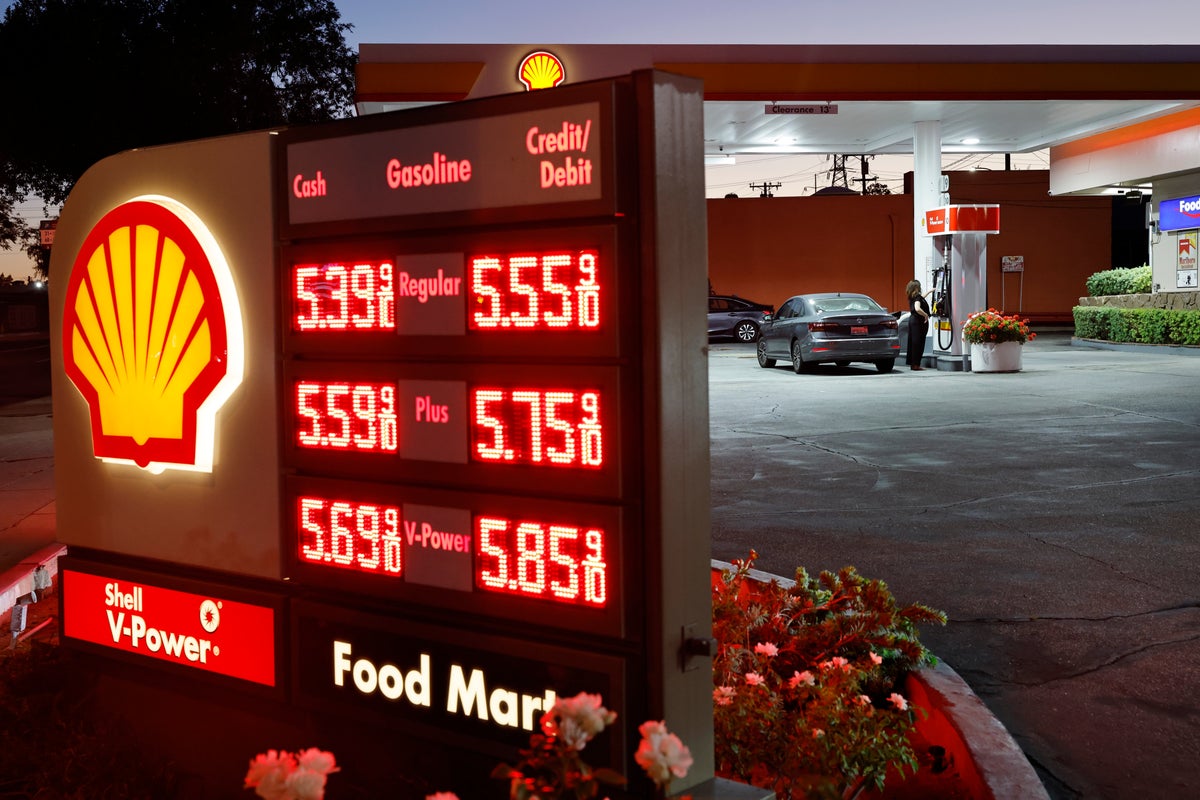
Retail gasoline pricing operates as a real-time transmission mechanism for global geopolitical risk. When a headline hits the wires declaring that an interim ceasefire has collapsed, the physical reality of fuel delivery does not change instantly. Instead, the financialized layer of the energy market reacts to a sudden shift in probability distributions. The underlying drivers of the recent retail price movement—exemplified by the five-cent overnight spike in the US national average to $3.84 per gallon following renewed hostilities between the US and Iran—demonstrate that pump prices are dictated by the marginal cost of crude oil, global refining capacity constraints, and immediate paper market adjustments.
Understanding this volatility requires discarding the notion that retail prices reflect past procurement costs. Gas stations price their inventory on replacement value, which is tied directly to the global spot market.
The Three Pillars of Fuel Pricing Mechanics
To deconstruct why a breakdown in diplomatic negotiations forces immediate retail adjustments, the cost structure of a single gallon of gasoline must be isolated. The retail price at the pump is governed by a strict four-part cost allocation framework:
- Crude Oil Component (45–55%): The largest variable expense. Because oil is globally fungible, local pump prices remain tied to global benchmarks like Brent and West Texas Intermediate (WTI), regardless of domestic production volumes.
- Refining Costs and Margins (15–25%): The cost of cracking heavy or light sweet crude into consumable transportation fuels. This fluctuate based on regional refinery utilization rates and seasonal blending configurations.
- Distribution and Marketing (10–15%): The physical logistics of moving product via pipeline, barge, truck, and operating retail infrastructure.
- Taxes (10–15%): Fixed federal, state, and local excise taxes that provide a rigid price floor.
Geopolitical instability primarily distorts the first two pillars. When risk premiums expand, the paper market immediately prices in a structural supply deficit.
The Chokepoint Elasticity Function
The primary transmission vector for the current market shock is the Strait of Hormuz, a maritime chokepoint through which roughly 20% of global oil consumption and 20% of global liquefied natural gas (LNG) pass daily. The threat of an active conflict or a physical blockage creates a severe structural bottleneck.
The economic implications can be expressed through a basic supply elasticity framework. Because short-term demand for transportation fuel is highly inelastic—consumers cannot instantly alter commuting habits or supply chains—even a minor 1% to 2% physical reduction in global crude supply yields a disproportionate, non-linear increase in price. When several tankers face interdiction or physical strikes, insurance premiums for maritime transit escalate rapidly. These war-risk premiums are immediately passed down through the supply chain, raising the landed cost of crude at refineries world-wide.
The Velocity of Paper Market Transmissions
A common point of confusion is how a diplomatic breakdown in the Middle East translates into an immediate price hike at a local domestic service station within twenty-four hours. This lag-free transmission is the result of futures market mechanics and replacement-cost pricing strategies utilized by distributors.
Commodity Futures as Predictive Real-Time Pricing
Refiners and large-scale distributors do not purchase oil on the spot market day-by-day; they utilize futures contracts to lock in supply months in advance. When the executive branch declares a ceasefire "over," the prompt-month futures contracts for Brent and WTI surge—as seen in the recent 5% jump to $77.86 per barrel.
[Geopolitical Flare-Up]
       │
       ▼
[Prompt-Month Futures Surge] ──► [Wholesale Rack Price Inversion]
                                              │
                                              ▼
                                 [Retail Replacement-Cost Pricing]
This paper market surge instantly alters the wholesale "rack price"—the price a tank truck pays to load fuel at a distribution terminal. Retail station operators monitor these wholesale terminal prices continuously. If a retailer sells their current underground tank inventory at yesterday's lower price while knowing that the next delivery will cost 10 cents more per gallon, they will lack the capital required to replenish their inventory. To maintain liquidity, operators adjust their street prices upward almost in lockstep with the electronic futures market.
Domestic Supply Vulnerabilities and Export Parity
A frequent counterargument is that record-breaking domestic crude production should insulate local markets from international shocks. This perspective overlooks the mechanism of export parity.
Because domestic producers can sell their crude to international buyers at global market rates, domestic refineries must match those international prices to secure local supply. Furthermore, a decade of infrastructure investment has deliberately linked domestic supply fields to global export hubs. While this maximizes capital efficiency during times of peace, it exposes domestic consumers to global volatility. Local inventory cannot be hoarded or insulated from the global pricing index without severe government intervention, which would distort supply lines further.
Secondary Volatility: The Compliance Credit Squeeze
While geopolitical risk commands the headlines, a secondary, systemic friction point amplifies these price spikes within the domestic market. Refiners are legally obligated to comply with federal biofuel mandates, requiring them to blend specific volumes of renewable fuels into the gasoline supply or purchase compliance credits known as Renewable Identification Numbers (RINs).
The structural challenge intensifies when the Environmental Protection Agency (EPA) enforces record-high blending targets—such as the roughly 25.82 billion credit requirement mandated for current operations.
- The Blend Wall Limitation: Most domestic infrastructure is optimized for E10 gasoline (10% ethanol). Forcing higher volumes into the system hits physical distribution constraints.
- Credit Price Escalation: When actual physical blending cannot keep pace with escalating regulatory quotas, refiners are forced to buy compliance credits on the open market.
- Cost Transference: These credits carry an explicit cash value that functions exactly like an additional variable tax. Refiners treat the cost of acquiring RINs as an immediate operational expense, passing the premium directly into the wholesale price of regular gasoline.
When a geopolitical shock pushes the baseline cost of crude upward, the added burden of elevated compliance credits creates a high price floor that prevents retail prices from cooling quickly, even if military tensions ease temporarily.
Strategic Play: Corporate and Consumer Adaptation
The strategic response to this volatile environment depends entirely on an entity's exposure profile. The data shows a structural shift in how market participants manage this ongoing energy volatility.
For corporate logistics and supply chain managers, relying on spot-market pricing during a geopolitical cycle introduces unacceptable margin risk. Fleet operators must shift toward programmatic hedging via options or fixed-price forward delivery contracts with suppliers to cap exposure.
At the consumer level, behavioral shifts are manifesting through explicit purchasing substitutions rather than outright demand destruction. Historical data from earlier spikes this year indicates that sustained pump prices near or above the $4.00 threshold do not completely stop driving habits; instead, they alter capital allocation in the automotive sector. Rather than transitioning fully to battery electric vehicles (EVs)—which face head-winds from altered subsidy structures and public charging infrastructure costs—consumers are migrating at scale toward hybrid and plug-in hybrid architectures. This allows households to hedge against sudden, multi-week fuel spikes through asset flexibility without binding themselves to a single infrastructure ecosystem. Expect retail gasoline prices to fluctuate between a baseline of $3.60 and a geopolitical ceiling of $4.50 for the remainder of the year, tracking the intermittent friction along major maritime supply corridors.