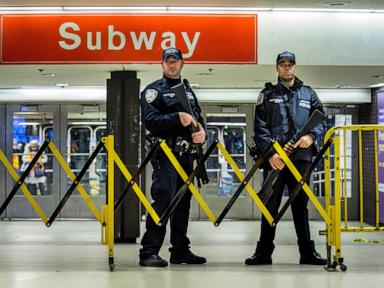
The morning air in the Port Authority Bus Terminal usually smells of diesel exhaust and cheap coffee, a thick, pressurized atmosphere of thousands of people rushing toward their cubicles. On December 11, 2017, that mundane rhythm was shattered by a sound that wasn't quite a bang. It was a dull, wet thud. It was the sound of a pipe bomb failing to do its job, but succeeding in its intent to paralyze the heart of Manhattan.
Akayed Ullah stood in that subterranean walkway, a man who had strapped a makeshift explosive to his chest with zip ties and Velcro. He wanted to kill for a cause he found on the internet. He wanted to turn a Tuesday commute into a massacre. He failed to kill anyone but himself—shredding his own torso and hands—yet the legal aftermath of that morning has spent years winding through the halls of the Second U.S. Circuit Court of Appeals.
The case is a puzzle of technicalities. It pits the visceral horror of a suicide bombing against the rigid, unfeeling machinery of federal statutes.
The Weight of a Life Sentence
Ullah is currently serving a life sentence plus thirty years. To the average person, that sounds like a mathematical redundancy. How can you serve thirty years after you are already dead? In the federal system, these layers of sentencing act as insurance policies. If one conviction is stripped away, the others remain like a stack of bricks, keeping the cell door locked.
Recently, the appeals court looked at that stack and pulled one brick out. They overturned his conviction on the top count: use of a weapon of mass destruction.
This sounds like a victory for a man who tried to blow up a hallway full of strangers. It isn't. Not really. The court upheld every other conviction, including providing material support to a foreign terrorist organization and bombing a public place. The life sentence remains. Ullah will still die in a cage. But the legal nuances of why that one count fell away reveal a fascinating, and perhaps frustrating, reality of how we define terror in a courtroom.
The Pipe Bomb and the Statute
The legal debate didn't center on whether Ullah was a "bad guy" or whether he intended to cause harm. Those facts were never in doubt. The friction was over the definition of a "weapon of mass destruction."
Consider a hypothetical scenario: A man walks into a crowded park with a hand grenade. It is a terrifying weapon, designed solely to kill. But is it a weapon of mass destruction in the eyes of the law? Federal statutes have specific boxes that must be checked. The defense argued that Ullah’s device—a crude pipe filled with match heads and sugar—didn't meet the threshold for that specific, heavy-duty charge.
The court agreed, not out of sympathy, but out of a commitment to the letter of the law. They found that the government hadn't sufficiently proven that the pipe bomb, as constructed, fit the statutory definition required for that particular top-level count. It was a failure of classification, not a denial of the act.
This is the cold, hard reality of the American justice system. It is a place where a man can blow himself up in a tunnel, and three judges will spend months debating the chemical composition of his fuse to ensure the paperwork matches the crime. It feels pedantic. It feels almost offensive to the victims who were knocked to the ground by the blast wave. Yet, this rigidity is what separates a court of law from a mob.
The Invisible Stakes of Radicalization
Beyond the legal gymnastics, there is a human story of a slow, digital rot. Ullah wasn't a soldier in a foreign army. He was a driver. He lived in Brooklyn. He had a family. He was, by all outward appearances, a thread in the fabric of the city.
The "invisible stakes" here aren't just about whether a life sentence is upheld. They are about the terrifying ease with which a person can be hollowed out by a screen. Ullah didn't need a training camp. He needed a basement and an internet connection. He watched videos. He read propaganda. He convinced himself that the people walking to the bus on a Tuesday morning were his enemies.
When we talk about "material support for terrorism," we often think of wire transfers to shadowy bank accounts in the Middle East. But Ullah’s support was ideological. He was a lone actor, a "lone wolf" who built a bomb in his apartment using common household items. This is the nightmare scenario for law enforcement: a threat that has no footprint until the moment of detonation.
The Walkway and the Aftermath
If you walk through that same corridor in the Port Authority today, there is no plaque. There is no scorched earth. The tiles have been replaced. The commuters move with the same frantic energy. The city has a way of healing its skin while the scars remain underneath.
For the people who were there that morning—the three commuters who suffered ringing in their ears and minor shrapnel wounds—the court's decision to overturn the "top count" might feel like a technicality that shouldn't matter. They felt the heat. They heard the blast. To them, the weapon was plenty "mass" enough.
But the law operates in a vacuum of logic. The Second Circuit’s ruling is a reminder that even in the face of the most emotional, high-stakes crimes, the rules must be followed. If the government overreaches in how it charges a terrorist, it creates a precedent that could be used against someone else in a far less clear-cut case.
The Finality of the Cage
Ullah challenged his life sentence as being "procedurally and substantively unreasonable." He argued that the judge was too harsh, that the sentence didn't account for his personal history or the fact that his bomb mostly just hurt himself.
The appeals court was unmoved by that argument.
They pointed to his intent. He didn't just want to hurt himself; he wanted to spark a larger flame. He chose the busiest transit hub in the world during the morning rush. He timed it for maximum impact. The fact that he was a poor chemist does not make him a better person.
The court’s message was clear: The legal labels might shift, and the technicalities might be debated, but the consequence for trying to tear a hole in the peace of the city remains absolute.
Ullah will remain at the ADX Florence "Supermax" prison in Colorado, the "Alcatraz of the Rockies." It is a place of total silence. He will spend twenty-three hours a day in a concrete cell. He will never see the Port Authority again. He will never see the sun set over the Hudson.
The legal system has done its work. It trimmed the edges of the prosecution's case, ensuring the law was applied with surgical precision, even if the result stayed the same. It is a hollow victory for the defense and a minor correction for the government.
As the sun sets over the Manhattan skyline, the buses continue to roll out of the terminal, carrying thousands of people back to their homes. They are safe, not because the bomb failed, but because the society they live in insists on a process that is as stubborn and enduring as the city itself.
The bomb was a failure. The law, in its cold and meticulous way, was not.