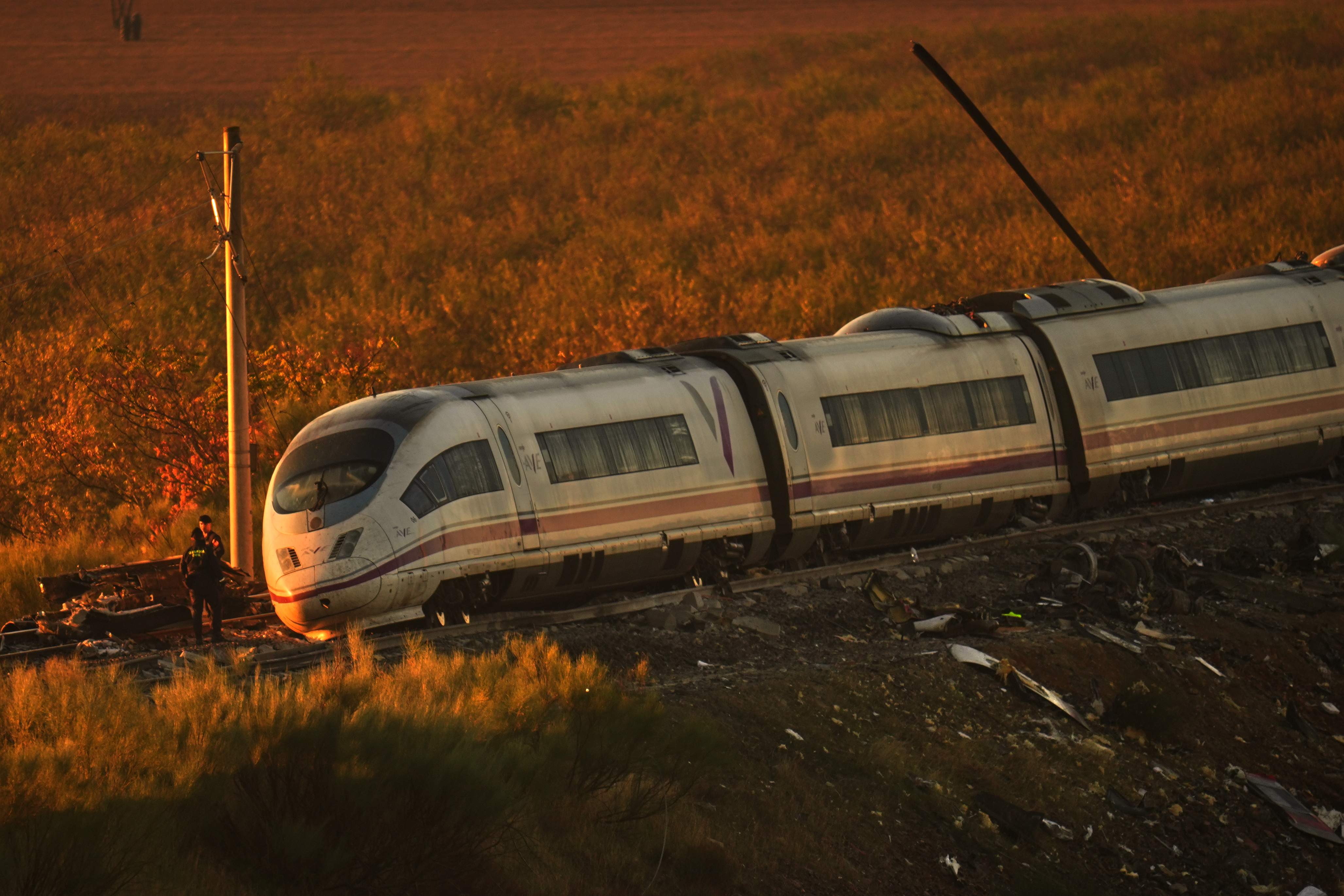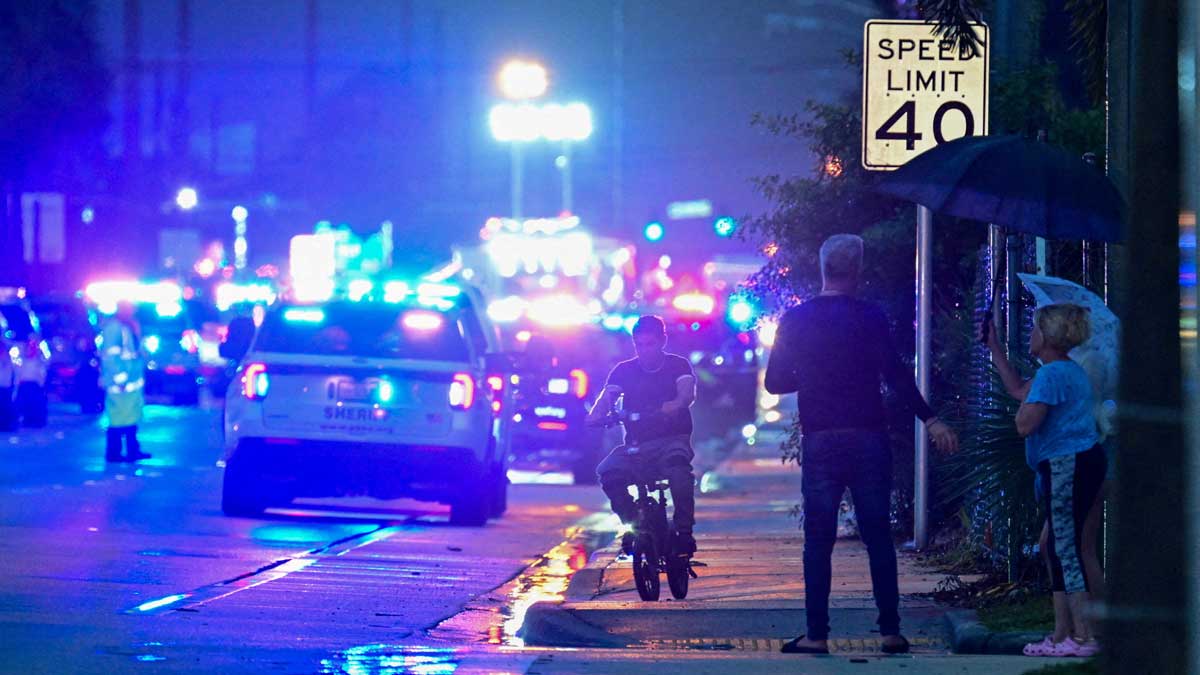
When a private business jet slams into the ground just miles from Palm Beach International Airport and Donald Trump’s Mar-a-Lago estate, killing all nine people on board, the immediate headlines write themselves. Witnesses describe a terrifying, vertical descent that looks like a missile falling out of the sky. Federal investigators descend on the scorched wreckage. Secret Service agents tighten perimeters.
Yet behind the visceral shock of a fatal aviation disaster near a high-profile political landmark lies a much more complex story about modern business aviation, congested South Florida airspace, and the specific aerodynamic physics that turn a routine approach into an unrecoverable dive. Understanding what actually happens in the final seconds of a catastrophic private jet crash requires looking past the sensational proximity to Mar-a-Lago and examining the cold, unforgiving mechanics of flight.
The Illusion of the Missile Dive
Eyewitness accounts of plane crashes almost universally rely on the same terrifying metaphor. People on the ground look up, see an aircraft descending at an impossible angle, and describe it as a missile or a lawn dart.
To an observer standing on a Florida golf course or driving down Southern Boulevard, a commercial or business jet descending at a 45-degree angle appears to be plunging straight down. Perspective plays tricks on the human eye. More importantly, modern swept-wing business jets are designed to slice through the air with minimal drag. When something goes catastrophically wrong at low altitude, these sleek machines do not float down like a Cessna. They accelerate rapidly toward the earth.
Aviation crash investigators know that a steep, high-speed impact near an airport generally points toward a specific set of failure modes. Unlike mid-air breakups at cruising altitude, which scatter debris over miles, a tight, localized impact crater indicates the aircraft remained largely intact until the moment it struck the ground. The wing structure held. The fuselage did not disintegrate in flight. Something else robbed the crew of control during one of the most critical phases of the journey.
Loss of Control In-Flight
In the aviation safety community, the deadliest category of accidents carries a clinical acronym: LOC-I, or Loss of Control In-Flight. According to data compiled over decades by the National Transportation Safety Board (NTSB) and the International Civil Aviation Organization, LOC-I accounts for more fatalities in business and commercial aviation than any other accident type.
A swept-wing jet approaching an airport is operating in a delicate aerodynamic envelope. As the aircraft slows down for landing, pilots deploy flaps and slats to increase the surface area and curvature of the wings, allowing the plane to fly safely at lower speeds. If the aircraft slows too much, or if the angle of the wing relative to the oncoming air becomes too steep, the airflow separates from the upper surface of the wing.
The wing stops producing lift. It stalls.
In a high-performance business jet, an aerodynamic stall at 2,000 feet leaves almost zero margin for error. When one wing stalls slightly before the other, the aircraft violently rolls inverted. The nose drops precipitously. To recover, a pilot must push the control yoke forward to reduce the angle of attack, add full power, and level the wings—all while losing precious altitude. Below a certain threshold, the ground arrives before the aerodynamics can recover.
The Palm Beach Airspace Bottleneck
To understand the operational pressures facing any flight crew flying into Palm Beach County, you have to look at the radar screen over South Florida. This is not a quiet regional outpost. It is one of the busiest, most complex aviation corridors in the United States.
Palm Beach International Airport (PBI) sits directly beneath a massive funnel of air traffic. To the south lie Fort Lauderdale-Hollywood International and Miami International, both pumping hundreds of heavy commercial airliners into the sky every hour. To the west sits the vast expanse of the Everglades, often battered by sudden, violent convective thunderstorms that build rapidly in the afternoon heat. To the east lies the Atlantic Ocean.
Private aviation surges into PBI on a seasonal tide that peaks between November and April. During high season, the ramp space at PBI’s fixed-base operators looks like a parking lot for Fortune 500 flight departments and billionaire charter clients. Gulfstreams, Bombardier Globals, Falcons, and Citations stack up in arrival corridors, sequenced tightly by air traffic controllers who are simultaneously managing commercial Boeing 737s and Airbus A321s.
Temporary Flight Restrictions and Security Chokepoints
Layered on top of this standard congestion is the unique security apparatus surrounding Mar-a-Lago. Whenever a sitting or former president is in residence at the Palm Beach estate, the Federal Aviation Administration issues a Temporary Flight Restriction (TFR).
A presidential TFR creates an invisible, concentric wall in the sky. The inner ring, typically extending several nautical miles around the estate, is completely off-limits to general aviation. The outer ring, stretching out to 30 nautical miles, imposes strict vetting, flight-plan filing, and continuous two-way radio communication requirements.
Because Mar-a-Lago sits directly under the standard eastern approach path to Palm Beach International Airport, the TFR forces air traffic controllers to thread a needle. Incoming aircraft cannot linger. They cannot deviate freely around localized weather cells without immediate, explicit clearance. Pilots are frequently given tight vectors, rapid altitude step-downs, and strict speed assignments to keep them clear of restricted airspace while maintaining safe separation from other traffic.
This high-workload environment demands absolute precision from the cockpit. If an aircraft experiences a mechanical anomaly—a flap asymmetry, a pitch trim runaway, or a sudden dual-engine flameout—while navigating a tight turn onto final approach, the crew has seconds to diagnose the problem while already flying in a compressed, unforgiving sector of sky.
The Human Factor in Private Aviation
Public perception often lumps all private jets into a single category of ultra-luxury, assuming every sleek twin-engine aircraft carries the same safety redundancies as a major commercial airline. The reality of the industry is far more fragmented.
Commercial airlines operate under Part 121 of the Federal Aviation Regulations. This is the gold standard of aviation safety. It mandates strict crew rest rules, rigorous simulator training every six months, standardized cockpit procedures, and continuous oversight by massive corporate safety departments.
Business jets, depending on who owns them and how they are operated, generally fall under two very different regulatory frameworks:
- Part 91 (Private/Corporate Operations): Used when a corporation or wealthy individual flies their own aircraft without charging passengers for transport. While many Fortune 500 flight departments exceed airline safety standards, Part 91 regulations themselves are remarkably permissive. There are fewer mandated duty-time limits, less frequent recurrent simulator checks, and minimal direct FAA operational oversight.
- Part 135 (On-Demand Charter): Used when an operator sells seats or charters the entire aircraft to the public. Part 135 sits in a middle ground—stricter than Part 91, with mandatory rest rules and regular checkrides, yet still lacking the deep institutional infrastructure of a major airline.
In high-stress scenarios, the difference between an airline crew and a lightly regulated private crew often comes down to Crew Resource Management (CRM). When an alarm blares in the cockpit at 1,500 feet, two pilots must operate as a single seamless unit. One pilot flies the airplane; the other diagnoses the failure and runs the checklist.
If the captain becomes fixated on a malfunctioning instrument or tries to salvage an unstable approach instead of executing a go-around, the first officer must intervene immediately. In some private cockpits—particularly where a junior pilot flies alongside a dominant owner-pilot or a senior chief pilot—that critical challenge-and-response dynamic breaks down. Nobody speaks up until the airspeed decays past the point of no return.
Mechanical Ghosts in the Machine
While pilot error and spatial disorientation remain leading causes of approach accidents, investigators never rule out sudden, catastrophic mechanical failure. Modern business jets are marvels of engineering, packed with redundant hydraulic, electrical, and flight-control systems. Yet redundant systems can still be defeated by rare, cascading failures or maintenance oversights.
Consider the horizontal stabilizer—the small wing on the tail of the aircraft that controls pitch, keeping the nose pointed up or down. On most jets, the angle of this stabilizer is adjusted by an electric or hydraulic trim motor.
If that motor suffers an electrical short and commands a "runaway trim" condition, it will steadily force the nose of the airplane down. The pilots will feel immense, growing pressure on the control yoke as they pull back to keep the nose level. If they do not recognize the runaway trim within seconds and hit the cutout switches to kill power to the motor, the aerodynamic forces on the tail will eventually overpower the physical strength of both pilots pulling back with everything they have. The jet will pitch over into a steep, terrifying dive.
Another mechanical nightmare involves thrust reverser deployment in flight. Thrust reversers are heavy metal clamshells or blocker doors on the engines designed to redirect engine exhaust forward, helping slow the aircraft after its wheels touch the runway. Triple-locking mechanisms prevent them from opening in the air. However, if a mechanical failure or wiring fault causes a reverser to deploy on one engine while the jet is airborne, the asymmetric drag and sudden loss of lift on that wing will violently snap the aircraft into an uncontrollable roll.
The Crucial Role of the Black Boxes
Determining whether a crash was caused by a stalled wing, a jammed flight control, bird strike, or an incapacitated crew falls to the NTSB’s Go-Team. Within hours of any fatal crash near Palm Beach, specialists in aerodynamics, structures, powerplants, and human performance arrive at the scene.
Their primary objective is locating two hardened, bright-orange boxes in the tail section:
- The Cockpit Voice Recorder (CVR): Captures the final two hours of audio in the flight deck, including radio transmissions, crew conversations, automated altitude callouts, and the background acoustic signature of engines, switches, and warning horns.
- The Flight Data Recorder (FDR): Tracks hundreds of distinct parameters every second—airspeed, altitude, pitch, roll, heading, control yoke position, rudder deflection, engine temperatures, and flap settings.
Even when a jet impacts the ground at extreme speed and is consumed by a post-crash fire fed by thousands of pounds of Jet-A fuel, the memory modules inside these recorders almost always survive. Investigators transport them to the NTSB laboratory in Washington, D.C., where technicians extract the raw data and reconstruct the final minutes of the flight in a three-dimensional computer simulation.
To understand how an investigator reads this data, consider a hypothetical example of a twin-engine jet on final approach. If the FDR shows the engines spooling up to maximum power three seconds before impact while the control column is pulled fully aft, investigators immediately know the crew was alive, awake, and fighting to pull the plane out of a dive. Conversely, if the data shows no control inputs at all during a steady descent into the ground, the investigation pivots toward pilot incapacitation, hypoxia, or a total electrical failure.
Why Post-Crash Narratives Often Miss the Mark
In the immediate aftermath of a high-profile crash near a political nerve center like Mar-a-Lago, an information vacuum opens up. Cable news networks loop grainy smartphone footage of black smoke rising above palm trees. Social media accounts speculate wildly about foul play, airspace intrusions, or targeted attacks.
Veteran aviation analysts treat those early narratives with deep skepticism. Commercial and business aviation operates within an unforgiving physical reality where gravity and aerodynamics care nothing for politics. When nine people die in the wreckage of a private jet, the tragedy is rarely the result of a single dramatic cinematic event.
Instead, fatal crashes almost always follow the Swiss Cheese Model of accident causation. Imagine several slices of Swiss cheese stacked together, each representing a layer of defense—aircraft maintenance, weather forecasting, air traffic control, pilot training, and cockpit checklists. Each slice has holes, representing minor flaws or latent weaknesses. Usually, the solid parts of one slice block the holes in another, keeping the flight safe.
A catastrophe happens only when the holes in every single slice momentarily align. A tired crew flies into deteriorating visibility. Air traffic control issues a tight turn to keep the jet clear of a VIP security zone. A minor mechanical distraction pulls the captain’s eyes inside the cockpit at the exact moment airspeed bleeds off in a steep bank. One error compounds the next until the laws of physics collect their debt.
The preliminary NTSB report typically arrives within two to three weeks of the accident, stripping away the rumors and laying out the bare facts of the radar track, weather conditions, and initial wreckage examination. The final report—the definitive autopsy of what went wrong and how to prevent it from happening again—takes anywhere from 12 to 24 months. Until those memory chips are read and every twisted piece of aluminum is cataloged in a hangar, the loudest eyewitness descriptions remain just a fraction of the truth.