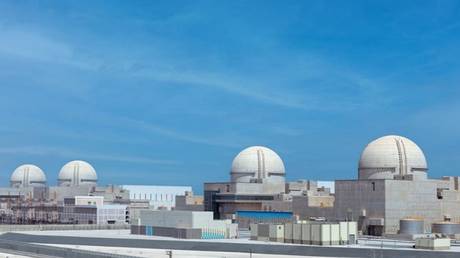
The United Arab Emirates has formalised a foundational structural shift: exiting the Organisation of the Petroleum Exporting Countries (OPEC) to eliminate raw-commodity export quotas and reallocate domestic energy capital directly into sovereign artificial intelligence infrastructure. This structural turn invalidates standard diversification theories. The UAE is not transitioning from resource extraction to a service economy; it is executing a vertical integration strategy that converts localized hydrocarbon and solar energy into high-margin, exportable compute.
By anchoring its domestic ecosystem to advanced American hardware while engineering open-access large language models for underserved markets, Abu Dhabi aims to establish itself as the primary technology distributor to the Global South. This strategic architecture relies on a clear economic mechanism: leveraging capital and unregulated energy inputs to gain monopoly control over the digital infrastructure of developing economies.
The Four-Variable Cost Function of Sovereign Compute
The expansion of artificial intelligence infrastructure is fundamentally constrained by physics and resource availability rather than digital demand. The cost and deployment velocity of localized compute engines are governed by a specific four-variable cost function:
$$C_{\text{compute}} = f(E_{\text{cost}}, E_{\text{certainty}}, I_{\text{scale}}, R_{\text{confidence}})$$
Where:
- $E_{\text{cost}}$ represents the absolute marginal cost of power generation.
- $E_{\text{certainty}}$ is the structural reliability of the grid and the legal autonomy to prioritize industrial compute loads over international export markets.
- $I_{\text{scale}}$ represents data center capacity and chip deployment density.
- $R_{\text{confidence}}$ is the regulatory predictability enforced by centralized governance.
Energy Cost and Certainty Optimization
Operating outside OPEC quotas allows the UAE to detach its domestic energy production from international cartel restrictions. The country utilizes its dual energy base—combining cheap natural gas extraction with high-yield solar arrays—to lower marginal electricity costs for data centers.
This creates a structural insulation loop: rather than selling crude oil on volatile global markets to buy technology assets, the state channels energy directly into domestic hyperscale facilities. This eliminates transmission inefficiencies and shields the localized tech sector from external macroeconomic supply shocks.
Industrial Scale and Speed of Execution
The physical footprint of this strategy is centered on the Stargate campus in Abu Dhabi, a 1-gigawatt data center cluster expanding toward an ultimate 5-gigawatt capacity. Developed by national technology holding company G42, the infrastructure is built to support massive hardware allocations, including the latest US-designed Nvidia Blackwell Ultra graphics processing units.
[Hydrocarbon / Solar Energy Input]
               │
               ▼
   [1GW-5GW Stargate Hub] ──(Sovereign Orchestration via Aleria / Haimaker)
               │
               ▼
 [Falcon / Arabic-First LLMs]
               │
               ▼
   [Global South Infrastructure Export]
By deploying infrastructure at a scale unmatched outside North America, the UAE achieves significant hardware-purchasing efficiencies and amortizes its fixed cooling and engineering overhead across massive computational workloads.
The Asymmetric Value Chain: From Oil Export to Compute Export
The traditional hydrocarbon framework is highly vulnerable to commodity price cycles, global energy transitions, and international production ceilings. The sovereign compute model replaces this vulnerable architecture with a highly defensible, high-margin asset class.
| Vector | Hydrocarbon Export Framework | Sovereign Compute Export Framework |
|---|---|---|
| Asset Type | Raw, unrefined commodity | Managed software, APIs, and raw data processing |
| Margin Structure | Low-to-medium variable margin dictated by OPEC+ market pricing | High fixed cost, near-zero marginal cost per API call |
| Geopolitical Value | Substitutable source material prone to supply switching | Sticky, non-substitutable digital public infrastructure |
| Strategic Leverage | Temporal supply constraints (valves, shipping lanes) | Permanent operational control over regional data layers |
The transition up the value chain alters the state's economic fundamentals. When the Technology Innovation Institute (TII) develops and open-sources the Falcon model series, it is not practicing corporate altruism. Providing free foundational software lowers the barrier to entry for developers across Africa, South Asia, and Latin America. This shifts their underlying reliance from Western hyperscalers to Emirati-hosted infrastructure.
The strategy creates a distinct structural path: open-source models stimulate local development, local development generates immense data flows, and those data flows must ultimately be processed within data centers owned and secured by Abu Dhabi.
Pax Silica and the Geopolitical Monopolization of the Global South
The UAE’s foreign policy operates within a strict technology-sharing trade-off. To secure the advanced semiconductors necessary for world-class machine learning, the nation had to align completely with Washington's national security parameters. This alignment required decoupling its core technology layers from Chinese vendors and joining Pax Silica—the US-led technology alliance designed to secure and control semiconductor supply chains.
This structural alignment is not a surrender of autonomy; it is a calculated trade for regional dominance. By functioning as the trusted, vetted distributor of American technology, the UAE transforms itself into a geopolitical intermediary. The relationship is governed by distinct strategic dynamics:
- The Hardware Bottleneck: Access to high-tier Nvidia chips requires strict compliance with US export controls. By implementing rigorous physical security and data isolation protocols, Abu Dhabi positions itself as the only player in the Middle East authorized to run large-scale Western hardware.
- The Global South Infrastructure Gap: Developing nations frequently lack the sovereign capital, stable power grids, and regulatory environments required to build domestic advanced computing clusters.
- The Intermediate Monopolization Play: The UAE steps into this infrastructure vacuum by launching targeted deployment funds, such as its $1 billion AI infrastructure initiative in Africa. By exporting computing power rather than physical hardware, the UAE provides Global South nations with advanced technological capabilities while retaining structural custody of the underlying intellectual property and data centers.
This dual approach isolates the UAE from typical platform competition. It does not compete directly with American hyperscalers for domestic enterprise market share in the West. Instead, it monetizes the regions that Western tech firms routinely neglect due to high geopolitical risk or insufficient local infrastructure.
Systemic Risks and Operational Vulnerabilities
This strategy is not without significant structural risks. Converting an entire economy from a liquid, globally traded financial asset (oil) into fixed, highly localized technology infrastructure introduces unique vulnerabilities.
Kinetic and Cyber Infrastructure Threats
Data centers are highly centralized physical assets. The concentrated nature of the Stargate campus makes it a high-priority target for regional state and non-state adversaries. Cheap drone technology and precision guided munitions can inflict severe operational damage on power grids or water-cooling networks. A single successful kinetic strike on a cooling plant can instantly knock a gigawatt of computing power offline, forcing client states to look for alternative cloud providers.
Dual Dependency Exploitation
The UAE remains exposed to a dual dependency trap. It relies completely on the United States for proprietary chip designs and foundational software integrations (such as its core partnerships with OpenAI and Microsoft). Concurrently, its broader commercial economy remains deeply integrated with Chinese supply chains and trade networks.
If geopolitical tensions between Washington and Beijing escalate further, the US can use its export licensing authority as leverage. This could force Abu Dhabi to choose between losing access to advanced hardware upgrades or cutting off lucrative non-tech trade ties with China.
Strategic Playbook for Sovereign Tech Transition
To sustain capital advantages and avoid the infrastructure utilization traps common in emerging tech sectors, the state's technology apparatus must execute three distinct operational directives:
- Enforce Sovereign Orchestration Layers: Shift the domestic computing ecosystem away from simple hosting arrangements with Western companies. All local data processing must be mediated through sovereign abstraction software, ensuring that foreign partners can never unilaterally shut down or extract proprietary insights from regional workloads.
- Accelerate Physical and Capital Hardening: Decentralize data infrastructure away from single, massive desert installations. Distribute computing clusters across modular, underground, or heavily defended sites powered by independent micro-grids to neutralize asymmetric kinetic threats.
- Lock In Regional Digital Public Infrastructure: Focus international capital deployment on funding core public software systems—such as identity systems, financial clearinghouses, and medical data repositories—across the Global South. Tie these applications explicitly to Emirati-hosted cloud infrastructure to guarantee long-term, non-cyclical utilization of domestic computing power.
The United Arab Emirates: The new playbook for AI leadership (Atlantic Council). This comprehensive report outlines the specific institutional mechanisms, capital structures, and sovereign wealth instruments the UAE uses to execute its national AI strategy.