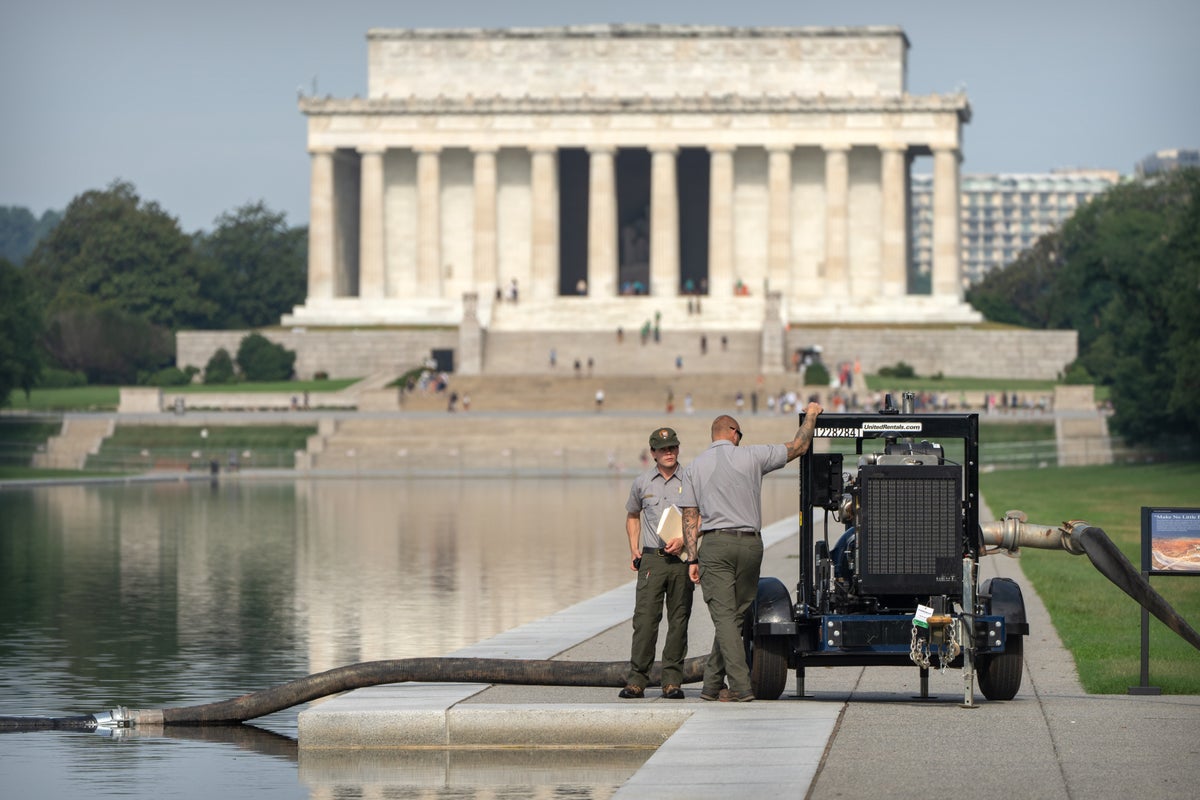
Compressing execution timelines below the structural thresholds required for chemical and mechanical bonding invariably results in systemic asset failure. The operational degradation of the Lincoln Memorial Reflecting Pool—characterized by structural peeling, immediate biological colonization, and subsequent emergency draining cycles—is a textbook study in compressed project schedules overriding established civil engineering principles. Capital expenditure projects involving large-scale aquatic infrastructure require rigid adherence to chemical cure windows, fluid dynamics, and environmental load balancing. When political mandates substitute arbitrary calendar targets for these technical constraints, the resulting infrastructure fails to perform.
An analysis of the $16.4 million capital project reveals that the core failure mechanism stems from treating a dynamic, 4-million-gallon open-air stormwater and ecological basin as a static commercial swimming pool. Deconstructing the system failure requires mapping the precise technical variables that govern large-scale hydraulic engineering, the breakdown of the substrate adhesion layer, and the biological realities of open-system water management.
The Triad of Adhesive Failure: Mechanics of the Substrate Breakdown
The primary mechanical symptom of the project failure is the rapid delamination of the newly applied polyurea coating from the underlying concrete floor, an asset that was structurally stabilized in 2012 with 2,133 timber pilings. The administration's assertion that the peeling was entirely driven by localized vandalism conflicts with the material science governing industrial waterproofing coatings. Large-scale delamination across a 14.7 million dollar coating contract suggests a systemic breakdown in the mechanical bond between the polymer and the concrete substrate.
This specific failure mode is governed by three engineering variables:
- Substrate Moisture Vapor Emission Rate (MVER): Concrete is porous. When an impermeable polyurea barrier is applied over a massive slab exposed to a high water table, vapor pressure builds beneath the membrane. If the concrete is not sufficiently dry or if a vapor-blocking primer is omitted, hydrostatic pressure forces the coating away from the surface, creating blisters that tear easily under minimal physical stress.
- Inadequate Surface Profile (Mechanical Anchor): High-performance coatings do not adhere to smooth concrete. They require a specific concrete surface profile achieved via abrasive blasting or shot-blasting. Compressing the timeline directly incentivizes contractors to skimp on substrate preparation, leaving micro-laittance that shears off under the weight of 4 million gallons of water.
- Cure Window Deficits: Polyurea and industrial sealants require strict temperature, humidity, and time variables to cross-link properly. Truncating the cure window to meet a premature filling deadline prevents the polymer from reaching its designated tensile strength, rendering it highly susceptible to both environmental tearing and minor physical contact.
The structural reality is clear: a properly bonded industrial coating cannot be systematically peeled or carved away by casual human intervention or superficial foot traffic unless the adhesive bond has already experienced a macro-level failure.
The Biological Bottleneck: Algae Proliferation in Shallow Open Systems
The secondary failure mode observed immediately following the June refilling was a massive algae bloom that shifted the water color from the intended aesthetic blue to a turbid green within days. This biological bottleneck was entirely predictable based on the physical design of the basin and basic limnology.
[Solar Radiation / UV] + [Atmospheric Nutrients] + [Stagnant Boundary Layers]
                                    │
                                    ▼
                     [Uncontrolled Algae Proliferation]
                                    │
                                    ▼
       [Accelerated Chemical Consumables Consumption (Hydrogen Peroxide)]
                                    │
                                    ▼
                     [System Shutdown & Manual Draining]
The pool is characterized by a high surface-area-to-volume ratio, with an average depth of approximately three feet. This geometry maximizes solar radiation absorption, rapidly elevating water temperatures and creating an ideal incubator for photosynthetic organisms.
Furthermore, the introduction of a bright blue bottom coating drastically increases light reflectance through the water column, optimizing the photic zone for green algae. While the project integrated a $1.7 million nanobubbler and water-purification contract to mitigate stagnation, the sheer volume of organic load—introduced via wind, waterfowl, and the debris from a massive July 4th fireworks display—overwhelmed the system's filtration capacity.
When biological growth outpaces the turnover rate of the filtration infrastructure, operators are forced into reactive chemical dosing, such as dumping heavy volumes of hydrogen peroxide. This creates an operational paradox: excessive chemical treatment can degrade the integrity of an already unstable surface coating, accelerating the mechanical peeling loop.
The Procurement Paradox and Capital Inefficiency
Public infrastructure projects are fundamentally bound by the Iron Triangle: scope, cost, and time. In this instance, forcing a fixed, hyper-compressed timeline while expanding the scope to include custom chemical colorations structurally broke the cost function.
| Project Metric | Initial Executive Estimation | Verified Contractual Awards | Delta / Cost Overrun |
|---|---|---|---|
| Total Capital Expenditure | $1.5M – $2.0M | $16.4M | +720% (Minimum) |
| Waterproofing & Coating | Unspecified | $14.7M (Atlantic Industrial) | Structural Overrun |
| Filtration & Purification | Unspecified | $1.7M (Green Water Solutions) | Mechanical Overrun |
The 720% variance between the initial public estimates and the actual contract values reflects a failure to account for the specialized nature of marine-grade asset rehabilitation.
Compounding this fiscal inefficiency is the decision by leadership to bypass competitive bidding for the secondary repair cycle, re-engaging the same contractors under the logic that they performed adequately despite the immediate failure of the asset. In public procurement, bypassing competitive bidding for remediation work eliminates cost-control incentives and locks the asset owner into a single-source dependency model, exposing the taxpayer to uncapped operational expenditures.
Operational Risk Analysis and Strategic Playbook
The ongoing cycle of draining, patching, and refilling the Reflecting Pool represents an unsustainable asset management strategy. Every complete drain-and-fill cycle wastes millions of gallons of water, consumes hundreds of man-hours, and subjects the concrete slab to thermal shock and structural cycling as the weight of the water is removed and reintroduced.
To stabilize the asset and halt the compounding capital loss, the engineering strategy must pivot away from cosmetic fixes and address the root material constraints:
- Execute an Independent Substrate Forensic Audit: Halt all immediate repainting efforts. Core samples of the concrete must be tested for moisture content and core temperatures to establish the factual baseline for why the polyurea failed to adhere.
- Enforce Extended Cure Timelines: The project schedule must be dictated by chemical data sheets, not civic anniversaries. If the polymer requires 14 unbroken days of dry, temperate conditions to reach maximum cross-linking density, the basin must remain empty for that duration regardless of political visibility.
- Calibrate Filtration Turn Rates to Actual Organic Load: The $1.7 million purification system must be dynamically re-engineered to handle localized shock events, such as post-fireworks particulate fallout and seasonal waterfowl migration, rather than operating on baseline assumptions for a closed commercial system.