The war in Ukraine has transitioned from a conflict defined by rapid territorial maneuvers to an industrial-scale war of attrition governed by deep operational, energetic, and macroeconomic cost functions. While conventional media outlets track daily tactical shifts through uncontextualized live feeds, a structural analysis reveals that the true vectors of the conflict are defined by asymmetric ammunition depletion rates, the destruction of energy infrastructure, and competitive economic resilience under heavy sanctions. Understanding the trajectory of the war requires breaking down these variables into quantifiable inputs rather than relying on surface-level updates.
The Ammunition Asymmetry: The Production and Interception Bottleneck
The primary determinant of frontline stability is the kinetic cost function of artillery and long-range strike systems. The operational balance is dictated by a strict mathematical reality: the ratio of ammunition expenditures to system replacement rates.
Frontline Elasticity = (Artillery Volumetric Inflow + Domestic Drone Production) / (Daily Consumption Rate * System Attrition)
This creates an immediate structural bottleneck on both sides of the frontline.
- Volumetric Shell Deficits: Ukrainian forces face cyclical shortages in 155mm NATO-standard artillery rounds due to lags in Western defense industrial base expansions. Russian forces maintain a consistent volumetric advantage, firing an estimated 3:1 to 5:1 ratio over Ukrainian positions depending on the sector. This allows Russian forces to achieve marginal but steady territorial gains, averaging roughly 5 to 10 square kilometers daily along the eastern axis, particularly around the Kostiantynivka and Pokrovsk sectors.
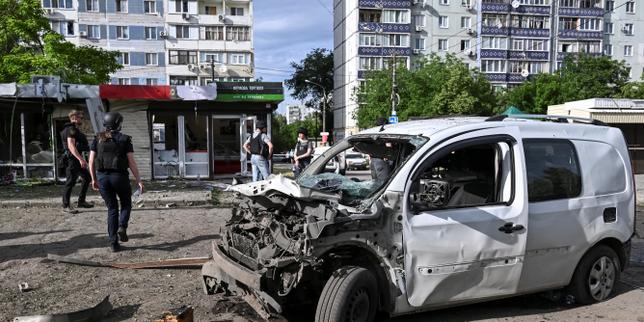
- The Interception Cost Asymmetry: A profound economic bottleneck manifests in air defense. The cost function of long-range strike interception is heavily inverted. The Russian Federation utilizes mass-produced, low-cost loitering munitions such as the Geran-2, costing approximately $20,000 to $40,000 per unit, alongside long-range cruise missiles. Intercepting these assets structurally drains Ukrainian stores of advanced surface-to-air systems, such as Patriot or NASAMS interceptors, which cost between $1 million and $4 million per shot. This creates a geometric drain on Western military aid packages.
- The Drone Substitution Model: To mitigate the artillery deficit, Ukraine has scaled up its domestic first-person view (FPV) and long-range strike drone production, deploying thousands of low-cost tactical drones monthly. While effective for localized interdiction against armored columns and personnel, these platforms cannot replicate the sustained suppressive fire or structural destruction capacity of heavy high-explosive artillery.
The Energy Infrastructure Grid Attrition Framework
Air superiority is not achieved purely in the skies; it is realized through the systemic degradation of a nation's industrial capacity. Long-range strikes targeted at energy production assets function as an economic force multiplier, aiming to induce systemic state failure by neutralizing the domestic power grid.
The infrastructure attrition strategy operates across three specific pillars.
1. Generation Node Destruction
Strikes targeting thermal power plants (TPPs) and hydroelectric power plants (HPPs) inflict irreversible structural damage. Unlike substations, which can be bypassed or repaired using modular transformers, the destruction of turbine halls requires complex, multi-year engineering interventions. This strips gigawatts of baseline power permanently from the national grid, forcing structural energy rationing across industrial hubs.
2. Transmission Grid Fragmentation
By targeting high-voltage substations (specifically 750kV and 330kV nodes), deep strike campaigns isolate regional power subsystems. This prevents the redistribution of surplus energy generated by nuclear power facilities in western Ukraine to the high-consumption industrial sectors in the east and center. The second limitation is the critical shortage of heavy autotransformers, which feature manufacturing lead times exceeding twelve months.
3. Kinetic Spillover to Neighboring Elements
The widening geographic footprint of drone and missile encounters introduces international operational friction. Incidents involving debris or erratic flight paths over NATO airspace—such as repeated tracking of loitering munitions crossing into Romanian territory—force defensive re-posturing on the alliance's eastern flank. This kinetic spillover increases the operational demands on Western early-warning architecture and local air-defense deployments without fundamentally altering the frontline calculus.
The Macroeconomic War: Asymmetric Shock Absorption
The endurance of each belligerent relies on its capacity to absorb macroeconomic shocks while financing high-intensity military production. The strategic viability of Russia and Ukraine hinges on two distinct economic paradigms.
The Russian War-Economy Autarky
The Russian Federation has reoriented its macroeconomic framework toward military Keynesianism, dedicating over 6% of its GDP to defense spending. This structural pivot has insulated domestic manufacturing from immediate collapse, but it introduces deep structural imbalances.
Russian Inflationary Driver = (State Military Injections + Labor Scarcity) - Non-Defense Industrial Output
The massive injection of state capital into the defense industrial base, combined with severe labor shortages driven by military mobilization, has pushed the Russian central bank to maintain double-digit interest rates to combat persistent inflation. Concurrently, Russia relies on a "shadow fleet" of tankers operating outside G7 price caps to sustain oil export revenues, which flow directly into financing military operations.
This reliance is evident during major diplomatic and corporate gatherings, such as the annual St. Petersburg International Economic Forum. While these forums are leveraged to signal institutional normalization and secure non-Western trade agreements, the underlying data indicates that Russia’s growth is hyper-dependent on state-funded military output rather than sustainable consumer or technology-driven market expansions.
The Ukrainian External Sovereign Subsidization
Ukraine's economic survival exists as a function of external capital injections from Western partners, primarily the European Union, the United States, and international financial institutions.
This framework faces clear operational limitations.
- Macro-Financial Dependence: Direct foreign aid covers the structural deficit of Ukraine’s non-military national budget, funding state salaries, healthcare, and pensions, while domestic tax revenues are redirected toward the Ministry of Defense.
- Demographic Capital Erosion: The prolonged displacement of millions of citizens abroad has shrunk the domestic tax base and created critical labor shortages across the agricultural and manufacturing sectors.
- Infrastructure Replacement Costs: The capital requirements for repairing the damaged energy grid and municipal infrastructure draw funds away from domestic defensive production, creating a perpetual dependency loop on Western financial aid.
Strategic Asymmetry in Long-Range Interdiction
A significant development in operational design is the expansion of Ukrainian deep-strike capabilities inside Russian territory. By shifting from purely localized tactical defense to strategic interdiction, Ukraine aims to alter the economic calculus of the conflict for the Russian leadership.
The primary target vector involves targeting fuel chains and logistics nodes. Ukrainian long-range strike drones have repeatedly penetrated deep into Russian territory, striking oil refineries, storage depots, and rail transport infrastructure across western Russia, including high-profile disruptions near Saint Petersburg and major logistical corridors linking Moscow to occupied regions like Crimea.
This deep-strike framework achieves several distinct tactical outcomes.
- Refinery Capacity Degradation: By targeting distillation columns, Ukraine temporarily takes significant percentages of Russian domestic refining capacity offline. This forces Russia to divert crude oil to export markets rather than processing it into high-value fuel products, directly impacting local supply chains.
- Logistical Friction: Attacks on rail infrastructure and rolling stock slow down the throughput of ammunition and fuel to the frontline. A single successful strike on a military cargo train or rail junction creates immediate operational bottlenecks that ripple across entire army groups.
- Air Defense Redistribution: To protect vital economic and industrial assets located hundreds of kilometers from the border, the Russian military is forced to pull advanced air defense systems (such as Pantsir and S-400 batteries) away from the frontline. This structural redistribution reduces air defense density along the contact line, creating localized opportunities for Ukrainian tactical aviation and drone operations.
Strategic Play: The Path to Diplomatic Leverage
The current operational realities dictate that a decisive military breakthrough by either side remains highly improbable under current resource allocations. The conflict has reached a phase where kinetic actions are designed primarily to generate leverage for eventual diplomatic maneuvering.
The primary strategic lever remains the manipulation of territory and economic security to dictate terms. The United States and European partners have attempted to orchestrate a diplomatic off-ramp, pushing for structured, direct dialogues between Moscow and Kyiv. However, the diplomatic framework remains deadlocked due to fundamentally incompatible core positions regarding territorial sovereignty and regional security guarantees.
Ukraine’s strategic posture, reinforced by recent statements from its leadership during defensive consultations in European capitals, dictates that no formal diplomatic instrument can validate the forced alteration of international borders. Conversely, the Russian leadership leverages its volumetric artillery advantage and structural endurance to demand sweeping territorial concessions as a precondition for halting hostilities.
The optimal strategic play for Ukrainian forces over the next operational phase requires a strict focus on maximizing the Russian cost function while preserving its own limited human and technical capital. This involves a three-pronged operational deployment:
- Transition to Active Elastomeric Defense: Relinquish highly exposed, low-value terrain when necessary to maintain favorable attrition ratios, preventing Russian forces from achieving operational breakthroughs while conserving Ukrainian manpower.
- Asymmetric Deep Interdiction Scale-Up: Accelerate strikes against Russian energy infrastructure, refining assets, and rail logistics to continuously degrade the economic inputs that feed the Russian military apparatus.
- Grid Hardening and Decentralization: Shift from large-scale, centralized power generation nodes to a highly distributed network of small-scale gas turbines and renewable systems that are fundamentally resilient against massed ballistic and cruise missile strikes.