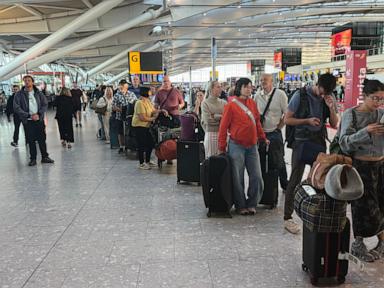
Modern air traffic management systems operate on razor-thin margins of temporal and spatial tolerance. When the National Air Traffic Services flight processing system experienced a critical software fault, it exposed systemic fragilities that extend far beyond a simple IT glitch. The disruption grounded over 1,900 flights across British airports, stranded hundreds of thousands of passengers, and triggered a cascading network failure across European corridors. Understanding this collapse requires moving past superficial reporting to examine the structural mechanics of airspace capacity, software dependency, and recovery economics.
The Three Pillars of Airspace Vulnerability
The propagation of delays from a localized software fault into a continent-wide standstill stems from three distinct architectural weaknesses within the European aviation ecosystem.
- Flight Plan Processing Dependency: Air traffic control relies on automated validation of flight plans, route trajectories, and safety separations. When the primary processing engine encounters unhandled exceptions, human controllers are forced to revert to manual safety regulation or restrict clearance rates entirely. This instantly caps throughput at a fraction of nominal capacity.
- Asymmetric Network Recovery: The cost function of restarting a halted aviation network is non-linear. While shutting down departures takes minutes, reconstituting a balanced network requires matching displaced aircraft, stranded flight crews governed by strict maximum duty hours, and saturated gate capacity at constrained hubs like Heathrow and Gatwick.
- Single-Point-of-Failure Architecture: Centralized air navigation service providers function as essential monopolies. Unlike decentralized routing networks, a failure in the core processing logic of the dominant provider leaves airlines with zero alternative routing channels or redundant processing layers within domestic airspace.
The Propagation Dynamics of Secondary Congestion
The operational impact of the system stoppage followed a predictable cascading sequence. The initial failure manifested as a restriction on departing flights to maintain safety margins under manual or degraded automation modes. As departure slots froze, major hubs quickly reached saturation limits on their physical stands and terminal gates because incoming aircraft continued to land from preceding sectors.
This spatial constriction forced air traffic coordinators to suspend inbound arrivals or divert international services to continental alternates such as Amsterdam, Brussels, and Paris. Aircraft absorption capacity at these secondary airports rapidly hit exhaustion, locking foreign fleets out of position. Consequently, carriers like British Airways and easyJet faced simultaneous dislocation of equipment and crew personnel, rendering their short-haul schedules mathematically impossible to operate even after the software fix was deployed.
Systemic Economics and Accountability Mechanics
The recurrence of major technical faults within a three-year window highlights an underlying tension in how national air navigation services are funded and regulated. Because these entities operate under economic regulation frameworks where costs and capital investments are recovered through charges levied on airlines, incentives for aggressive digital modernization can conflict with short-term cost containment.
Airlines bear the immediate financial burden of passenger compensation under statutory regulations, hotel accommodations, and rebooking logistics, while the infrastructure provider absorbs negligible direct liability for network-wide operational paralysis. This misalignment of financial risk creates a suboptimal investment loop in software resilience. To dismantle this recurring vulnerability, regulatory oversight must transition from retrospective inquiries to mandatory zero-downtime architectural standards, forcing providers to implement distributed, hot-swappable processing nodes that eliminate single points of failure before the next systemic shock materializes.