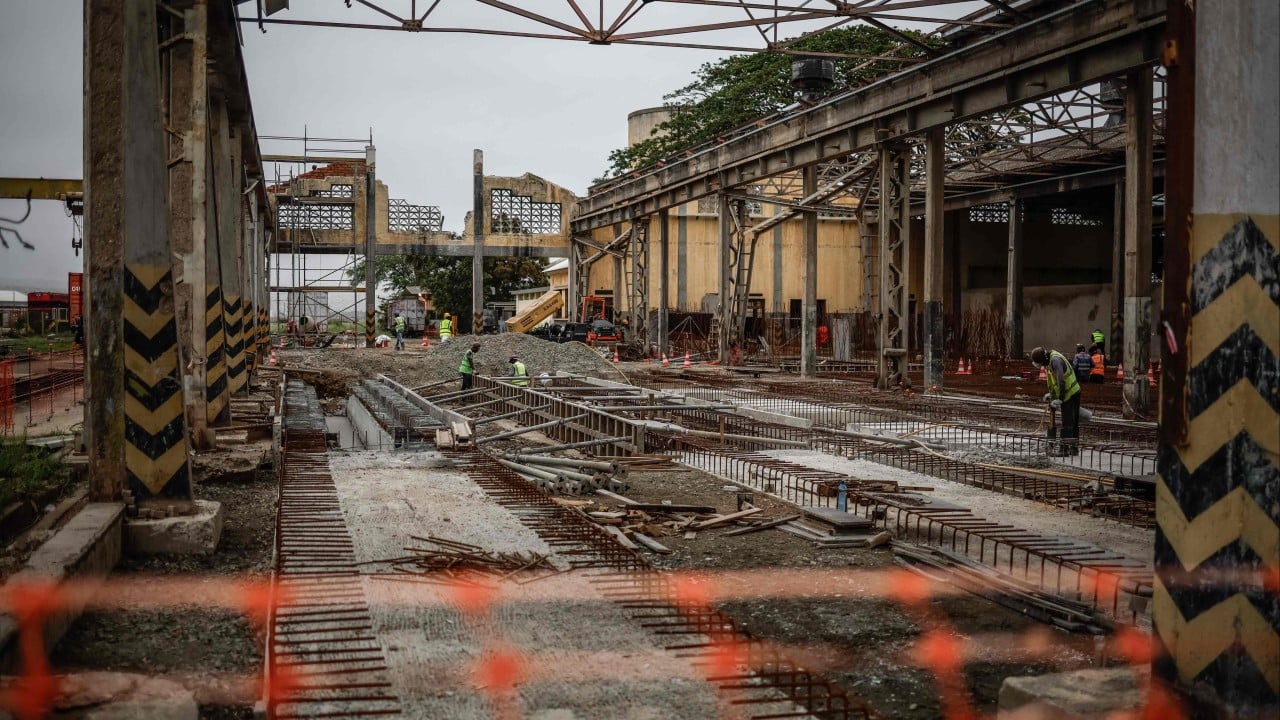
Washington loves a good ghost story, and right now, the scariest ghost in town is China’s Belt and Road Initiative (BRI). For the past decade, the foreign policy establishment has panicked over Beijing’s global infrastructure blitz. The lazy consensus among Western policymakers is simple: China is buying global influence with cheap loans, so the US needs to build a bigger checkbook to compete.
Enter the recycled strategy. Agencies like the US International Development Finance Corporation (DFC) and initiatives like the G7’s Partnership for Global Infrastructure and Investment (PGII) are being cheered as America’s triumphant return to global infrastructure development.
This is a profound misreading of global economics.
By trying to beat Beijing at its own game, the US is funding a flawed, outdated model of state-sponsored development. I have spent years tracking capital flows in emerging markets, watching Western agencies attempt to counter Chinese influence. They fail because they misunderstand what China actually built—and what developing nations actually need. America is trying to build roads and ports with bureaucratic red tape, completely ignoring the fact that the hard-infrastructure game is already over.
The Great Debt-Trap Myth
To understand why the American counter-strategy is broken, we have to dismantle the foundational myth of Western foreign policy: Chinese "debt-trap diplomacy."
The standard narrative claims Beijing deliberately forces poor nations into unsustainable debt to seize their strategic assets. The poster child for this theory is always Sri Lanka’s Hambantota Port.
The reality is far more embarrassing for the West. Research from institutions like the Johns Hopkins China Africa Research Initiative and Chatham House has thoroughly debunked the debt-trap narrative. Sri Lanka’s debt crisis was driven primarily by Western-dominated multilateral roads and commercial bonds, not Beijing. When Colombo couldn't pay, a Canadian-designed feasibility study led to a lease agreement with a Chinese firm to raise foreign reserves. There was no military seizure. No grand geopolitical trap.
When US agencies base their entire strategy on countering a "debt trap," they build the wrong tools. They offer high-standard, slow-moving, risk-averse loans designed to save countries from a predatory threat that does not exist in the way Washington imagines.
Developing nations do not view China as a predator; they view it as a builder that shows up with concrete mixers while Western diplomats show up with lectures on governance. If the US wants to compete, it cannot rely on the false premise that sovereign states are helpless victims waiting for a Western rescue.
Why Washington Cannot Build Like Beijing
The DFC and its G7 allies promise "high-quality, sustainable infrastructure." Translated from bureaucratic jargon, this means every project must clear years of environmental impact assessments, labor audits, and transparency reviews before a single shovel hits the dirt.
This sounds noble. In practice, it is a competitive death sentence.
Imagine a scenario where a West African government needs a railway to connect an inland mine to a coastal port.
- The Chinese Approach: China Exim Bank approves a loan within months. State-owned enterprises deploy thousands of workers. The railway is functional in three years. The project might have environmental flaws and cost overruns, but it exists. It generates economic activity today.
- The American Approach: The project enters a multi-year review pipeline. Lawyers debate compliance metrics. Local NGOs file objections. By year five, the political administration in the host country has changed, the commodity prices have shifted, and the project is quietly abandoned.
The West cannot compete on speed or scale because democratic governments do not command state-owned construction monopolies. China can absorb financial losses on a speculative port in Pakistan because the state views it as a long-term strategic bet. A US agency, answerable to taxpayers and congressional oversight, cannot legally or politically underwrite massive, loss-making infrastructure assets.
Trying to mimic the BRI with fractional budgets and paralyzing regulatory frameworks is not a strategy. It is theater.
The Actual Answer to "People Also Ask" About Infrastructure Wars
When you look at public debates surrounding international development, the wrong questions dominate the discourse. Let's fix the premise of these inquiries.
Does the US need to match China’s infrastructure spending dollar for dollar?
No. Attempting to match China’s trillion-dollar spending is an asymmetric trap. China's domestic economy suffers from massive industrial overcapacity. It produces more steel and concrete than it can consume domestically. The BRI was conceived as an export engine for this overcapacity, keeping Chinese construction workers employed.
The US has no such overcapacity. Forcing American capital into heavy civil engineering abroad makes zero sense when America’s own domestic bridges and grids are crumbling.
Can Western private capital replace state-funded infrastructure?
This is the ultimate fantasy of Western technocrats. The PGII claims it will mobilize hundreds of billions in private capital by using public funds to "de-risk" projects.
It is an illusion. Private institutional investors—like pension funds and insurance companies—are legally bound by fiduciary duties. They are not going to invest in a toll road in a sub-Saharan country with a volatile currency and high default risk just because a Washington agency provides a minor partial guarantee. Private capital wants predictable, liquid returns. Mega-infrastructure projects in emerging markets offer the exact opposite.
Shift the Battlefield to Intangible Assets
If heavy infrastructure is a losing battle, where should Western capital go? The answer lies in the architecture of the modern economy, not the physical relics of the industrial age.
The US must stop building concrete and start building code.
| Feature | The Old Game (China's Playbook) | The New Game (The US Advantage) |
|---|---|---|
| Primary Asset | Deep-water ports, railways, highways | Cloud networks, digital payment rails, biosecurity |
| Capital Type | Sovereign debt, state-backed loans | Venture capital, equity, intellectual property |
| Bottleneck | Physical labor, supply chains, raw materials | Regulatory standards, encryption, talent |
| Influence Type | Territorial, physical presence | Systemic, institutional, operational |
China has spent a decade locking its capital into illiquid, depreciating physical assets across the globe. Many of these projects are now facing restructuring, creating a massive financial drag on Beijing. While China is bogged down managing distressed port debt, the US should be capturing the digital and financial nervous systems of these developing economies.
Instead of funding an expensive, slow-moving highway in Southeast Asia, Western strategy should focus on underwriting the legal frameworks, digital identities, and financial clearing systems that the highway’s users will rely on. When you control the operating system of an economy, you do not need to own the asphalt.
The Bitter Truth of the Sovereign Tech Stack
Shifting to a digital-first strategy requires confronting an uncomfortable truth: the West is currently losing the digital infrastructure race too, precisely because it refuses to play dirty.
While American tech firms focus on high-margin consumer apps and enterprise software for wealthy markets, Chinese firms like Huawei and ZTE are quietly laying the subsea cables, 5G towers, and data centers for the global south. They are building the "Digital Silk Road."
If Washington wants to counter this, it must drop the sanctimonious rhetoric about the free market. Private American telecom giants will not build unprofitable broadband infrastructure in rural Latin America out of patriotism. The US government must directly subsidize the deployment of secure, allied digital architecture.
This means providing deep, uncompetitive financial advantages to Western tech consortiums. It means forcing open markets through targeted financial statecraft. If that sounds like state capitalism, that is because it is. You cannot fight an economic superpower by relying purely on Adam Smith’s invisible hand when the opponent is wielding an iron fist.
Stop Proving Beijing's Point
Every time a US official gives a speech targeting the Belt and Road Initiative, it reinforces the idea that Washington only cares about the developing world when China is involved. This reactive posture destroys American credibility. Host nations see right through it. They know the sudden influx of American interest is not driven by a desire for local development, but by geopolitical panic.
This panic leads to bad investments. It leads to funding redundant projects simply to prevent a Chinese company from winning a tender.
The current path is unsustainable. The US International Development Finance Corporation cannot out-brick and out-mortar China. Continuing down this road ensures a future of expensive, half-baked infrastructure failures that leave the US with no strategic leverage and the host countries with half-finished bridges to nowhere.
Drop the construction tools. Stop chasing China’s ghost in the mud of physical mega-projects. The true leverage lies in the cloud, the financial rails, and the institutional standards that govern them. Win the systems that run the world, and let Beijing handle the maintenance costs of the physical world.