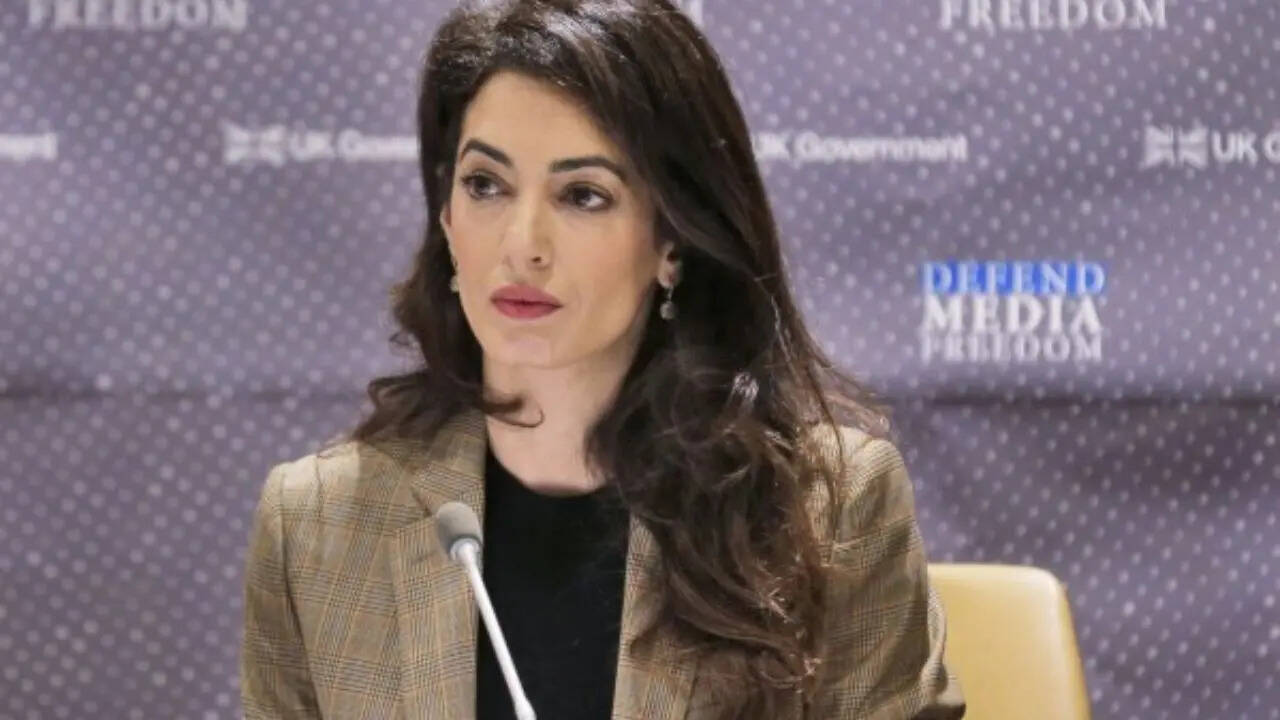
Most graduation speeches are entirely forgettable. They offer the same tired platitudes about reaching for the stars or finding your passion. But when international human rights lawyer Amal Clooney stood in front of Vanderbilt University graduates, she bypassed the fluff and went straight for the jugular.
"When I look at the world today I see that courage is needed more than ever," she said.
It's a great soundbite, sure. But look past the celebrity sheen and you find something much heavier. She wasn't talking about the cinematic bravery of a superhero movie. She was talking about moral friction. The absolute discomfort of standing up when staying quiet is easier. Here is why her perspective on raw courage matters right now, and how most people completely misunderstand what it takes to actually practice it.
The Cost of Looking Away
We like to think that human progress moves in a straight line. We want to believe that once a right is won, it stays won. It doesn't. Progress is fragile, and it slips backward the second we get comfortable.
When Clooney gave this speech, she didn't paint a pretty picture. She pointed directly to the ugly realities facing global society. Women losing custody of their kids, facing physical abuse, or being banned from working and traveling. Journalists thrown into dark prison cells for printing the truth. Politicians intentionally blurring the lines between a desperate refugee and a dangerous terrorist just to harvest votes through fear.
These aren't abstract thought experiments. They are happening right now.
The real problem isn't just that bad things happen. It's that the average person watches these events unfold through a screen, sighs, and moves on to the next video. We've replaced actual bravery with passive awareness. Sharing a hashtag or liking a post feels like doing something, but it costs you absolutely nothing. True moral courage requires a transaction. It demands your comfort, your time, or sometimes your reputation.
Why Courage is Domestically Awkward
You don't need to fly to a war zone or argue a case at the International Criminal Court to live out Clooney's message. That's the biggest misconception people have. They assume bravery is reserved for historical figures like Martin Luther King Jr. or Nelson Mandela.
It isn't. It starts during breakfast, or in your Slack channels, or at the family dinner table.
Think about the last time a colleague made an explicitly sexist joke during a meeting. Did you speak up, or did you laugh uncomfortably because you didn't want to mess up the team dynamic? What about when a friend shared a blatantly false, xenophobic article in the group chat? Did you call it out, or did you let it slide to avoid a fight?
Choosing harmony over honesty is how toxic environments grow. Moral cowardice usually wears the mask of politeness. We tell ourselves we're just picking our battles, but we're usually just protecting our own peace at the expense of someone else's dignity.
How to Build the Bravery Muscle
If you wait for a massive, dramatic moment to suddenly become a brave person, you'll fail. Courage is a habit. You build it through tiny, incredibly awkward daily choices.
First, accept the friction. Doing the right thing is going to feel terrible in the moment. Your stomach will knot up. Your heart will race. Expect that discomfort instead of running from it. When you know the adrenaline spike is coming, it loses its power to paralyze you.
Second, use your leverage. You have power somewhere. Maybe it's your vote, your wallet, your voice, or your specific skills. If you're a manager, use your position to defend a junior employee who gets talked over. If you have disposable income, fund the independent journalists who are actually risking their lives to expose corruption. Put your resources where your values are.
Finally, remember that courage is contagious. That's another brilliant point Clooney made in her address. When one person refuses to repeat a lie or tolerate abuse, it gives the quiet people around them the permission to stand up too. You don't have to change the entire world by lunchtime. You just have to be the first person in the room to say, "No, this isn't right."
Stop waiting for someone else to fix the culture. Look at your immediate surroundings, find the spot where silence is doing damage, and open your mouth.