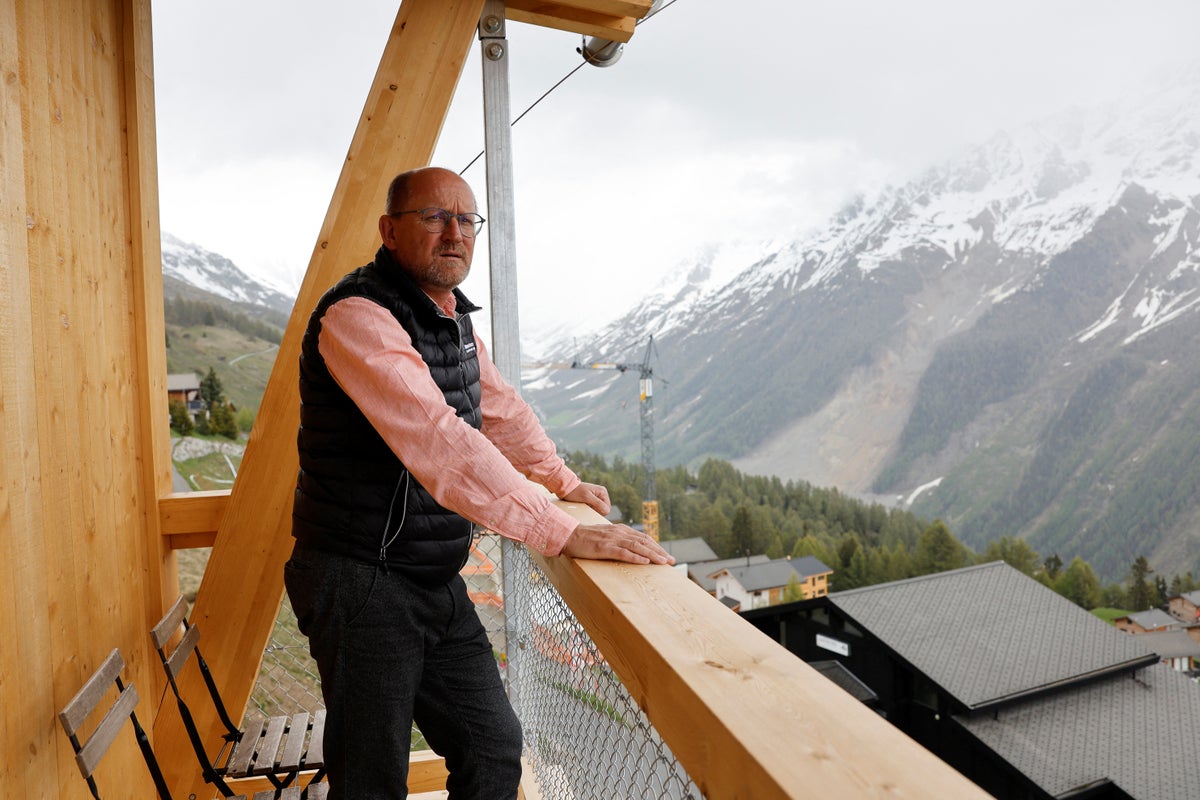
The sound doesn't leave you. It’s a deep, grinding roar that vibrates in your chest before you even see the ice move. When millions of tons of ice and rock sheared off a major glacier, tearing down the valley and crushing ancestral homes in the Swiss Alps, the world watched in shock. Media trucks rolled into the debris zone, captured the harrowing footage of shattered timber and grey mud, and then left. The immediate narrative was simple: climate change claimed another village, and the mountains are becoming uninhabitable.
That narrative is wrong. It misses the gritty reality of what happens when the cameras turn off.
The residents of these high-altitude communities aren't packing up and moving to Zurich. They’re staying. They’re rebuilding right in the shadow of the shifting peaks that just threatened to erase them. To an outsider, rebuilding a life where a glacier collapse just wiped out your property looks like stubborn madness. It looks like a denial of modern climate reality. But if you talk to the engineers, the local alpine mayors, and the families scraping mud off their foundations, you realize it’s actually a highly calculated, deeply emotional gamble on human ingenuity.
Understanding why these communities refuse to retreat tells us everything about the future of mountain life.
The Myth of the Easy Alpine Retreat
Moving an entire village sounds logical on paper. Bureaucrats in distant cities love the idea of "managed retreat." They suggest drawing a red line on a map, cutting a check, and relocating families to safer, lower ground.
It almost never works that way. In the Swiss Alps, land isn't just real estate. It's identity. Many of these families have held the exact same plots for four, five, or six centuries. The local economy relies on a delicate mix of high-altitude farming, specialized tourism, and seasonal trade that you can't just transplant to a valley suburb.
Moving means abandoning a cultural heritage. It means giving up.
There's also a massive legal and financial logistical nightmare that nobody talks about. Alpine land rights are notoriously complex. If a glacier collapse obliterates your home, your deed still says you own that specific patch of rock and debris. Insurance frameworks and cantonal solidarity funds in Switzerland are geared toward restoration, not relocation. If a homeowner decides to abandon their plot and buy elsewhere, they often face catastrophic financial losses because the market value of a high-risk zone drops to zero, while the cost of safe land elsewhere is astronomical. Rebuilding with state-backed mitigation support is frequently the only viable financial path forward.
Engineering Safety in a Melting World
You can't stop a mountain from moving, but you can change where the debris flows. The survival of these rebuilding villages hinges on cutting-edge Swiss alpine engineering, a discipline that's adapting faster than the ice is melting.
Glacier monitoring has evolved far beyond static satellite images. Geologists now install ground-based interferometric radar systems directly opposite unstable ice faces. These systems measure microscopic movements in the ice sheet down to the millimeter. If a section of a glacier accelerates its movement, automated warning systems instantly trigger sirens and SMS alerts in the valley below, giving residents crucial minutes to evacuate.
But early warning is only half the battle. The real work happens with heavy infrastructure.
[Glacier/Unstable Peak]
        │
        ▼ (Debris Flow)
┌────────────────┐
│ Retention Dam  │ <── Catches large boulders and slows velocity
└────────────────┘
        │
        ▼
┌────────────────┐
│ Deflection Wall│ <── Channels mud and water away from homes
└────────────────┘
        │
        ▼
┌────────────────┐
│ Reinforcement  │ <── Strengthened foundations on remaining houses
└────────────────┘
Villagers are working with cantonal authorities to build massive, reinforced concrete deflection walls and retention basins. These structures don't look pretty, and they alter the pristine alpine landscape, but they work. They act as massive shields, designed to catch shifting moraine rock and divert mudflows away from residential zones.
Architects are also changing how they build homes. New structures in high-risk zones frequently feature reinforced concrete basements and ground floors designed to withstand massive lateral pressure, with living spaces elevated to the second story.
The Hidden Cost of Staying Behind
Living under a destabilized peak takes a psychological toll that no engineering project can fix. Every time the summer temperature spikes or a heavy rainstorm hits, anxiety levels in these rebuilt villages soar. The mountains used to represent permanence and safety; now they represent a ticking clock.
There's also the reality of changing tourism. Swiss mountain villages depend heavily on winter skiers and summer hikers. When a headline blasts news of a catastrophic glacier collapse, bookings crater. Rebuilding homes is one thing, but rebuilding a shattered local economy while the very attraction that drew people there—the glacier—is actively dying is a much steeper climb.
Local business owners have to pivot. They’re shifting focus toward educational climate tourism, trail running, and cultural experiences that don't rely on pristine ice fields. It's a tough sell, and it requires a total rebranding of the classic Swiss vacation.
What It Takes to Adapt Right Now
If you live in a mountain region facing similar risks, or if you're tracking how communities adapt to extreme environmental shifts, waiting for a crisis to hit is a losing strategy. Mitigation requires immediate, proactive steps.
First, local governments must mandate continuous, real-time geomorphic monitoring of nearby peaks. Relying on annual surveys is outdated; warming trends require weekly or even daily data points to catch structural shifts in ice and permafrost before they turn catastrophic.
Second, community zoning laws need an aggressive overhaul. Rebuilding shouldn't mean copying the past. It means enforcing strict building codes that require reinforced foundations, impact-resistant structures, and clear deflection pathways on every single plot.
Finally, diversification of the local economy is non-negotiable. If a town relies solely on a glacier for its economic survival, it won't survive the century. Investing in diverse, year-round infrastructure ensures that even if a section of the mountain becomes temporarily inaccessible, the community's financial heartbeat keeps pumping.
The villagers in the Swiss Alps are proving that resilience isn't about running away from danger. It's about looking at a changing mountain, understanding its new rules, and building a smarter way to live alongside it. Look at your own local infrastructure, demand better data from your regional authorities, and stop treating environmental adaptation like a problem for the next generation. It's happening right now.


