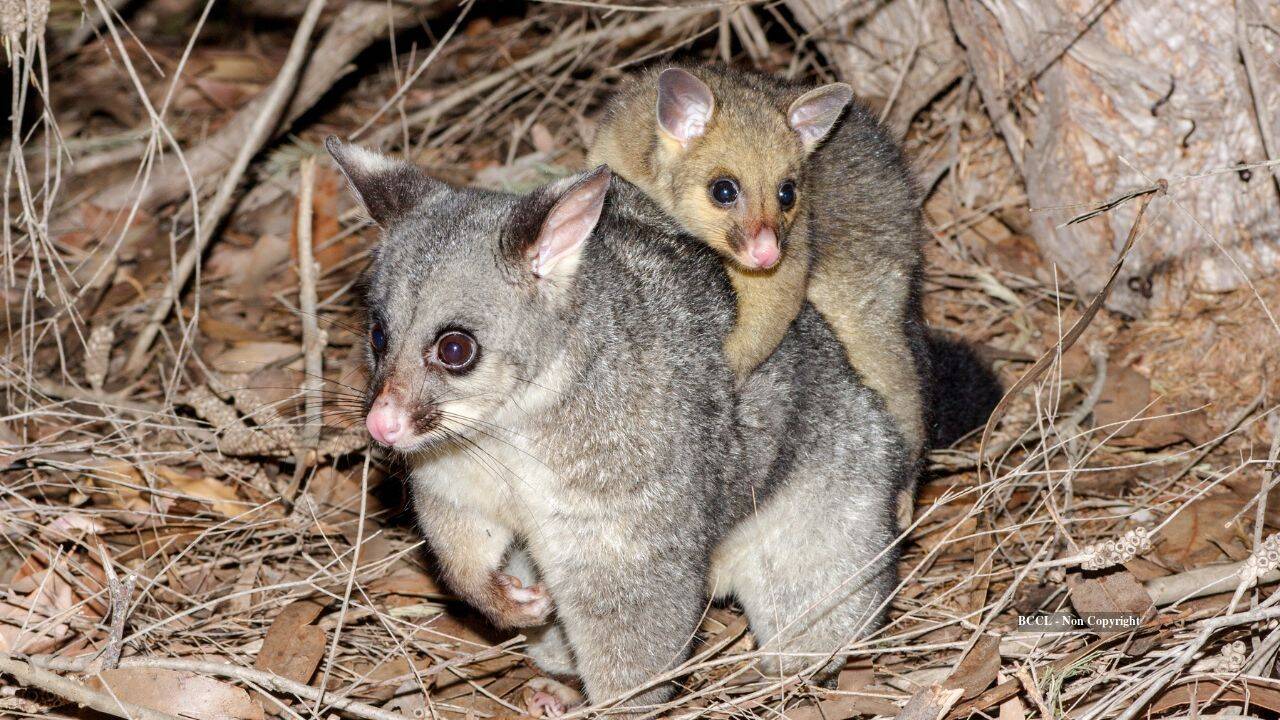
Nearly two hundred years ago, a group of well-meaning settlers brought brushtail possums from Australia to New Zealand to jumpstart a fur trade. They had no idea what they were unleashing. Today, that single decision haunts conservationists across the islands. In a rare lowland forest ecosystem, scientists recently discovered that these furry invaders have damaged or heavily defoliated half of the native trees. It is a brutal reminder of how easily an introduced species can unravel a fragile, isolated environment.
If you look closely at New Zealand's biodiversity crisis, you quickly realize it is a masterclass in unintended consequences. Islands evolve in isolation. Without native mammalian herbivores or predators, plants take entirely different evolutionary paths. They do not develop tough chemical defenses or rapid regenerative traits against creatures that strip bark and gorge on canopy foliage. When brushtail possums arrived in 1837, they stepped into an absolute paradise with zero natural predators and an endless buffet of defenseless vegetation.
How Half the Canopy Got Decimated
You might wonder how a relatively small marsupial can cripple an entire forest. The answer lies in their sheer numbers and dietary habits. Possums are notoriously picky eaters with expensive tastes. They do not just eat leaves; they target the most nutritious parts of the canopy. In vulnerable mixed-broadleaf forests, they systematically strip favored species like kamahi, northern rata, and tree fuchsia until the trees simply cannot photosynthesize anymore.
Recent ecological surveys inside some of the country's last remaining rare lowland remnants reveal a grim picture. Researchers measuring canopy health found that roughly fifty percent of mature trees show severe structural damage from repeated browsing. Entire sections of the forest ceiling are thinning out. When the canopy dies back, sunlight floods the dark forest floor. This sudden shift triggers massive invasions of weeds and exotic grasses that choke out native fern seedlings and ground-cover species. It is a domino effect that changes the physical structure of the landscape forever.
The Broader Ecological Ripple Effect
The destruction does not stop at the flora. Forests are complex webs. When you pull out the canopy trees, the entire neighborhood suffers. Native bird species like the kereru, tui, and bellbird rely heavily on the flowers, fruit, and nectar produced by the trees that possums love to snack on. As the food supply shrinks, native bird populations crash.
Worse yet, possums are omnivores. While they prefer leaves and shoots, they are more than happy to raid the nests of native birds. They devour eggs and chicks of flightless or ground-nesting species that have no evolutionary strategy to fight back. Every time a possum climbs a tree, it is not just hurting the wood; it is actively raiding the cradle of New Zealand's unique avian heritage.
Conservation groups have spent decades trying to stem the tide. Large-scale aerial drops of 1080 poison, extensive trapping networks, and community-led eradication projects have successfully cleared possums from offshore islands and large mainland sanctuaries. Yet, managing isolated pockets of rare lowland forest remains an uphill battle. Reinvasion is constant. Surviving possums breed quickly, and the moment control efforts lapse for even a few months, their numbers bounce right back up.
Protecting these rare forest remnants requires aggressive, ongoing intervention. You cannot simply fence them off and walk away. Eradication takes funding, community grit, and relentless boots on the ground. If New Zealand wants to save the remnants of its primeval forests from a nineteenth-century mistake, the work has to be constant, unyielding, and targeted.