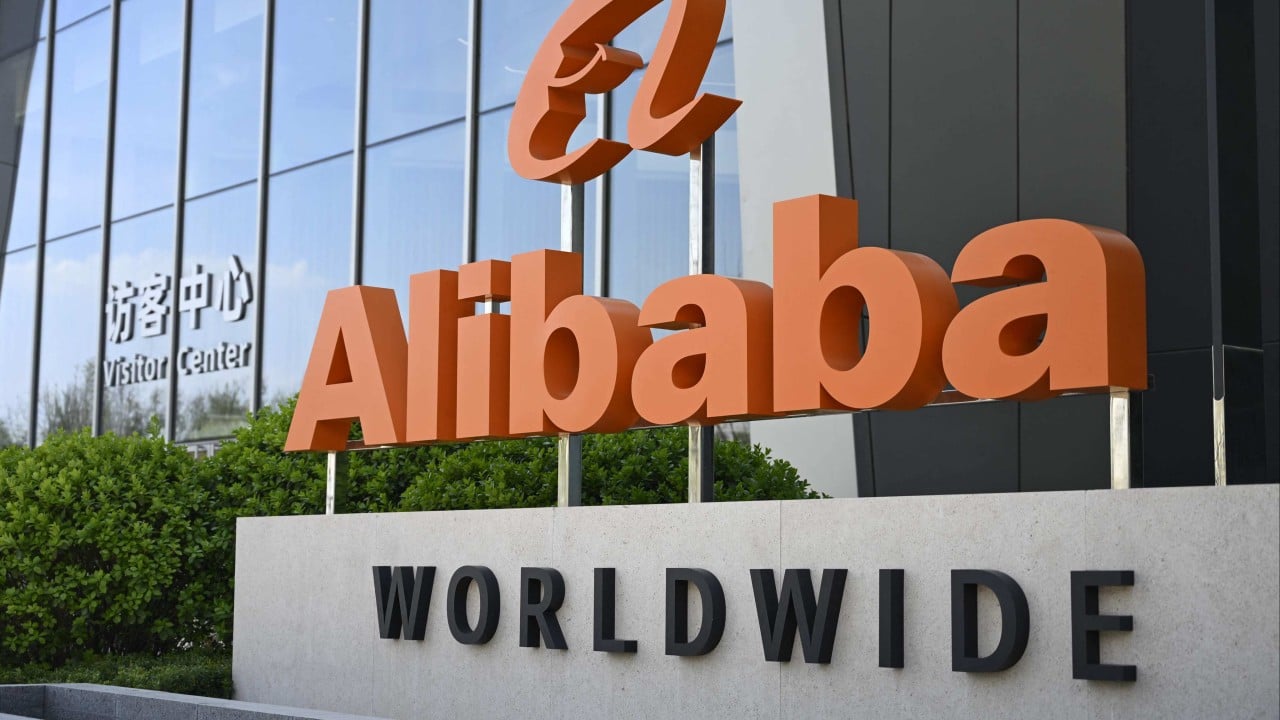
The tech press is currently swooning over Alibaba’s declared pivot from AI investment to AI commercialisation. The narrative is comforting: the frantic, cash-burning era of building foundation models is supposedly maturing into a neat, profitable era of enterprise adoption. Alibaba is slashing prices, open-sourcing its Qwen models, and claiming that cloud revenues will balloon as a result.
It is a beautiful fiction. It is also completely wrong. Also making news in this space: The Literary Whodunit That Exposed Publishing’s Biggest Vulnerability.
The assumption that massive infrastructure investment naturally gives way to high-margin software monetization is a hangover from the SaaS era. AI does not scale like SaaS. By treating AI compute as a traditional utility, tech giants are trapped in a race to the bottom, subsidising their enterprise clients' experimentation while taking on massive capital risk. Alibaba is not signalling the next phase of growth; they are signalling the commoditization of their own technology.
The Open Source Trap and the Fallacy of Price Cuts
Alibaba recently slashed prices for its Qwen models by up to 97%. The consensus view is that this aggressive pricing strategy lowers the barrier to entry, hooks developers into the Alibaba Cloud ecosystem, and drives long-term commercialisation. More insights regarding the matter are explored by TechCrunch.
This is basic economic misunderstanding.
When you cut prices by 97% on a commodity that requires massive capital expenditure to maintain, you aren't building a moat. You are destroying the value of the market. Unlike traditional software, where marginal cost drops to near zero, AI inference carries persistent, heavy hardware costs. Every API call hits a GPU.
Open-sourcing powerful models like Qwen 2.5 while simultaneously cratering API pricing creates a structural paradox:
- Zero Loyalty: Developers use cheap APIs because they are cheap. The moment another hyper-scaler drops prices further, or a local model becomes more efficient, they migrate.
- The Churn Reality: Enterprises are using these cheap tokens to build wrappers, not core infrastructure. I have watched enterprises burn through millions in subsidized cloud credits trying to force LLMs to do basic database lookups, only to abandon the project when the credits run out.
- Self-Cannibalization: By offering top-tier open-source weights, Alibaba allows sophisticated enterprises to bypass their cloud entirely, running models locally or on cheaper specialized hardware infrastructure elsewhere.
We are told that volume will fix this. It won't. If your unit economics are broken, scaling the volume only scales the bleeding.
Why AI Compute Is Not the New Cloud Computing
The core argument driving the tech sector's current optimism is that AI infrastructure will mirror the evolution of cloud computing. Amazon Web Services (AWS) spent billions building data centers, rented them out, and achieved incredible margins. The consensus states Alibaba will do the same with AI.
This comparison collapses under scrutiny.
Cloud computing sells predictable utility: storage, compute, and bandwidth. A virtual machine rented in 2016 operates on fundamentally similar logic to one rented today. AI compute, however, is tethered to a rapidly depreciating asset class.
Imagine buying a fleet of delivery trucks, but every twelve months, a new engine design enters the market that is ten times faster and uses a fraction of the fuel. Your existing fleet instantly becomes worthless liabilities. This is the hardware depreciation cycle driving the AI infrastructure race.
+-----------------------------------------------------------------------+
|                       THE CAPEX DEPRECIATION TRAP                     |
+-----------------------------------------------------------------------+
|                                                                       |
|  [ Year 1: Heavy Capex ] ---> Buy Cutting-Edge H100/B200 Clusters     |
|                                     │                                 |
|                                     ▼                                 |
|  [ Year 2: Rapid Obsolescence ] -> Next-Gen Architectures Launch      |
|                                     │                                 |
|                                     ▼                                 |
|  [ Year 3: Asset Write-Down ] ----> Compute Value Plummets 80%        |
|                                                                       |
+-----------------------------------------------------------------------+
Hyper-scalers are forced to invest tens of billions into hardware that depreciates faster than it can be monetized through enterprise workflows. When Alibaba notes that its cloud revenue is growing due to AI adoption, they rarely highlight the net margins of that specific revenue. It is low-margin, high-risk compute rental disguised as high-margin ecosystem growth.
Dismantling the Enterprise Adoption Myth
Go to any enterprise tech conference, and you will hear variations of the same question: How can businesses best implement generative AI to achieve operational ROI?
The question itself is flawed. It assumes that generative AI, in its current architectural form, is ready for enterprise-wide deployment.
The industry standard metrics for success in the enterprise space are deterministic: 99.999% uptime, strict compliance, predictable costs, and absolute data privacy. Large Language Models are probabilistic by design. They are engines of plausibility, not accuracy.
When companies try to cross the chasm from pilot to production, they encounter hidden structural barriers that the hyper-scalers conveniently ignore:
The RAG Illusion
Retrieval-Augmented Generation (RAG) is pitched as the silver bullet for hallucinations. Companies connect their internal databases to a model like Qwen, expecting a flawless corporate oracle. In practice, RAG systems scale linearly in complexity and cost. Managing chunking strategies, vector database latency, and embedding drift requires dedicated engineering teams. The cost of maintaining the RAG pipeline frequently outpaces the efficiency gains of the automation.
The Context Window Fallacy
Alibaba and its competitors frequently tout massive context windows (e.g., 128k or 1 million tokens) as proof of commercial readiness. They claim you can dump entire codebases or financial histories into the prompt. They don't mention standard needle-in-a-haystack degradation. As context windows grow, the model's retrieval accuracy across the middle of that context drops significantly. Enterprises relying on these long windows for compliance or audit auditing are walking into a legal minefield.
The Intellectual Property Standoff
Sophisticated enterprises do not want their proprietary data interacting with public infrastructure, nor do they trust indemnification clauses completely. The real value is in the data, not the model. By pushing for centralized cloud commercialisation, hyper-scalers are fighting against the natural corporate instinct to keep critical intellectual property locked down locally.
The Brutal Reality of AI Monetization
If the current path to commercialisation is a dead end, what does real value look like? It is far narrower than Big Tech wants to admit.
True monetization is not happening at the platform layer, nor is it happening via generalized chat interfaces. The only entities consistently making money in this cycle are hardware providers, specialized vertical application monopolies, and the consulting firms paid to clean up failed implementations.
| Layer | Promised Value | Reality |
|---|---|---|
| Infrastructure (Cloud) | High-margin utility scaling | Commodity price wars, rapid hardware depreciation |
| Model Layer (APIs) | Proprietary intellectual property | Rapid commoditization via open source |
| Application Layer | Ubiquitous productivity leaps | Fragmented, low-retention workflow wrappers |
The platform play is dead. There will be no Windows or iOS of AI. The underlying models are becoming interchangeable background infrastructure, much like databases or server architecture. Alibaba’s massive price cuts are a tacit admission of this reality: when you cannot differentiate on capability, you compete on price.
The Counter-Intuitive Playbook for Survival
If you are an executive navigating this environment, stop listening to the hyper-scaler marketing departments. Stop assuming you need to rebuild your business around a third-party foundation model API.
Instead, execute the opposite strategy.
1. Freeze Platform Expansion
Stop trying to find a use case for AI across every department. It introduces unnecessary risk and tech debt. Focus exclusively on narrow, deterministic bottlenecks where automated text generation or transformation has a clear, measurable dollar value.
2. Default to Small, Local Models
Do not pay for a 70-billion parameter model via an external API when a fine-tuned 8-billion parameter model running on your own infrastructure can handle the task at a fraction of the cost and with absolute data security. The future of enterprise AI is small, highly specialized, and local.
3. Treat Compute as an Expense, Not an Asset
If you must use cloud infrastructure, do not lock yourself into long-term compute contracts based on current model architectures. The hardware landscape will look completely different in eighteen months. Maintain maximum optionality.
Alibaba’s shift toward commercialisation isn't an orderly transition to a mature market. It is a desperate attempt to find a revenue stream capable of justifying the staggering capital expenditures of the last three years. The enterprise market is being flooded with cheap tokens, subsidized infrastructure, and over-hyped capabilities.
The companies that win this cycle won't be the ones that spent the most on the cloud; they will be the ones that saw through the illusion, kept their data close, and let their competitors fund the race to the bottom.