You might assume artificial intelligence models learn exclusively by scraping the live internet. They ingest billions of blog posts, social media updates, and news articles every single day. That approach hits a brick wall. Web data gets messy, repetitive, and legally hazardous. Companies building large language models face a massive shortage of clean, high-grade text. They need coherent grammar, complex narrative structures, and deep subject matter expertise.
They are buying physical books by the truckload.
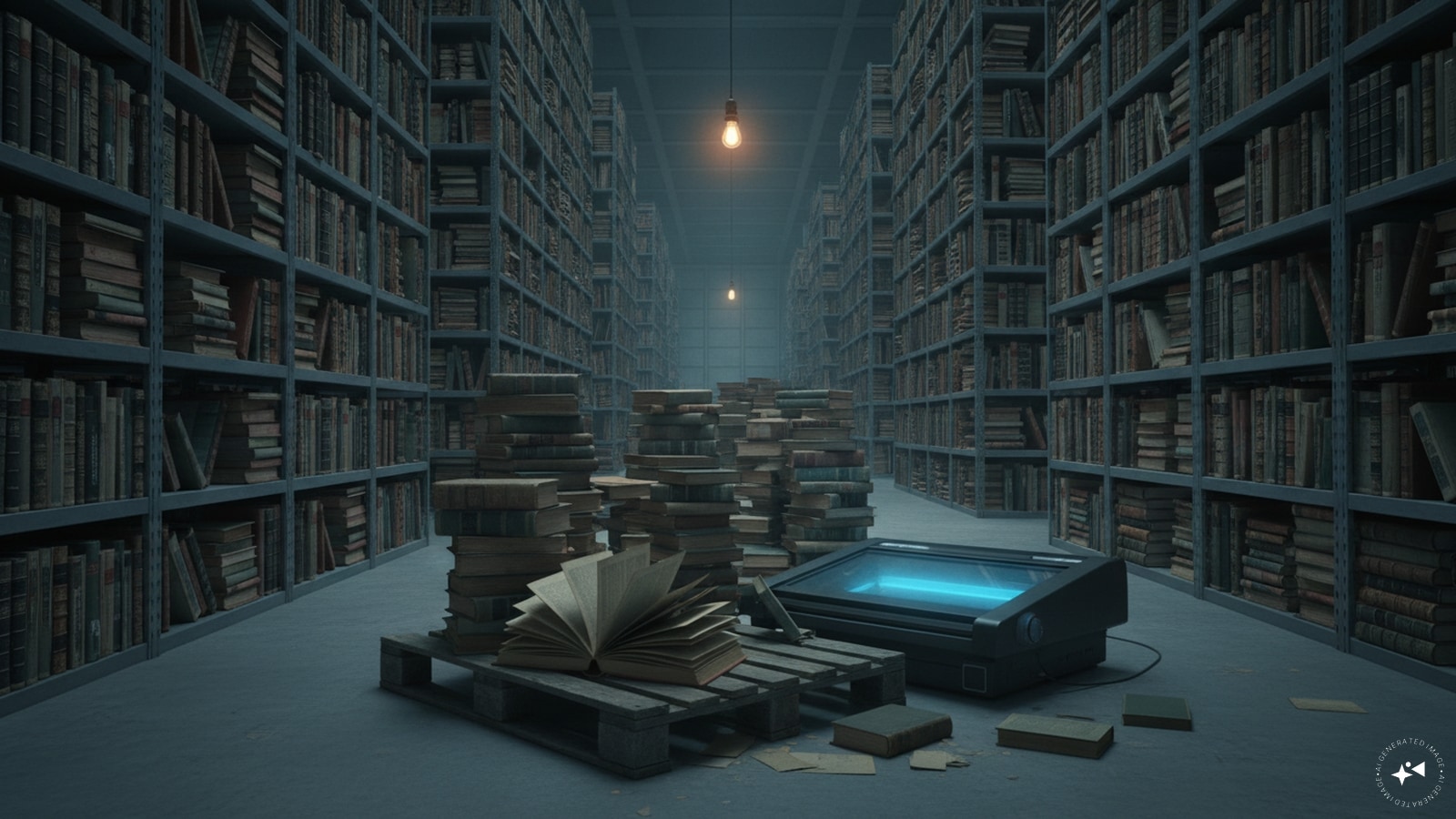
Tech giants and specialized AI startups are quietly spending millions of dollars to acquire antique libraries, digital scans of out-of-print paperbacks, and massive datasets of copyrighted literature. It sounds counterintuitive in an era dominated by cloud computing. Why waste physical resources on dead tree media? The answer changes how we view the future of machine intelligence.
The Quality Crisis in Machine Learning
Most public internet data is garbage. Models trained primarily on modern web forums and comment sections pick up toxic language, poor sentence construction, and shallow reasoning patterns. Engineers call this data degradation. When an algorithm eats its own tail by training on AI-generated text found online, performance collapses.
Books offer something the modern web cannot match. They pass through rigorous editorial oversight, professional copyediting, and long-form fact-checking. A textbook on organic chemistry or a nineteenth-century novel forces a neural network to track long-range dependencies across hundreds of pages.
Think about how human minds develop. You don't learn critical thinking by scrolling through endless short text snippets. You read structured books that build concepts step by step. AI models require the exact same nutritional diet. Without historical literature and academic texts, models plateau. They become great at casual chat and terrible at rigorous problem-solving.
The Copyright Battlefield
Acquiring millions of books creates a legal minefield. Authors and publishers are fighting back against unauthorized ingestion. Class-action lawsuits target tech companies for feeding copyrighted text into training pipelines without permission or payment.
Some firms bypass this by targeting public domain works. Anything published before a certain year is fair game. Startups buy up digitized archives of out-of-print titles from university presses and historical societies. Other companies strike direct licensing deals with major publishers. They pay hefty fees to legally access current catalogs.
This creates a massive economic divide. Well-funded tech monopolies can afford multi-million-dollar publishing contracts. Smaller open-source labs struggle to find legal training data that won't get them sued into oblivion. The race for literature isn't just about intelligence. It is about market dominance.
What Real Literature Teaches Machines
Machines need narrative tension, philosophical discourse, and diverse cultural perspectives. Modern web text skews heavily toward English-language commercial content produced in specific Western bubbles. Old books expand the historical window. They capture idioms, scientific discoveries, and human experiences from centuries past.
When a model processes a biography from the eighteen-hundreds, it learns how people reasoned through industrial change, pandemics, and social upheaval. This historical depth makes the resulting AI more adaptable when handling unprecedented real-world scenarios today.
We often forget that language evolves. Older texts teach models how words shifted meaning over time. That context stops systems from misinterpreting historical documents or legal archives.
Moving Beyond the Scrape
The days of free-for-all web scraping are ending. Publishers protect their assets, lawmakers draft tighter regulations, and the web fills up with synthetic noise. High-end machine learning now depends on physical infrastructure, logistics warehouses filled with old paper, and massive scanning operations.
If you want to understand where artificial intelligence goes next, stop looking at silicon chips. Look at dusty library basements. The future of digital thought rests entirely on the physical pages of the past. Grab a physical book today and read it yourself. The machines are already trying to catch up.