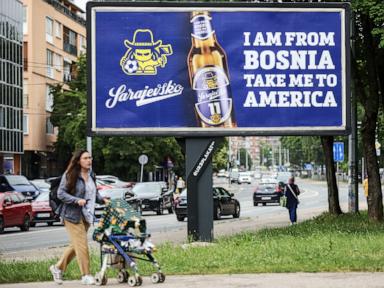
When a sub-pop track recorded in a basement in Sarajevo ends up echoing through a multi-billion-dollar stadium in Qatar, it is not an accident of the algorithm. It is a symptom of a systemic cultural shift. The global sports industrial complex has long relied on sanitized, corporate-approved anthems to soundtrack its tournaments—think of Shakira’s infectious optimism or Pitbull’s glossy, focus-grouped party tracks. Yet, during the recent World Cup cycle, an entirely different kind of song went viral, defying every rule of modern sports marketing. Dubioza Kolektiv, a Bosnian band known for blending ska, punk, and folklore, saw their older track about the death of the American Dream transformed into an unofficial global football anthem.
The phenomenon caught traditional media outlets off guard. Most foreign correspondents covered the story as a whimsical, feel-good anomaly about a catchy tune. That superficial reading completely misses the point. The track did not catch fire because it was upbeat. It caught fire because it gave voice to a profound, cross-border exhaustion with economic precarity, an exhaustion that resonates deeply with the modern working-class football fan.
The Geography of Discontent
To understand how a song tearing down Western consumerism became a stadium banger, you have to look at the economic reality of the Balkans, a region defined by post-war transition and broken promises. For decades, the narrative sold to Eastern Europe was simple: embrace hyper-capitalism, and you will achieve Western prosperity.
Instead, the region experienced mass emigration, inflation, and a devastating brain drain. Dubioza Kolektiv wrote their music from the epicenter of this frustration. Their lyrics explicitly target the myth of immigration as a golden ticket, mocking the visa queues, the grueling low-wage labor awaiting migrants in Western capitals, and the hollow promise of the American Dream.
When this track hit Western algorithms, it collided with a demographic that felt exactly the same way. The modern football fanbase is no longer just the elite who can afford a five-figure ticket to a VIP hospitality suite. The true engine of football culture remains the working and lower-middle classes across Europe, Latin America, and North Africa. These fans are grappling with skyrocketing rent, stagnant wages, and energy crises. When they heard a brass-heavy, high-energy track screaming about the deception of the global economic system, they did not just dance. They internalized it.
Why Corporate Sports Marketing is Breaking Down
For the past twenty years, football governing bodies have attempted to turn the sport into a sanitized family product. FIFA and major confederations spend millions hiring pop stars to craft anthems designed to offend absolutely no one. These songs are stripped of political context, scrubbed of local grit, and polished until they sound like television commercial jingles.
This corporate strategy is failing because it creates a massive authenticity deficit.
Fans are pushing back against the hyper-commercialization of the sport. The Qatar World Cup, marred by controversies over migrant labor and the abrupt banning of alcohol in stadiums, highlighted the massive gulf between corporate organizers and everyday supporters. In that sterile environment, a raw, politically charged song from Bosnia offered an antidote. It was aggressive. It was angry. Most importantly, it felt real.
The irony is delicious. A sport built on the backs of working-class communities had its premier event hijacked by a soundtrack that explicitly condemns the billionaires running the world. It proves that while sports executives can control the branding inside the stadium perimeters, they cannot control the digital ecosystem outside it.
The Mechanics of an Unofficial Viral Hit
How does a song bypass the traditional gatekeepers of the music and sports industries entirely? The answer lies in the decentralization of fan culture.
- The TikTok Fan Edit: Soccer culture on social media is driven by user-generated content. Fans take raw match footage, match it with high-tempo music, and create highlights that spread faster than any official broadcast package.
- The Matchday Playlist: Stadium DJs, particularly in Europe and South America, are under constant pressure to keep crowds energized. When a song gains traction on TikTok, it jumps to the stadium speakers within days, bypassing record label promotions.
- The Universal Language of Ska-Punk: You do not need to speak Bosnian to understand the frantic energy of a minor-key horn section. The sonic profile of the track mimics the traditional chants found in the ultras sections of European stadiums—fast, repetitive, and confrontational.
The Counter Argument and the Risk of Co-Option
There is an obvious critique to be made here. Does a radical protest song lose its teeth when it is played over a stadium sound system funded by state-sponsored oligarchs?
Some purists argue that the moment a counter-cultural track becomes a stadium anthem, its political message is neutralized. The anger is commodified. The crowd is not thinking about the exploitation of migrant labor or the failures of capitalism when the chorus drops; they are jumping up and down because the beat slaps.
That is a valid concern, but it underestimates the agency of the audience. The fans utilizing this music are not passive consumers. In many countries, football ultras use stadium terraces as one of the last remaining spaces for public, collective political expression. By introducing a soundtrack of explicit socio-economic dissent into these spaces, the song reinforces a culture of resistance. It provides a shared vocabulary for fans who know the system is rigged against them, even if they are currently participating in a multi-billion-dollar spectacle.
The New Playbook for Football Culture
The success of this Bosnian track offers a stark lesson for the future of entertainment and sports marketing. The era of the top-down, corporate-mandated hit is drawing to a close. Audiences possess an incredibly sharp radar for artificial sentiment.
If sports leagues want to retain the loyalty of the next generation of fans, they must stop trying to sanitize the sport. They need to understand that the friction, the anger, and the political edge of football are not bugs to be fixed—they are the features that made the game global in the first place.
The industry must stop chasing a mythic, sanitized global consumer and start acknowledging the lived reality of the actual people buying the tickets and streaming the games. Until corporate marketers realize that true cultural resonance cannot be manufactured in a boardroom, the streets—and the basements of Sarajevo—will continue to write the real anthems.