When a political fight turns personal, ask yourself what the attacker doesn't want you to look at.
That's the core argument Abdul El-Sayed made during the heated 2026 Michigan U.S. Senate race as President Donald Trump targeted his Muslim faith and name on the campaign trail. El-Sayed didn't just push back on the insults—he flipped the script, arguing that attacks on his religious identity were a deliberate distraction from rising grocery bills, tariff fallout, and foreign conflict hurting everyday families.
Look at how fast a policy debate gets derailed when identity becomes the headline. One minute voters are talking about prices at the checkout counter or trade disputes with Canada. The next minute, cable news and social feeds are arguing over nicknames, town hall hecklers, and decades-old overseas politics.
What Sparked the Clash Over Faith and Distraction
During the stretch run toward the November 3, 2026 midterm elections, the Michigan Senate race between Democrat Abdul El-Sayed and Republican Mike Rogers became a flashpoint for national politics. Trump jumped into the fray with sharp rhetoric aimed directly at El-Sayed's background and faith—including calling him "Abdul Ramadan" at a campaign event and labeling him a "jihadist Muslim Brotherhood member" during an October rally in Port Huron, Michigan.
El-Sayed's response was blunt. Speaking in interviews and campaign statements, he argued that Trump was leaning on his name and Muslim identity to change the subject from economic squeeze and unpopular policies. In one exchange after Trump used the nickname "Abdul Ramadan," El-Sayed pointed straight back to kitchen-table costs, quipping that with grocery prices so high, it seemed like the president was trying to impose Ramadan on everyone else.
At a town hall in Caro, Michigan, El-Sayed also confronted questions and online insinuations tying him to the Muslim Brotherhood. He flatly disavowed the group, called out claims about 1970s Egypt when he was born in Rochester Hills, Michigan in 1984, and echoed John F. Kennedy's famous framing on Catholicism—telling voters he wasn't running to be a "Muslim senator," he was running for the U.S. Senate and happened to be Muslim.
Meanwhile, Republicans and critics saw it differently. Rogers argued in a CNN interview that El-Sayed's disavowal wasn't enough and framed his questions around ideology rather than faith itself. Trump defended his rhetoric at a Kentucky rally by saying, as president, he could call El-Sayed whatever he wanted, noting El-Sayed's middle name is Mohammad.
Why Voters Often Hear Culture Wars Instead of Policy Math
If you've watched enough modern campaigns, you know the playbook. Policy arguments are slow, messy, and easy to fact-check. Identity fights move at lightning speed.
When voters feel pinched by high food prices, uncertain trade rules, or costly foreign entanglements, incumbents and allied surrogates face real pressure to defend results. Attacking an opponent's religious background—or insinuating divided loyalties—activates strong emotional reactions on both sides. Supporters rally around a perceived threat; opponents spend days playing defense instead of pressing their own economic message.
Honestly, that dynamic is tough on candidates and voters alike. El-Sayed even spoke candidly in an October interview with ABC News about the toll of campaigning while parenting, noting how his wife, Sarah, kept the TV off at home so their kids wouldn't see negative ads. That detail gets lost in viral clips, yet it shows how personal these nationalized races become for real families.
Still, voters aren't blank slates. People can care about cultural identity and care deeply about whether their paycheck stretches further next month. Calling something a "distraction" is a potent political frame, though critics will always counter that ideology, foreign policy views, and past associations are fair game in a federal race.
The Bigger Picture Beyond One Senate Race
This clash didn't happen in a vacuum. Broader debates over Islamophobia, U.S. foreign policy in the Middle East, and how political leaders talk about American Muslims have been front and center across the country.
- Economic friction vs. cultural framing: In Michigan—where border trade with Canada, auto manufacturing, and household costs matter directly to voters—candidates constantly fight over who owns the cost-of-living issue.
- Foreign policy fault lines: El-Sayed drew sharp attention for criticizing U.S. military involvement and questioning traditional assumptions about U.S.-Israel relations, which added another layer of intense debate alongside domestic economic arguments.
- Historic representation: Following the November 3, 2026 election, El-Sayed's victory made him the first Muslim elected to the U.S. Senate, turning a fiercely contested campaign into a historic milestone.
In politics, every side claims the other is dodging the real issue. Voters usually decide who's telling the truth by checking which argument matches what they experience in their own daily lives.
How to Cut Through Campaign Noise and Evaluate Claims
If you're following heated political coverage—whether in Michigan or anywhere else—don't let viral one-liners do your thinking for you. A few practical habits help keep your bearings:
- Separate the insult from the policy record. When a leader uses a nickname or identity jab, write down what policy topic was in the news five minutes earlier. Usually, that reveals the exact pressure point someone wants to move past.
- Read full quotes, not just clip captions. Short clips on social media strip away context—both when politicians attack and when candidates answer tough town hall or debate questions.
- Check primary sources on major claims. When accusations involve historical groups, foreign policy positions, or economic impacts, look up reputable reporting, official statements, and nonpartisan data rather than relying on partisan summaries.
- Focus on concrete trade-offs. Ask what happens to real households under a proposed tariff, healthcare plan, or foreign policy shift—who pays more, who benefits, and what evidence backs the claim.
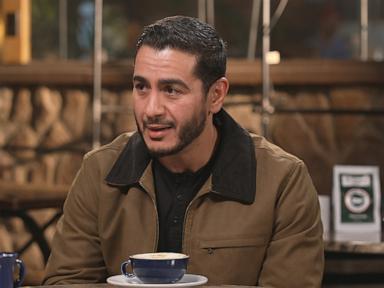
NBC News clip on El-Sayed's response to Trump's nickname
This short clip captures how El-Sayed directly linked Trump's name-calling to high grocery prices during the campaign stretch.