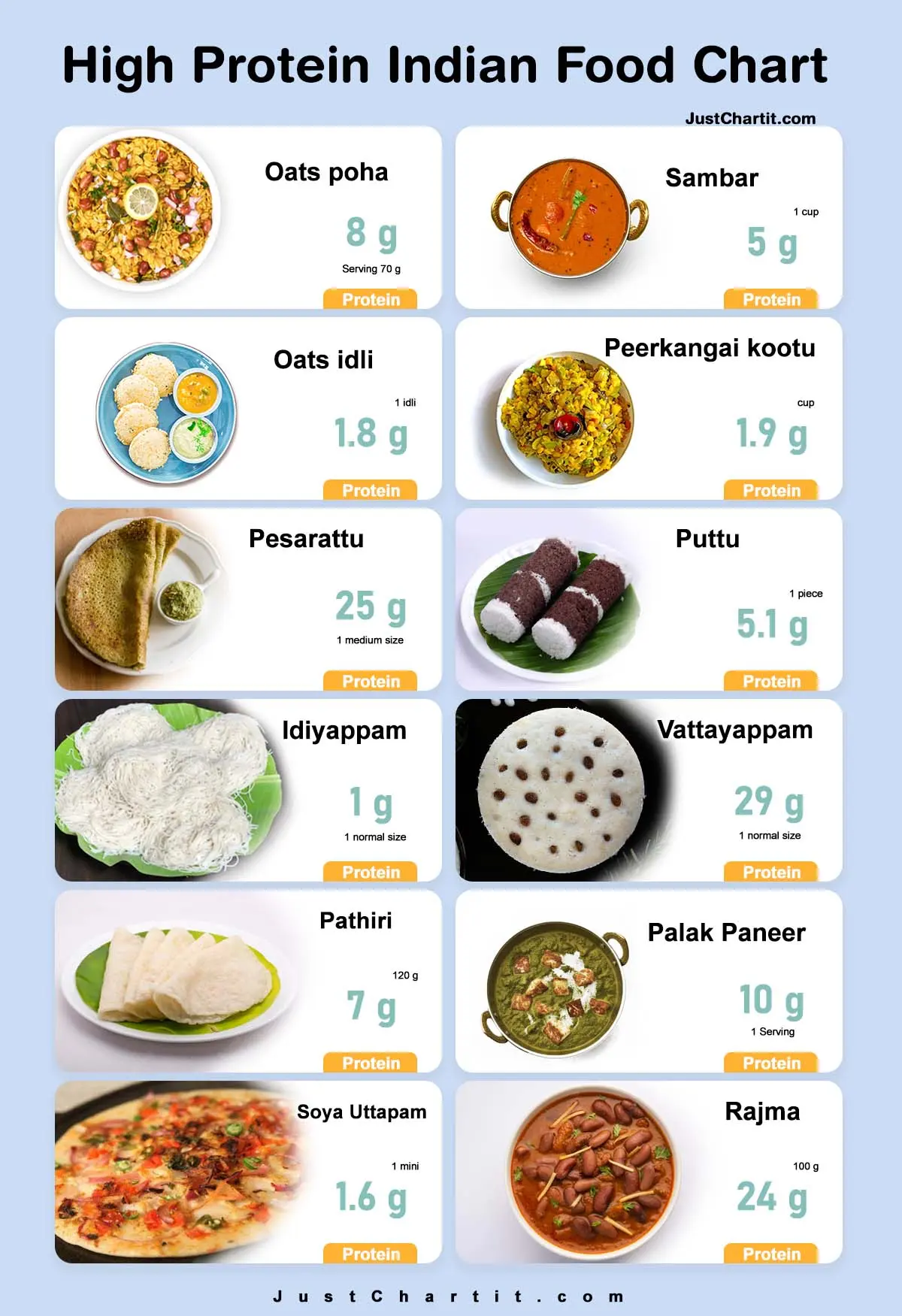
You're probably tired of seeing the same generic graphics. You know the ones—a blurry JPEG of a chicken breast and a scoop of whey protein that some fitness "guru" posted in 2014. If you’ve been hunting for a high protein food chart, you aren't just looking for a list of things you already know are healthy. You want to know how much to eat without feeling like a math student, and you want to know what to buy when the grocery store is out of eggs. Honestly, getting your protein right is the single most effective lever you can pull for metabolic health. It's not just about "gains." It's about staying full so you don't eat an entire sleeve of crackers at 9:00 PM.
The reality is that protein needs are deeply individual. The RDA (Recommended Dietary Allowance) is often cited as 0.8 grams per kilogram of body weight, but many researchers, like Dr. Gabrielle Lyon, author of Forever Strong, argue this is the bare minimum to prevent deficiency, not the optimal amount for longevity. If you’re active, you’re likely looking at double that. Let’s get into the weeds of what actually belongs on your plate.
Why Your Current High Protein Food Chart Is Probably Lying to You
Most charts give you "per 100g" measurements. That’s useless. Nobody weighs out exactly 100 grams of steak in the middle of a busy Tuesday. We think in servings. A palm-sized piece of meat is roughly 25 to 30 grams of protein. That is your baseline.
Bioavailability matters too. This is where things get controversial. The DIAAS (Digestible Indispensable Amino Acid Score) is the gold standard for measuring how well your body actually uses the protein you eat. Animal proteins like eggs and dairy consistently score higher than plant sources because they contain all the essential amino acids in the right proportions. If you're relying on peanut butter for protein, you're mostly eating fat. Sorry. One tablespoon of peanut butter has maybe 4 grams of protein but nearly 100 calories. To get 30 grams of protein from peanut butter, you’d have to consume over 700 calories. That's a recipe for accidental weight gain, not muscle synthesis.
The Heavy Hitters: Animal-Based Essentials
Let's look at the lean stuff first. Chicken breast is the cliché for a reason. In a standard 6-ounce serving, you’re looking at about 54 grams of protein. It's efficient. Turkey breast is nearly identical but often overlooked unless it’s November. White fish like cod or tilapia is basically pure protein with almost zero fat. It's great if you’re trying to cut calories but stay satiated. Lean beef (90/10 or 93/7) provides heme iron and B12, which you won't get from poultry. A 6-ounce burger patty (sans bun) gives you roughly 42 grams of protein.
Then there’s the "Liquid Gold" of the dairy aisle. Greek Yogurt is a miracle food. Seriously. A single cup of plain, non-fat Greek yogurt can pack 20 to 25 grams of protein. Compare that to regular yogurt which might have 6 grams. It’s a massive difference. Cottage cheese is making a huge comeback on social media, and for good reason. It’s high in casein, a slow-digesting protein that keeps you full for hours. A half-cup serving sits at about 14 grams.
High Protein Food Chart: Plant-Based Realities
If you don't eat meat, you have to be more strategic. You can’t just "eat more beans" and hope for the best because the fiber will eventually make your digestion a nightmare before you hit your protein goals.
Seitan is the undisputed king of plant protein. It’s made from wheat gluten and has a texture shockingly close to meat. A 3-ounce serving offers about 21 grams of protein. Tempeh and Tofu are the reliable backups. Tempeh is fermented, which is better for your gut, and packs about 15 grams per half-cup. Tofu is slightly lower at 10 grams for the same amount but is more versatile for cooking. Lentils are great, but they are a "carb-protein" hybrid. You get 18 grams of protein per cooked cup, but you also get 40 grams of carbohydrates. You have to account for that in your daily totals.
The "Sneaky" Protein Sources
Sometimes you just need to bridge the gap. Edamame is a fantastic snack; a cup gives you 18 grams. Pumpkin seeds are surprisingly dense, with about 9 grams per ounce. Bone broth isn't a "complete" protein—it lacks tryptophan—but it adds an easy 10 grams to your day if you sip it like tea.
Organizing Your Day Around Protein
Forget the "3 square meals" rule if it doesn't work for you. Most people find success with "Protein Pacing." This means hitting 30-50 grams of protein at every meal. Why? Because of the Muscle Protein Synthesis (MPS) threshold. Your body needs a certain "trigger" amount of the amino acid leucine (usually found in 25-30g of high-quality protein) to actually start building or maintaining muscle tissue.
If you eat 10 grams of protein five times a day, you might never actually trigger that process. You’re just treading water.
Eat big.
Breakfast is where most people fail. They eat toast or a bagel. That’s a missed opportunity. Switching to an omelet with three eggs and a side of turkey sausage puts you at 35 grams before 9:00 AM. That change alone can stop mid-afternoon sugar cravings dead in their tracks. It’s about blood sugar stability. Protein takes longer to break down, which prevents the insulin spikes that lead to the "3 PM crash."
The Truth About Protein Powders
You don't need them, but they are convenient. Whey Isolate is the fastest absorbing and has the highest leucine content. If you're vegan, a Pea and Rice blend is your best bet because the combination creates a complete amino acid profile that a single plant source usually lacks. Check the labels, though. Many "protein" bars are just candy bars with some soy nuggets thrown in. If the bar has 20 grams of sugar and only 10 grams of protein, put it back.
Practical Mapping: Building Your Plate
Think of your plate in layers. Base Layer: Your protein source (The size of your hand). Second Layer: Fiber (Two handfuls of greens or cruciferous veggies). Third Layer: Flavor/Fats (A thumb-sized portion of avocado, oil, or nuts).
If you follow this visual high protein food chart, you don't need to track every calorie in an app. You just need to ensure the protein is the star of the show.
Specifics for the grocery list:
- Canned Tuna/Salmon: Cheap, shelf-stable, 20g+ per can.
- Egg Whites: Add them to whole eggs to bulk up protein without skyrocketing fat.
- Pork Tenderloin: Often cheaper than beef and just as lean as chicken.
- Quinoa: Better than rice, but still a carb. Treat it as a "bonus" protein.
Navigating Social Situations and Restaurants
Eating out is the ultimate test. The easiest hack? Order "double meat." Most restaurants serve about 3-4 ounces of protein in a dish. That’s not enough. Asking for an extra chicken breast or a double patty on your burger (no bun) ensures you hit that 40g-50g sweet spot.
Beware of salads. A "Chicken Caesar" often has more calories from the dressing and croutons than protein from the chicken. Always ask for dressing on the side and prioritize the grilled protein over the "crunch."
Actionable Steps for the Next 24 Hours
Stop overcomplicating the science. You don't need a PhD; you need a plan.
- Audit your breakfast. If it’s less than 30g of protein, change it tomorrow. Swap the cereal for Greek yogurt or eggs.
- Buy "Convenience Protein." Pick up a rotisserie chicken or some pre-cooked hard-boiled eggs. The biggest barrier to high-protein eating is the prep time. Remove the friction.
- Drink your water. High protein intake requires your kidneys to work a bit harder to process urea. If you're upping the meat, up the hydration.
- Prioritize whole foods. Use shakes as a backup, not a foundation. The thermic effect of food (TEF) is higher for whole proteins—meaning your body actually burns more calories just digesting a steak than it does digesting a shake.
Focus on the big wins. Don't worry about whether your seeds are organic or if your chicken was "massaged." Just get the grams in. Consistency over six days beats perfection for one day every single time.
Now, go look at your fridge and see what’s missing. If there isn't a clear protein source for your next three meals, it's time for a grocery run.


