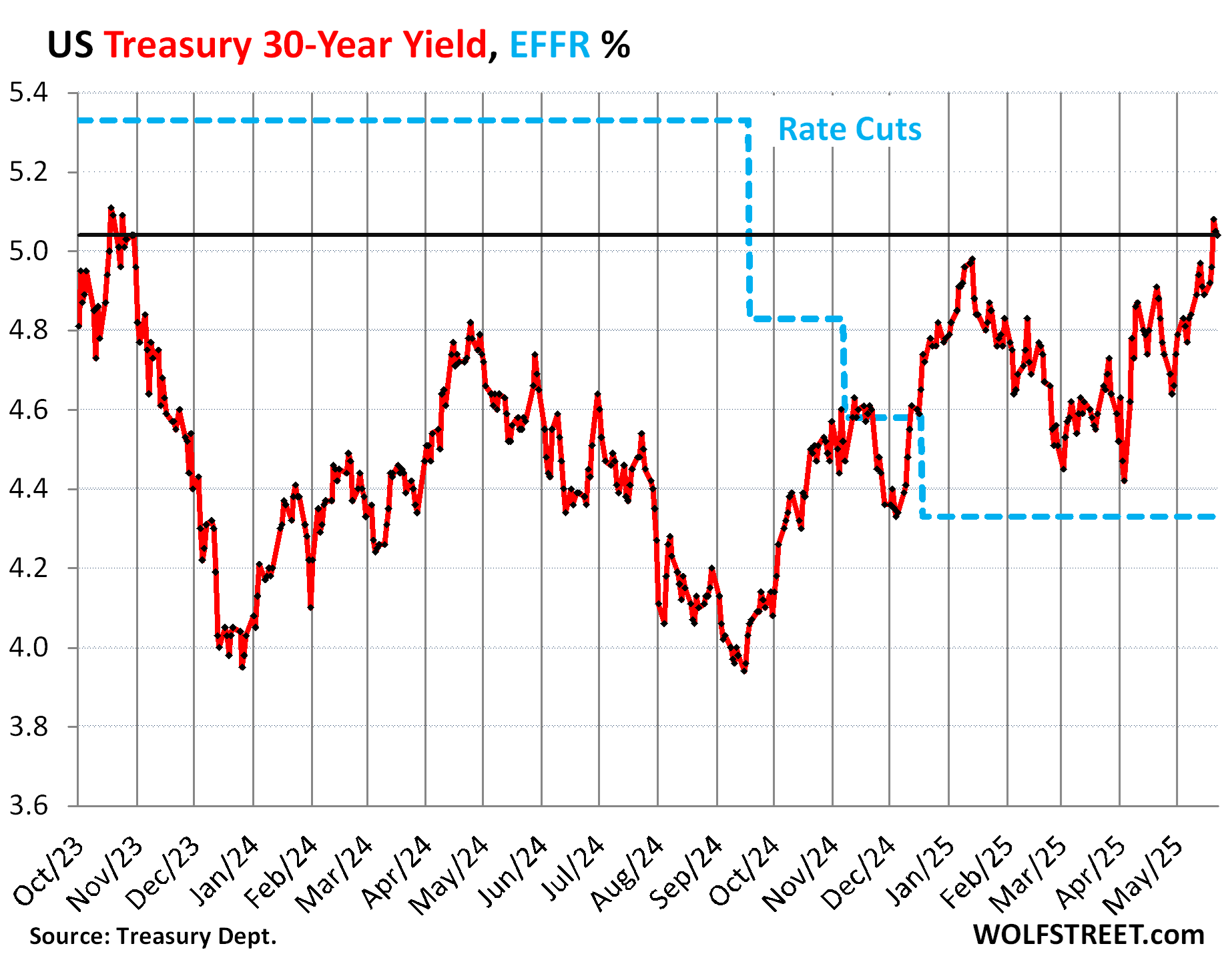
Borrowing costs are getting out of hand. When the 30-year Treasury yield climbs past 5.33 percent, hitting territory we haven't seen in nearly two decades, the financial shockwaves hit everyone. From mortgage holders to corporate CFOs, the reality is sinking in. Money isn't cheap anymore.
You're probably wondering how we got here. Inflation refuses to stay down, government spending keeps accelerating, and bond investors are demanding a higher premium for locking up their cash for three decades. This isn't just a number on a Wall Street terminal. It dictates what you pay for a house, how much businesses spend on expansion, and whether your retirement portfolio is taking a beating. Meanwhile, you can read other stories here: Retail Margins Versus Tech Valuations Structural Stress Tests Ahead of Earnings.
Let's break down why this 19-year high matters and what you should actually do about it.
The Debt Supply Shock Nobody Talks About
The government borrows a staggering amount of money. Every single month, the Treasury department auctions off massive piles of debt to fund federal deficits. When supply swamps demand, prices drop and yields jump. Basic economics. To explore the full picture, we recommend the recent analysis by Harvard Business Review.
Investors aren't feeling generous. With Washington deadlocked over spending reforms and national debt spiraling past historic thresholds, buyers demand higher compensation for taking on long-term risk. They look at the next thirty years and see inflation risks, massive entitlement spending, and geopolitical instability.
If you think the government can just print its way out of this, look at the bond market. Bond vigilantes are back. They are refusing to buy long-term debt unless the yield makes it worth the inflation risk. That pushes yields higher, which cascades through the entire financial ecosystem.
How High Yields Crush Your Daily Finances
Higher Treasury yields do not live in a vacuum. They form the gravity of the financial world. Every other loan rate is priced relative to government bonds.
Mortgage rates follow the 10-year and 30-year Treasury yields closely. When government yields spike, your home loan rate climbs right alongside them. Buying a house right now means locking in a monthly payment that is significantly higher than it would have been just a few years ago. That locks up housing inventory and freezes buyers in their tracks.
Car loans, credit cards, and business loans follow suit. Companies that rely on debt financing to build factories, hire workers, or fund research suddenly face a much higher hurdle rate. Projects that made sense at 3 percent returns look disastrous at 6 or 7 percent.
The Fixed Income Illusion
For years, people called bonds safe. Then inflation and rising rates crushed bond portfolios, causing historical drawdowns. If you bought long-term bonds when yields were low, your portfolio took a massive haircut as market rates climbed.
Now that yields sit above 5 percent, fixed income looks attractive again. Cash equivalents and short-term instruments yield decent returns without locking your capital up for decades. But buying a 30-year bond at 5.33 percent comes with severe reinvestment and inflation risks. If inflation averages 4 percent over the next decade, your real return is microscopic.
Rethinking Your Strategy in a High Yield Environment
Stop treating high interest rates as a temporary glitch. This is the new normal, or at least a return to historical norms after an abnormal decade of zero-percent interest rate policy.
You need to adjust your approach immediately.
- Eliminate variable debt: If you have high-interest revolving debt, pay it down aggressively. Floating rates will punish you as long as the Federal Reserve keeps policy tight to combat stubborn inflation.
- Lock in yields wisely: If you are buying fixed income, consider laddering maturities. Avoid dumping all your cash into a 30-year duration just because the headline rate looks tempting.
- Focus on cash flow: Businesses and individuals with strong cash positions win in high-rate environments. Relying on continuous refinancing is a recipe for bankruptcy.
The era of cheap money is dead. A 5.33 percent 30-year Treasury yield is a loud warning siren from the bond market. Pay attention, adjust your leverage, and protect your capital before the next shoe drops.