Smoke curls through the bamboo rafters of a southern village at dawn. Outside, the river moves with a heavy, monsoon-swollen grace, smelling of mud and crushed reeds. Inside, fingers stained green from stripped leaves work with the practiced, hypnotic rhythm of centuries.
We think of history as something carved in marble or inked on brittle parchment locked behind museum glass. We look at broken swords and shattered urns and imagine our ancestors lived in a different register of existence. But history is also sticky. It is fragrant. It is wrapped tightly in leaves and boiled until the glutinous rice surrenders its individual grains to a singular, cohesive soul.
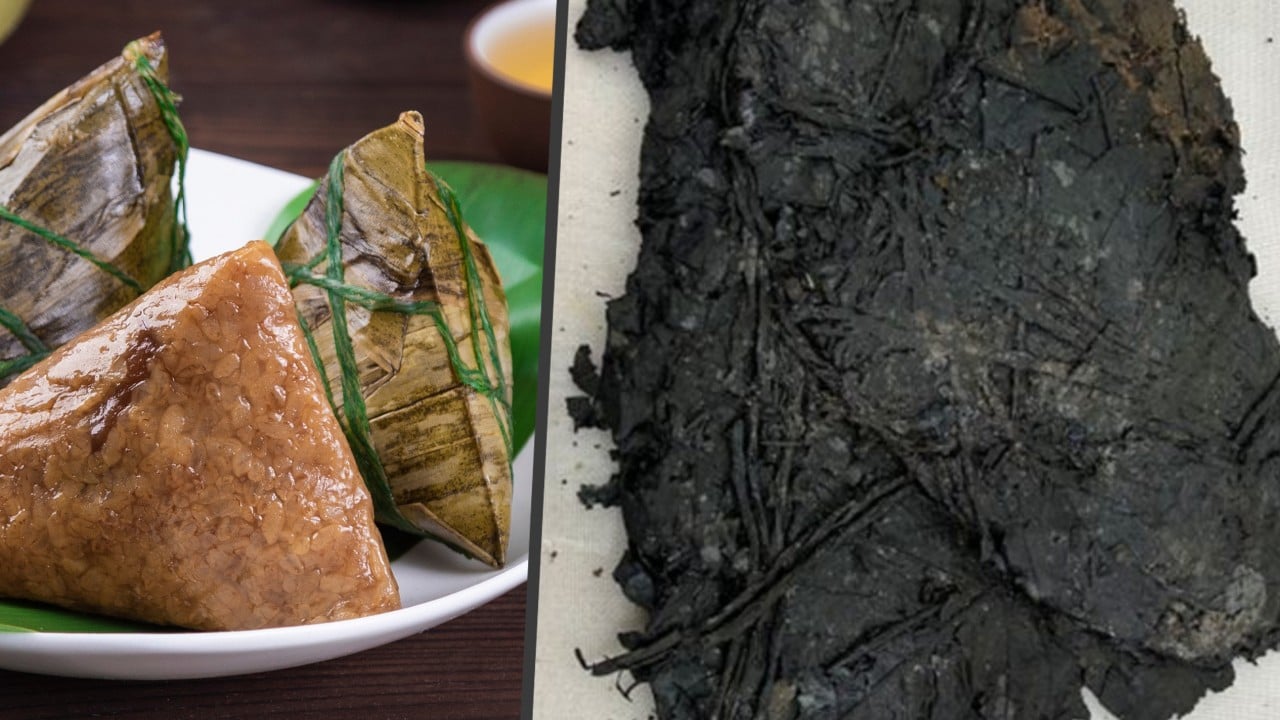
Deep in the rich earth of Hunan province, Chinese archaeologists recently pulled back the damp soil to reveal a ghost from the Qin and Han dynasties. They found food. Not fossilized grains or the vague chemical signature of ancient feasts, but preserved remnants of zongzi—the triangular rice dumplings that millions of people still unwrap every summer during the Dragon Boat Festival.
Two thousand two hundred years. Think about what has vanished in that span. Entire dynasties rose, fractured, and burned to ash. Languages shifted. Borders bled across maps and redrew themselves in blood and ink. Yet, here it was: a humble snack of sticky rice, preserved by waterlogged anaerobic magic, whispering a direct message from a kitchen two millennia gone.
To understand why this matters, you have to step away from the academic papers and into the damp air of a Warring States kitchen.
Imagine an old woman standing over a steaming bronze cauldron. Her hands are gnarled, her knuckles swollen from damp weather and endless labor. She does not know about the Emperor Qin Shi Huang unifying the script, nor does she care much about the political machinations of the Chu state. She cares about the harvest. She cares about feeding the mouths gathered around her hearth before the autumn rains set in.
She takes broad, tough leaves—likely reed or bamboo—and folds them into a tight, secure cone. Into this pocket goes the rice, perhaps spiked with a handful of red beans or a sliver of preserved meat if the family had a rare bit of luck at the market. She pulls the leaf tips over, binds the package securely with strips of wild grass, and drops it into the roiling, bubbling water.
She is making zongzi. And she is doing it for the exact same reason a mother in modern Shanghai does it today: to anchor her family to the turning of the seasons.
Centuries later, the scholar Wen Wu would write down the folklore that came to define this ritual. We are told the story of Qu Yuan, the tragic poet and statesman of the Chu kingdom who walked into the Miluo River in despair after watching his homeland fall to ruin. Legend says the local fishermen raced out in their narrow boats, beating drums to scare away the river spirits and tossing packets of rice into the deep water so the fish would feed on the offerings instead of the poet's body.
That is the myth. That is the grand, sweeping romance we tell our children.
But the archaeology tells a quieter, more stubborn truth. Long before Qu Yuan waded into the river, people were wrapping grains in leaves. It was practical engineering. Leaves acted as nature’s Tupperware, sealing in moisture, protecting food from spoilage during humid summers, and making a portable meal for farmers hauling heavy loads to the paddy fields.
The ritual didn't start with poetry. It started with survival. The poetry came later, poured over the food like sweet honey to make the bitter pill of history easier to swallow.
When the excavation team in Hunan lifted those ancient zongzi from the mud, the initial reaction in the lab was sheer disbelief. Organic matter from that deep antiquity rarely survives unless it is charred or frozen. But the unique chemical environment of the tomb—sealed tight, deprived of oxygen, soaked in mineral-rich groundwater—froze the food in time.
Look closely at what was left behind. The rice grains are intact, swollen and pale. The wrapping leaves are still fibrous enough to identify. When scientists analyzed the microscopic remnants, they found clues about prehistoric diets, ancient agricultural techniques, and the sheer ingenuity of early food science.
We often suffer from chronological snobbery. We look at our smartphones, our refrigeration, our instant-delivery apps, and assume that ancient people lived in a state of perpetual deprivation and ignorance. We forget that they understood fermentation, preservation, and flavor chemistry with an intimacy we have largely outsourced to factories. They knew how to coax perfection out of mud, water, and fire.
Consider the sheer sensory weight of that moment in the trench.
The archaeologist brush sweeps away the last skim of wet clay. There is a smell—not of rot, but of ancient earth, neutral and heavy. Someone leans in with a flashlight. There, nestled in the dark soil, is a shape made by human hands. Fingers that lived and died before the Roman Empire reached its zenith pressed those leaves into that exact shape.
It is staggering to realize that food is our most enduring monument.
Stone monuments crumble. Castles become quarries. Bronze statues are melted down into coins and cannonballs. But a recipe? A recipe is passed from mouth to ear, from worn hand to eager hand, across fifty generations. It is a living artifact. When you unwrap a zongzi today, smelling the sweet, grassy perfume of the boiled bamboo leaf, you are participating in an unbroken human chain that stretches back into the mists of antiquity.
You are eating history.
We live in an era obsessed with reinvention. Every quarter brings a new disruption, a fresh cultural pivot, a digital revolution that promises to render yesterday's habits obsolete. We scroll through our feeds, desperate for connection, feeling increasingly untethered from the physical earth and the slow rhythms of the natural world.
Yet we crave the ancient. We seek out sourdough starters, heritage grains, slow-cooked meals that demand hours of our attention. We do this because deep down, we know we are starving for something authentic. We want to touch things that last.
The 2,200-year-old zongzi from Hunan isn't just a quirky archaeological footnote about an ancient snack. It is an indictment of our modern impatience. It reminds us that what truly endures is not the grand architecture of empires, but the small, domestic acts of care repeated in the dark.
Somewhere in a Hunan kitchen two millennia ago, a fire crackled. Steam rose against the darkness. Someone smiled, wiped their brow, and tied off a knot of grass.
The empire fell. The river shifted its course. The names of kings turned to dust.
But the rice stayed wrapped.