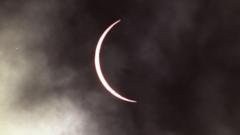
The shadow of the Moon moves fast. When the 1999 total solar eclipse swept across the surface of the Earth, it did not merely bring a momentary shadow; it exposed the sheer vulnerability of modern infrastructure to an ancient cosmic rhythm. On August 11, 1999, millions of people watched day turn to dusk as the lunar disk aligned perfectly with the Sun. Across Europe, the Middle East, and parts of India, streetlights flickered on at midday, temperature drops forced livestock to bed down, and millions experienced a visceral reminder of our place in the solar system.
Yet, the true significance of that afternoon stretched far beyond the poetic spectacle of day turning to dusk. It served as a massive, unplanned stress test for human systems at the dawn of the global internet era and the commercial aviation boom. Observers on the ground witnessed the corona, but behind closed doors, engineers and meteorologists scrambled to understand how a sudden loss of solar radiation would impact power grids, communication networks, and atmospheric stability.
Anatomy of a Celestial Alignment
To understand why the 1999 total solar eclipse commanded such intense focus, one must look at the mechanics of the event. A total solar eclipse occurs when the Moon passes between the Earth and the Sun, completely blocking the face of our star. On August 11, the path of totality began in the Atlantic Ocean, crossed the UK briefly through Cornwall, swept over northern France, Germany, Austria, Turkey, and ended in India.
The path was narrow, roughly one hundred kilometers wide, but the psychological and scientific impact radiated globally. Traffic gridlock paralyzed major European highways as over-the-road travelers sought vantage points along the centerline. Hotels booked out years in advance. Millions of cardboard solar filter glasses were distributed, marking one of the first mass public safety campaigns for a celestial event in the digital age.
The sudden twilight triggered immediate, documented anomalies in the lower atmosphere. Temperature drops of up to five degrees Celsius were recorded within minutes as the solar flux plummeted. Wind patterns shifted abruptly because the differential heating driving local breezes vanished momentarily. Birds stopped singing, mist descended over cooling valleys, and a deep, eerie silence settled over millions of spectators.
The Power Grid Shockwave
While the public looked up, power system operators looked down at their control panels with growing anxiety. The 1999 event marked the first time a total solar eclipse threatened a heavily interconnected, modern electrical grid. At the time, photovoltaic solar energy penetration was minuscule compared to today, but conventional power plants still relied on predictable patterns of human activity and ambient light.
The sudden drop in ambient light and temperature caused an immediate dip in photovoltaic output where small systems existed, but the bigger shock was psychological and operational. Millions of lights switched on simultaneously as automated sensors reacted to the sudden gloom. Demand spiked precisely as the power supply infrastructure experienced unique atmospheric cooling anomalies.
Grid operators in France and Germany had spent months preparing for the drop in load and sudden demand shifts. Transmission lines were reconfigured, and backup generation was placed on standby. The system held, but the event exposed vulnerabilities that modern grids face on a magnified scale today. It was the first true warning shot for power sector engineers dealing with sudden interruptions in solar irradiance.
Lessons Learned for Modern Energy Infrastructure
The 1999 blackout of solar radiation forced a quiet revolution in grid management. Before that August afternoon, few power companies factored astronomical events into long-term load forecasting. The eclipse proved that predictable natural phenomena could mimic sudden grid emergencies.
Engineers realized that public behavior during a celestial spectacle alters energy consumption just as much as the physical loss of sunlight. When millions of people turn on televisions, indoor lights, and electric kettles simultaneously while daylight vanishes, the resulting load profile looks nothing like a normal Tuesday afternoon.
Atmospheric Disruptions and Ionospheric Chaos
Beyond the visible spectacle of the corona, the 1999 eclipse provided a unique laboratory for atmospheric scientists. The ionosphere, a layer of charged particles stretching from about sixty kilometers to one thousand kilometers above the Earth, relies heavily on solar radiation to maintain its ionization levels.
When the Moon blocked the Sun, the ionosphere experienced a localized collapse. High-frequency radio communications suffered sudden disruptions as the sudden removal of solar X-rays and ultraviolet radiation caused electrons and ions to recombine rapidly.
Researchers tracked these changes using early GPS networks and ground-based ionosondes. The data gathered in 1999 helped refine computer models of the upper atmosphere. These models are now vital for predicting satellite drag, GPS accuracy, and communication blackouts caused by space weather.
The Behavioral Oddities of Nature
The sudden transition from day to dusk also scrambled biological clocks across the path of totality. Zoos became natural laboratories. Observers noted that chimpanzees in European zoos began their evening vocalization rituals, while nocturnal animals awoke, confused by the brief night.
Spiders began tearing down their webs, only to frantically rebuild them a few minutes later when the real Sun returned. Domestic pets showed signs of anxiety, pacing and seeking shelter. These reactions highlighted the deep evolutionary programming tied to the solar cycle. Life on Earth does not merely respond to internal biological clocks; it is tethered directly to the relentless light of our local star.
The Cultural Shift in Science Communication
The 1999 eclipse also transformed how scientific events are communicated to the mass public. It preceded the explosion of social media by nearly a decade, yet it utilized television broadcast networks and early internet portals in unprecedented ways. NASA and European space agencies provided live coverage, streaming grainy low-resolution video feeds to millions of desktop computers worldwide.
Schools organized viewing events, turning a rare astronomical occurrence into a massive civic education lesson. Millions of children who stood on playgrounds with pinhole projectors or cardboard glasses grew up to pursue careers in science, technology, and engineering. The cultural footprint of the event cemented the idea that science is not confined to laboratories; it is an accessible, shared human experience.
The Myth of the Unseen Threat
Public health warnings during the 1999 eclipse dominated news cycles, occasionally crossing into moral panic. Tabloids warned of permanent blindness, spontaneous combustion of cameras, and mysterious rays that could penetrate car windshields.
This hyper-vigilance forced science journalists to walk a fine line between effective safety communication and sensationalism. The emphasis on eye safety was entirely justified—looking at the uneclipsed or partially eclipsed Sun without proper filters causes irreversible retinal damage. However, the extreme fear surrounding the event highlighted a broader societal disconnect from basic astronomy. Many people had grown so disconnected from the natural world that a simple shadow cast by the Moon felt like a supernatural anomaly.
The Long Shadow of 1999
Decades later, the 1999 total solar eclipse remains a benchmark for researchers and infrastructure planners. It bridged the gap between historical eclipse tracking and modern telemetry. The observational techniques perfected during that event laid the groundwork for how scientists study solar storms, coronal mass ejections, and atmospheric dynamics today.
When future generations look back at the historical milestones of Earth science, August 11, 1999, stands as the moment humanity watched the lights go out on the twentieth century and realized how fragile our complex systems truly are against the backdrop of the cosmos. The day turned to dusk, and in that fleeting shadow, we caught a glimpse of our fragile place in the universe.