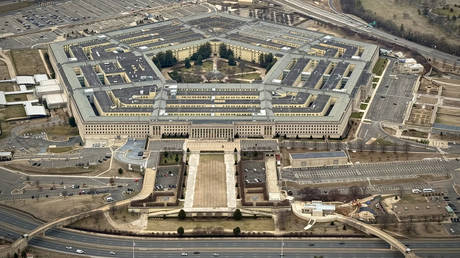
Military infrastructure damage estimates reaching $15 billion represent a structural failure in forward-operating base economics rather than an isolated accounting anomaly. When asymmetric missile and drone capabilities strike fixed, high-density logistics hubs, the financial loss reflects the replacement cost of specialized expeditionary architecture, disrupted supply chains, and degraded deterrence posture. Standard media reporting treats this $15 billion ceiling as a static price tag; an operational analysis reveals it is the output of a compounding cost function driven by theater geography, hardened construction premiums, and multi-year procurement bottlenecks.
The Structural Anatomy of Base Damage Valuation
Estimating $15 billion in damages across regional installations requires separating direct physical destruction from systemic operational losses. Defense cost-estimators do not calculate military real estate using commercial construction metrics. Forward bases in the Middle East operate under extreme environmental, security, and logistical constraints that multiply baseline engineering costs by factors of three to five.
The valuation breaks down into four distinct capital categories:
- Tactical Aviation and Runway Infrastructure: Modern fifth-generation fighter aircraft and heavy strategic airlifters require reinforced concrete aprons, specialized arresting gear, fuel hydrant systems, and climate-controlled maintenance hangars. Cratered runways and destroyed taxiways halt sortie generation immediately. Repairing high-stress pavements under threat conditions requires rapid-setting aerospace-grade materials flown in via strategic airlift, driving per-square-meter costs exponentially higher than domestic equivalents.
- Command, Control, Communications, Computers, Intelligence, Surveillance, and Reconnaissance (C4ISR) Nodes: Hardened data centers, satellite ground terminals, and radar arrays represent the highest value-to-footprint ratio on any installation. A single precision strike on a regional fusion center destroys hardware that cannot be sourced off the shelf, triggering months-long manufacturing lead times and temporary blindness across theater-wide sensor networks.
- Bulk Fuel and Munitions Storage: Underground fuel bladders, hardened aircraft shelters, and earth-covered magazines designed to prevent sympathetic detonation require complex civil engineering. When kinetic strikes breach these facilities, the secondary explosions destroy surrounding perimeter defenses, utilities, and adjacent billeting, turning a localized hit into a facility-wide write-off.
- Integrated Air and Missile Defense (IAMD) Emplacements: Radar pedestals, launcher reload mechanisms, and fire-control shelters positioned on base perimeters absorb the brunt of saturation attacks. Even when interceptors successfully engage incoming threats, debris fields and blast overpressure degrade sensitive phased-array radar components, requiring complete depot-level overhauls.
The Asymmetric Cost-Exchange Ratio
The core economic vulnerability exposed by a $15 billion damage projection is the severe inversion of the cost-exchange ratio. In classical warfare, attrition favors the side with superior industrial capacity and deeper capital reserves. In modern missile and unmanned aerial system warfare, the offense dictates the economic tempo.
An adversary deploying ballistic missiles, cruise missiles, and one-way attack drones spends between $50,000 and $2 million per munition. A single salvo costing $30 million can inflict $500 million in structural damage to an unhardened or partially hardened airbase. Even when defensive batteries intercept 85 to 90 percent of incoming projectiles, the remaining 10 percent that penetrate the shield target high-value nodes.
This creates a dual financial drain:
- Interceptor Depletion Cost: Defending the base requires firing surface-to-air interceptors costing between $2 million and $4 million per round. Firing two interceptors per incoming target means the defender spends $4 million to $8 million to neutralize a $100,000 drone.
- Residual Penetration Damage: The leakers—munitions that bypass air defenses—strike fixed infrastructure whose replacement cost dwarfs both the offensive salvo and the defensive expenditure combined.
The Pentagon faces a compounding fiscal trap where the cost of defending an asset approaches the value of the asset itself, while any failure in the defensive umbrella results in multi-billion-dollar capital destruction.
Expeditionary Logistics and the Replacement Multiplier
Rebuilding damaged military bases in an active or contested theater introduces a severe logistical multiplier that commercial insurers never encounter. Domestic construction relies on local labor, established rail and highway networks, and uninterrupted maritime shipping. Theater reconstruction in the Persian Gulf and surrounding regions depends on vulnerable maritime chokepoints and contested airspace.
Every ton of structural steel, specialized concrete additive, electrical switchgear, and HVAC equipment must be procured in the United States or allied industrial bases, transported via Military Sealift Command or commercial charters, offloaded at regional ports, and moved overland to forward sites.
This supply chain introduces three distinct cost drivers:
- War-Risk Insurance and Charter Premiums: Commercial shipping operators transiting contested waters demand massive risk premiums, often doubling or tripling freight rates. If maritime routes are restricted, heavy equipment must move via C-17 Globemaster or C-5 Galaxy strategic airlift, which costs tens of thousands of dollars per flight hour and severely limits cargo volume.
- Expeditionary Labor and Security Overhead: Deploying Army Corps of Engineers personnel and cleared defense contractors into a missile threat zone requires continuous force protection, life-support infrastructure, hazard pay, and medical evacuation coverage. Historically, life-support and security overhead account for up to 40 percent of total contingency construction budgets.
- Industrial Base Bottlenecks: The U.S. defense industrial base operates on lean, just-in-time manufacturing models optimized for peacetime efficiency rather than surge replacement. Custom transformers, hardened blast doors, and specialized airfield lighting systems have backlogs extending 18 to 36 months. Expediting these orders forces the Department of Defense to pay steep acceleration fees or cannibalize inventory designated for other combatant commands, such as Indo-Pacific Command.
Budgetary Mechanics and Appropriation Friction
A $15 billion damage bill does not come out of a unified Pentagon checking account. Understanding how the Department of Defense absorbs these losses reveals the operational friction created inside the Pentagon's financial management system.
Military funding is strictly siloed by Congress into distinct appropriations categories:
- Military Construction (MILCON): Covers major permanent infrastructure projects. MILCON requires explicit congressional authorization and line-item approval, a process that normally takes two to three years from planning to groundbreaking.
- Operations and Maintenance (O&M): Funds day-to-day base operations, minor repairs, and emergency restoration.
- Procurement: Pays for replacing destroyed radar systems, vehicles, and base defense hardware.
When bases sustain $15 billion in damage, the Pentagon cannot legally shift funds from Procurement to MILCON without congressional reprogramming approval. In the immediate aftermath of strikes, commanders rely on emergency O&M funds to patch runways and restore basic utilities. However, draining $15 billion from O&M accounts forces the military services to cancel training exercises, delay depot maintenance on ships and aircraft, and furlough civilian personnel across the globe.
To avoid gutting global readiness, the administration must request an emergency supplemental appropriation from Congress. Supplemental bills bypass standard budget caps, adding directly to the federal deficit, while subjecting reconstruction timelines to legislative gridlock. Until supplemental funds are appropriated and obligated, theater commanders must operate out of degraded facilities, using temporary expeditionary matting and mobile generators that degrade operational tempo and increase maintenance failure rates on sensitive aircraft.
Strategic Vulnerabilities of Concentrated Basing
For three decades following the 1991 Gulf War, U.S. central command posture relied on a hub-and-spoke basing model. Massive, centralized installations—such as Al Udeid Air Base in Qatar, Al Dhafra in the United Arab Emirates, and Ali Al Salem in Kuwait—were built to maximize logistical efficiency. Concentrating fuel, munitions, maintenance depots, and command centers in a few sprawling complexes reduced peacetime operating costs and simplified supply chains.
That concentration is now a critical liability. Modern precision-guided ballistic missiles and long-range loitering munitions have eliminated the sanctuary status these mega-bases once enjoyed. When billions of dollars of infrastructure are packed into a 10-square-kilometer footprint, an adversary does not need pinpoint accuracy to achieve strategic effects; area bombardment of a densely packed flight line guarantees catastrophic collateral damage.
The $15 billion damage figure serves as an empirical validation that fixed, concentrated bases cannot survive intact against a peer or near-peer missile arsenal without prohibitive defensive expenditures.
Limitations of Hardening and Active Defense
Standard military doctrine offers two primary remedies for base vulnerability: active defense (shooting down incoming threats) and passive defense (hardening structures so they survive impacts). Both approaches face severe diminishing returns at the $15 billion scale.
The Limits of Active Defense:
Deploying additional Patriot, THAAD, and short-range air defense batteries around regional bases creates a layered shield, but it cannot achieve a 100 percent intercept rate against saturated, multi-axis attacks. Attackers can combine low-altitude cruise missiles, high-apogee ballistic missiles, and swarms of low-cost drones to overwhelm radar tracking capacities and exhaust magazine depths. Once a battery runs out of interceptors, reloading takes hours, leaving the base defenseless against follow-on waves.
The Limits of Passive Hardening:
Constructing reinforced concrete hardened aircraft shelters capable of withstanding direct hits from 1,000-pound warheads costs upwards of $10 million to $15 million per shelter. Retrofitting existing mega-bases with enough hardened shelters for hundreds of tactical and support aircraft would cost tens of billions of dollars and take a decade to complete. Furthermore, massive support aircraft—such as KC-135 tankers, E-3 AWACS, and C-17 transports—have wingspans too wide to fit inside standard hardened shelters, leaving the backbone of U.S. air mobility exposed on open ramps.
Tactical Shifts in Theater Posture
Mitigating future multi-billion-dollar infrastructure losses requires abandoning the concentrated mega-base model in favor of distributed, resilient operations. Rather than rebuilding destroyed facilities to their original specifications—which simply recreates high-value targets for future strikes—defense planners must execute three structural adjustments:
- Agile Combat Employment (ACE) Execution: Disperse aircraft, maintenance crews, and munitions across dozens of smaller, austere civilian airfields, highway strips, and secondary military bases throughout the region. By spreading assets across 20 locations instead of three, the Pentagon forces adversaries to expend exponentially larger missile salvos to achieve the same operational disruption. Rebuilding damaged hubs should focus exclusively on rapid-repair capabilities—stockpiling crushed stone, precast concrete slabs, and expeditionary airfield matting—rather than erecting permanent, high-cost steel-and-glass structures.
- Decoupling C4ISR from Physical Hubs: Eliminate single points of failure by migrating command-and-control networks off physical bases and into resilient, cloud-based, and satellite-linked architectures. Commanders and intelligence analysts should operate from distributed mobile nodes or directly from the continental United States, leaving only minimal, easily replaceable tactical communications relays inside the missile engagement zone.
- Asymmetric Counter-Battery and Directed Energy Integration: Shift the cost-exchange curve back in favor of the defense by accelerating the deployment of high-energy lasers and high-power microwave systems to forward bases. Neutralizing incoming drone swarms and cruise missiles at a cost of a few dollars per shot preserves kinetic interceptors for complex ballistic threats, preventing both magazine exhaustion and multi-billion-dollar infrastructure write-offs.
Reconstructing damaged facilities in the Middle East using 20th-century engineering standards will guarantee a repeat of the $15 billion loss cycle. Capital must be reallocated away from static, concentrated real estate and toward mobile, distributed logistics and low-cost-per-shot terminal defenses.


