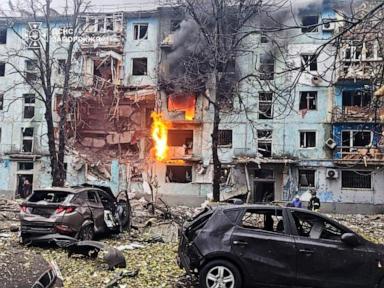
Mainstream defense desks are treating a 1,200-drone barrage into Russian territory like a victory parade. They count the airframes. They tally the refinery fires. They frame the surge as proof that Kyiv holds the escalation ladder right as American diplomats sit down to redraw the European security map.
That reading gets the entire strategic equation backward.
When an army launches nearly 1,200 long-range one-way attack drones in a single coordinated wave during active diplomatic negotiations, it is not flexing from a position of untouchable strength. It is burning its most precious asymmetric reserve to buy twenty-four hours of relevance before Washington locks in a settlement framework without its input.
I have spent fifteen years tracking defense procurement, air defense saturation economics, and alliance diplomacy from Brussels to Washington. I have watched defense contractors and think-tank analysts mistake tactical pyrotechnics for strategic leverage in conflict after conflict. Every time a smaller force unveils a massed strike capability, commentators fall in love with the hardware and ignore the balance sheet behind it.
Here is the truth the wire services missed: a 1,200-drone salvo is a distress flare disguised as a shock-and-awe campaign.
The Wire Service Illusion of Escalation Dominance
Standard coverage of the barrage follows a predictable script. First comes the staggering raw number—nearly 1,200 unmanned aerial vehicles crossing into Russian airspace in a single operational window. Second comes the juxtaposition with US-led European security talks. The implied thesis is simple: Ukraine is signaling to Washington and Moscow that it can impose unacceptable costs at will, thereby forcing both capitals to respect Kyiv’s red lines.
That thesis collapses the second you look at how Great Power diplomacy actually operates.
Washington does not enter European security negotiations looking for reasons to prolong a war of attrition. When American negotiators convene talks over continental security architecture, their primary metric is escalation containment and force posture stabilization. A massive cross-border strike conducted during those talks does not make Kyiv look indispensable. It makes Kyiv look like an unpredictable variable that needs to be managed, capped, and boxed in before a stray airframe hits something that triggers a direct NATO-Russia confrontation.
Think about the incentive structure inside the room. US planners are trying to calculate minimum viable deterrence along NATO’s eastern flank while managing global munition stockpiles stretched thin across multiple theaters. Watching 1,200 long-range strike systems fly deep into Russian territory reminds American officials of two uncomfortable realities:
- Proliferation risk is out of control. The guidance kits, commercial flight controllers, and cellular-modem navigation hacks powering these swarms are already migrating into non-state conflict zones worldwide.
- Escalation control is slipping out of Washington’s hands. You cannot build a durable European security guarantee if a partner nation can unilaterally launch a thousand-airframe strike in the middle of a diplomatic summit.
Far from strengthening Ukraine’s hand at the table, the barrage gives every realist in Washington another reason to accelerate a negotiated freeze.
The Brutal Math of Mass Drone Attrition
To understand why a 1,200-drone wave is unsustainable, stop looking at launch videos and start looking at intercept physics and industrial cycle times.
A long-range one-way attack drone—whether a domestically built Lyutyi, a Beaver, or a modified light-sport airframe packed with high explosive—is not a cruise missile. It flies slow. It flies low. It relies on pre-programmed waypoints, inertial navigation, and terrain contour matching rather than active terminal seekers. Because its kinematic profile is predictable, it survives only through saturation: throwing so many targets at a sector that radar tracking queues overflow and interceptor magazines run dry.
Now look at the exchange ratio over a multi-week campaign rather than a single headline-grabbing night.
- Electronic Warfare (EW) Adaptation: Russia’s layered EW network—systems like Zhitel, Pole-21, and Krasukha-4—does not stay static. Every mass swarm gives Russian signal intelligence teams terabytes of telemetry on frequency hopping, satellite navigation fallback protocols, and terminal dive profiles. Within seventy-two hours of a major wave, jamming waveforms are updated across regional air defense districts.
- Cheap Kinetic Countermeasures: Moscow stopped firing million-dollar S-400 surface-to-air missiles at propeller-driven drones over a year ago. Today, the bulk of a 1,200-drone wave runs into mobile fire groups equipped with twin-barrel ZU-23-2 anti-aircraft cannons, truck-mounted heavy machine guns, Pantsir-S1 point-defense systems, and cheap interceptor drones. When a $40,000 long-range drone gets chewed up by $800 worth of 23mm cannon shells, the cost-exchange curve flips completely against the attacker.
- Production Bottlenecks: Building 1,200 airframes takes months of dispersed workshop assembly, smuggled dual-use microelectronics, small-displacement combustion engines, and composite airframe molding. Launching them all in one compressed operational window empties deep-strike warehouses faster than decentralized supply chains can refill them.
Imagine a scenario where a regional bank spends its entire quarterly marketing budget on a single Super Bowl commercial while negotiating a distressed buyout. The ad looks spectacular on Sunday night. Everyone talks about it on Monday morning. By Wednesday, the acquirer looks at the bank’s depleted cash reserves and lowers the buyout offer by thirty percent. That is the exact operational logic of blowing a multi-month drone stockpile on a single diplomatic news cycle.
Why US-Led European Security Talks Are Asking the Wrong Question
If you follow mainstream commentary, the central question surrounding the talks is: How many weapons and security guarantees will the West give Ukraine to deter future Russian aggression?
That is the wrong question. It assumes the United States still views European security as an open-ended commitment backed by unlimited industrial capacity.
The real question driving the US-led talks is far colder: How do we construct a self-sustaining European containment line so Washington can pivot resources elsewhere without triggering a collapse on the continent?
Classic strategic thinkers like Thomas Schelling distinguished sharply between brute force (taking what you want by destroying the enemy’s physical capacity to resist) and coercion (inflicting pain to make the enemy choose to comply). Deep-strike drone campaigns are textbook coercive tools. They break windows in Moscow, burn fuel depots in border oblasts, and disrupt civil aviation schedules. What they cannot do is dislodge entrenched infantry divisions, clear dense minefields, or hold contested territory along a thousand-kilometer front.
American military planners know the difference between brute force and coercion. They saw during the Combined Bomber Offensive in World War II, during Operation Rolling Thunder in Vietnam, and during the 1999 air campaign over Serbia that strategic bombardment of rear-area infrastructure rarely forces an authoritarian regime to capitulate on core territorial claims. Instead, it hardens domestic political resolve and justifies harsher retaliatory mobilization.
When US diplomats look at the current map, they see three hard constraints that no number of long-range drones can erase:
- Manpower asymmetry: You cannot automate trench holding. Infantry attrition remains the decisive bottleneck on the ground.
- Artillery and air-defense interceptor deficits: European defense industrial bases are still years away from matching Russian shell and tactical missile output at scale.
- Alliance fatigue: European governments facing stagnant growth and rising borrowing costs are quietly signaling to Washington that open-ended fiscal transfers cannot continue indefinitely.
Against that backdrop, a 1,200-drone strike looks less like a war-winning breakthrough and more like a desperate attempt to manufacture headlines before the diplomatic concrete dries.
What Everyone Gets Wrong About Asymmetric Drone Warfare
Search queries around this conflict are flooded with variations of the same anxious questions. Let’s dismantle the three most dangerous myths driving public misunderstanding.
Does a massive drone swarm mean traditional air defense is obsolete?
No. It means unlayered air defense is obsolete.
Every few years, a new offensive weapon triggers obituaries for established defensive platforms. Anti-tank guided missiles supposedly killed the main battle tank in 1973. Cruise missiles supposedly killed the surface warship in 1982. Low-cost drones supposedly killed integrated air defense networks in 2024.
In reality, warfare operates as a continuous measure-countermeasure cycle. High-end radar-guided missiles were never designed to swat down slow-moving fiberglass gliders flying at tree-top height. As militaries re-integrate acoustic sensor arrays, short-range radar-directed autocannons, high-energy lasers, and autonomous kinetic interceptors, attrition rates on mass drone swarms climb rapidly. The drone does not replace the air force; it merely fills the gap when a nation lacks stealth strike aircraft and suppression of enemy air defenses (SEAD) capability.
Can long-range drone strikes cripple Russia’s war economy?
They can tax it, inconvenience it, and force localized fuel rationing—but they cannot break it.
Hit an oil refinery's primary distillation column with a 50-kilogram warhead, and you shut down processing capacity for weeks. That hurts export revenues and spikes domestic diesel prices. Yet Russia’s energy infrastructure spans eleven time zones, sits behind dense industrial repair networks, and bypasses Western sanctions through shadow tanker fleets and state-subsidized credit lines.
Even when 15 to 20 percent of regional refining capacity goes offline temporarily, the Russian military machine runs on prioritized state reserves. Civilian motorists feel the squeeze at the pump long before an armored brigade runs dry at the front. Coercive economic pain takes years to compound into political collapse—time that Ukraine’s frontline units do not have.
Does launching 1,200 drones force Moscow to make concessions at the negotiating table?
The historical record points in the exact opposite direction.
In coercive diplomacy, strikes against a major power’s homeland almost always raise the domestic political price of compromise for its leadership. If the Kremlin makes territorial or security concessions immediately after absorbing a 1,200-drone raid, it signals weakness to domestic hardliners and regional elites. Instead, Moscow responds by escalating missile strikes against Ukraine’s electrical grid, hardening its negotiating demands, and framing the conflict to its population as an existential defense of the homeland.
The Uncomfortable Downside of the Contrarian View
Intellectual honesty requires admitting where a contrarian thesis carries blind spots. Dismissing the 1,200-drone barrage entirely as empty theater would be just as naive as calling it a war-winner.
There are three tangible operational dividends Kyiv actually extracts from these mass salvos:
- Air Defense Displacement: Every Pantsir, Tor, and Buk battery pulled back from the front lines to guard refineries in Tatarstan or airfields near Moscow is one less air defense system shooting down Ukrainian reconnaissance drones and glide-bomb interceptors over the Donbas. Stretching Russia’s air defense blanket thin creates local tactical openings along the line of contact.
- Psychological Parity: After years of enduring nightly Shahed and cruise missile raids on Kyiv, Kharkiv, and Odesa, demonstrating the capacity to reach deep into Russian territory shores up domestic morale and proves that Russia’s borders are porous.
- Industrial Proof-of-Concept: Scaling from cottage-industry prototypes to a synchronized 1,200-airframe launch demonstrates remarkable engineering resilience under wartime conditions. European defense ministries are taking notes—not necessarily to fund Ukraine forever, but to copy Ukraine’s decentralized manufacturing model for their own territorial defense forces.
The mistake is confusing those real tactical dividends with strategic leverage over US-led diplomatic negotiations.
What Serious Strategists Should Watch Instead of Drone Counts
If you want to know how the European security talks will actually end, stop counting UAVs on Telegram channels and start tracking four cold metrics over the next ninety days:
- Interceptor Allocation Ratios: Watch whether Washington prioritizes shipping Patriot and NASAMS interceptors to Ukrainian cities or keeps them earmarked for US and NATO base defense in Poland, Romania, and the Indo-Pacific. Hardware allocation tells you the real policy before any diplomat speaks.
- European Defense Bond Issuance: Ignore summit communiqués praising "unwavering solidarity." Look at whether Berlin, Paris, and Brussels actually pass joint debt mechanisms to fund multi-year artillery and air-defense production. Words are free; sovereign bond yields tell the truth.
- Energy Grid Repair Capacity: Monitor Ukraine’s high-voltage transformer reserves heading into winter. A nation can launch a thousand drones outward and still lose its industrial base if its domestic power grid drops below critical load thresholds.
- Demilitarized Zone Architecture: Pay close attention to leaked proposals regarding buffer zones, third-party monitoring missions, and restrictions on long-range strike systems. The very fact that negotiators are debating range caps on cross-border unmanned systems proves that Kyiv’s drone swarms are being treated as a bargaining chip to be traded away, not a trump card that dictates the terms.
The Hard Truth About Leverage
In geopolitics, leverage is never measured by the noise you make on the way into the conference room. It is measured by what happens if you walk out.
If Ukraine walks away from a US-brokered European security framework, its ammunition pipelines narrow, its intelligence-sharing feeds degrade, and its economic lifeline frays. If Washington walks away, American diplomats pivot to other global flashpoints while European capitals scramble to cut their own bilateral deals with Moscow.
A 1,200-drone barrage changes none of that underlying math. It burns months of painstakingly assembled hardware to create forty-eight hours of dramatic satellite imagery, all while reinforcing the exact perception in Washington that the war has become an uncontrollable escalation trap that needs to be closed down fast.
Count the drones all you want. The side holding the real leverage isn't launching swarms into the dark—it’s holding the pen on the security guarantee.


