The internet loves a warm, fuzzy math problem.
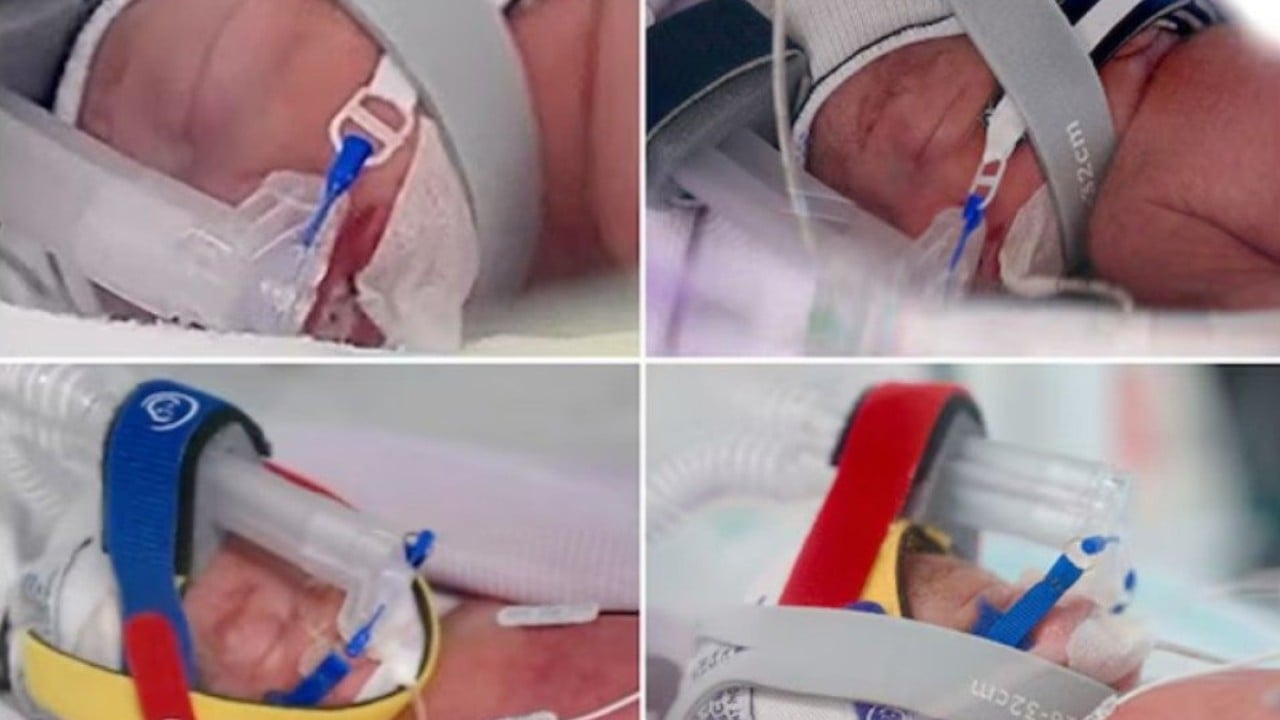
When news broke that an Australian woman gave birth to naturally conceived identical quadruplets—four babies split from a single fertilized egg—every major media outlet rushed out the exact same headline: "A 1-in-15-million miracle."
It makes for a cozy, feel-good story. Editors love it. Social media algorithms devour it. Readers hit share, drop a heart emoji, and move on with their day, feeling just a little lighter.
There's just one problem. That 1-in-15-million stat is complete statistical garbage. And the warm-and-fuzzy framing of natural high-order multiple births hides a much darker, far more uncomfortable medical reality that the healthcare industry refuses to talk about publicly.
We need to stop celebrating high-order multiple pregnancies as lottery wins. They aren't statistical miracles—they are high-risk medical crises that highlight the glaring gaps in reproductive education and modern prenatal care.
The Lazy Math Behind the "1 in 15 Million" Myth
Let's dissect the numbers. Where did "1 in 15 million" even come from?
It’s calculated by taking the background rate of spontaneous twin splitting (roughly 1 in 250 births) and multiplying it exponentially to account for subsequent splits. $1/250 \times 1/250 \times 1/250$. It’s back-of-the-napkin math done by journalists who haven't taken a statistics class since high school.
In embryology, biological probabilities do not work like independent coin flips.
Spontaneous monozygotic (identical) division occurs when the blastocyst undergoes cellular instability during the first few days post-fertilization. Once an egg demonstrates the epigenetic or structural propensity to split, the probability of secondary and tertiary splits increases dramatically. It is not three isolated, lightning-strike events; it is a single, cascading cellular anomaly.
By propagating the "1 in 15 million" myth, media companies transform a complex genetic and biological malfunction into a magical lottery draw.
Why does this matter? Because when you frame a severe obstetric anomaly as a divine stroke of luck, you sanitize the catastrophic clinical risks associated with it.
What Nobody Admits About Natural Quadruplets
Ask any high-risk maternal-fetal medicine specialist off the record, and they’ll tell you the truth: a spontaneous identical quadruplet pregnancy is a terrifying clinical scenario, not a celebration.
Monozygotic high-order multiples almost always share placental architecture. In a monoamniotic or monochorionic setup, babies are sharing a single placental mass and limited vascular real estate. This sets off a physiological hunger games inside the womb.
- Twin-to-Twin Transfusion Syndrome (TTTS): Vascular connections in the placenta distribute blood flow unevenly. One baby gets flooded with fluid, leading to heart failure; another gets starved of blood and amniotic fluid. Multiply that dynamic across four fetuses, and the math turns lethal fast.
- Cord Entanglement: Without membrane barriers, four active infants in a single sac inevitably tangle their umbilical cords, cutting off oxygen in seconds.
- Extreme Prematurity: The human uterus was designed for a single occupant. Holding four fetuses past 28 to 32 weeks is a massive physical challenge. Babies born at 28 weeks face steep odds: intracranial hemorrhage, chronic lung disease, necrotizing enterocolitis, and lifelong neurodevelopmental disabilities.
When a hospital PR department releases a smiling picture of four tiny infants wrapped in pink blankets, they don't show you the three months of sleepless, high-stress NICU stays. They don't mention the agonizing discussions around selective reduction that parents are forced to have in dark clinic rooms at 11 weeks gestation.
Selective reduction—the clinical process of terminating one or more fetuses to give the remaining ones a fighting chance at survival—is the dirty secret of high-order multiple care. It is a soul-crushing decision that thousands of parents face every year. But mentioning selective reduction ruins the heartwarming viral clickbait, so the media buries it.
The Hypocrisy of "Natural" vs. Assisted Reproduction
When a woman conceives quadruplets through In Vitro Fertilization (IVF) or ovulation induction drugs, the medical community reacts with outrage. Reproductive endocrinologists who transfer multiple embryos or fail to monitor follicle counts during a fertility cycle face severe professional scrutiny. Guidelines from the American Society for Reproductive Medicine (ASRM) explicitly push for Single Embryo Transfer (eSET) precisely to prevent the disaster of high-order multiples.
Yet, when the exact same dangerous physiological outcome happens spontaneously, we throw a parade.
Imagine a scenario where a patient presents with a rare condition causing severe, uncontrolled cell proliferation in an organ. We wouldn't celebrate the biological rarity of the tumor; we would treat the medical emergency. A monozygotic quadruplet pregnancy is, at its core, extreme cellular dysregulation during early cleavage.
It is hypocritical to condemn multiple-fetus pregnancies in the fertility clinic while romanticizing them when they happen by chance in nature. Biological risk doesn't care about how the pregnancy started. The severe strain on maternal cardiovascular systems, the risk of uterine rupture, severe preeclampsia, and postpartum hemorrhage remain identical.
The Hidden Financial and Psychological Carnage
Let's discuss what happens after the viral headlines fade and the camera crews pack up their equipment.
Bringing home four infants simultaneously is an operational nightmare that breaks ordinary families. The average cost of newborn care for quadruplets in their first year easily clears six figures—and that’s after insurance covers the million-dollar NICU bill.
- Sleep Deprivation as Trauma: Four infants feeding every three hours means 32 feedings, 32 diaper changes, and continuous soothing over a 24-hour cycle. Chronic sleep deprivation of this scale triggers severe postpartum depression and anxiety.
- Systemic Failure: Most healthcare systems offer zero long-term home nursing assistance for parents of high-order multiples. Once you leave the hospital, you are entirely on your own.
- Relationship Strain: Divorce rates among parents of high-order multiples soar past the national average. The combination of financial pressure, physical exhaustion, and medical care management strips away every ounce of personal space and spousal connection.
Yet, the media sells a sanitized, Disneyfied narrative. They turn complex medical emergencies into reality TV fodder, leaving expecting parents completely unprepared for the brutal reality of raising high-order multiples.
How We Fix the Narrative
If we want to address maternal health honestly, we need to completely overhaul how we talk about multiple births.
- Ditch the Misleading Odds: Stop using lazy, multiplied probability metrics to create clickbait headlines. Acknowledge the complex embryological mechanics behind cell splitting.
- Highlight the Medical Reality: Media coverage must mention the severe risks—prematurity, NICU stays, and maternal complications—alongside the rare success stories. Stop pretending these pregnancies are risk-free walk-in-the-park events.
- Demand Systemic Support: If society wants to celebrate these rare births, we need to demand that health insurance and government agencies cover long-term, post-discharge nursing and mental health care for families facing high-order multiple births.
A mother delivering four identical, healthy babies isn't a statistical spectacle to gawk at on your morning news feed. It is a high-wire medical triumph achieved through the sheer grit of the parents and the intense, round-the-clock intervention of specialized maternal-fetal medicine teams.
Stop calling it a 1-in-15-million lottery win. Call it what it actually is: an extreme medical anomaly that survived incredible odds despite a system that fetishizes the outcome while ignoring the crisis.